


Be the Referee: Punts & Missed FGs
October 18, 2018
This week, MHSAA assistant director Brent Rice explains how high school rules differ from collegiate and professional when it comes to these kick scenarios.
Be The Referee is a series of short messages designed to help educate people on the rules of different sports, to help them better understand the art of officiating, and to recruit officials.
Below is this week's segment – Punts & Missed Field Goals - Listen
One of the differences between high school football rules and rules at the collegiate and professional levels deals with punts and missed field goals.
Essentially, the place kick is treated like a punt as it relates to team possession from the goal line and out of bounds. If either goes out of bounds from inside the field of play, the defensive team takes possession at that spot. If either goes into the end zone, the defensive team may not return the kick.
And a missed field goal in high school that goes into or through the end zone, resulting in a touchback, has the defense taking over, first and 10, at their own 20, regardless of the previous spot.
Past editions
October 11: What Officials Don't Do - Listen
October 4: Always 1st-and-Goal - Listen
September 27: Unique Kickoff Option - Listen
September 20: Uncatchable Pass - Listen
September 13: Soccer Rules Change - Listen
September 6: You Make the Call: Face Guarding - Listen
August 30: 40-Second Play Clock - Listen
August 23: Football Rules Changes - Listen
Longtime Cheboygan Coach Stormzand Continues Giving to Game as Official
By
Tom Spencer
Special for MHSAA.com
April 10, 2023
Twenty-five years ago, Cheboygan girls soccer started by storm.
 Actually, “Stormy” is more accurate.
As another girls soccer season gets rolling across Northern Michigan this month, the pitch will frequently experience a storm, er Stormy, again.
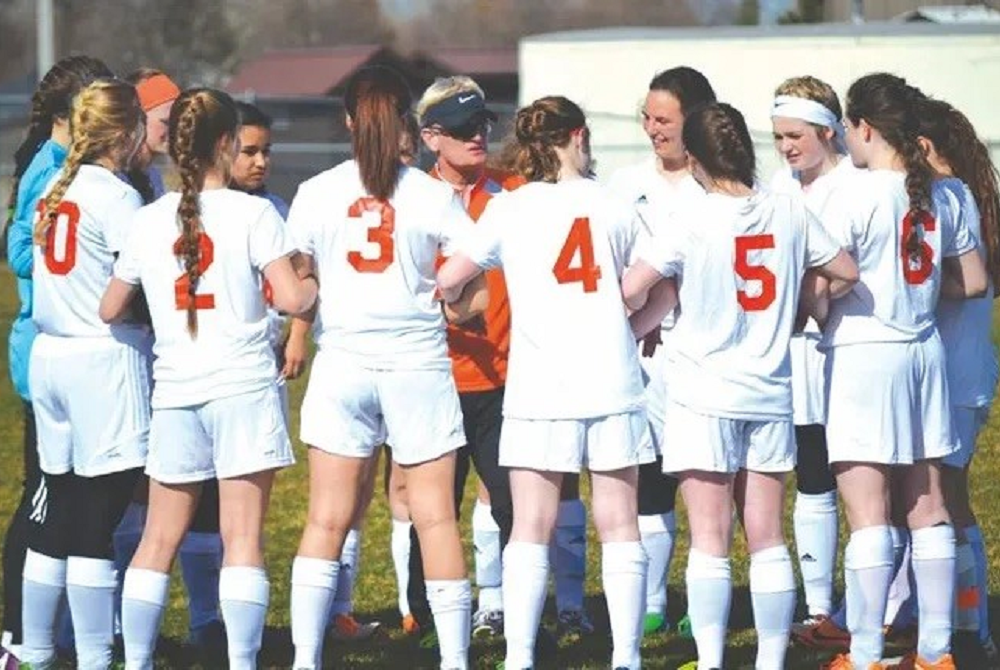
Stormy is Mark Stormzand, and he may be joined often by his regular referee partner, Alan Granger. Stormzand, one of many members in his family nicknamed Stormy, got the Chiefs girls soccer program started in 1997 after one year as a club. At the time, he was also an assistant coach on the school’s boys team.
His career included 217 total victories, seven District titles, six conference titles, and eight players who went on to play college soccer. He spent two seasons assisting the boys.
But he started another career in 1999. He became a soccer referee. He is still doing it today, which is why the Chiefs definitely will see him on their home field or somewhere else nearby this season.
Like many officials, Stormzand started using the whistle because he really just wanted to be a part of the game.
“I started with just boys soccer because I was coaching the girls,” Stormzand recalled. “I just wanted to be part of the game when I wasn’t coaching.
 “I love being around young athletes,” he continued. “And, I enjoy helping.”
Now at 69 years young, Stormzand plans to stay with officiating as long as most officials try.
“Like all of us, until my body won’t,” he says of his when he’ll leave the pitch. “Every year I keep thinking I am surprised I am still doing this.”
Stormzand is glad he started officiating. It has helped fill a void after coaching. It also helped fill a void in his personal life.
In 2015, his wife Gail died after battling breast cancer.
“We had been together since we were 15 years old,” said Stormy. “She was inspirational for my coaching … my kids loved her, and she was always a part of our team.”
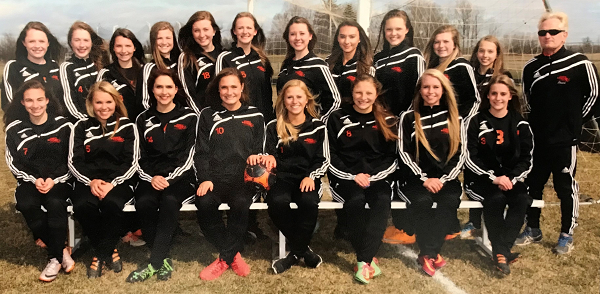
Stormzand noted he’s had many great players and great teams over the years — all of which he credits with teaching him more than he taught — but the team from the spring of 2015 is at the top of the list. His wife’s passing came two months before the start of practice.
That team filled the greatest void in his life.
“I kept telling myself if I could make it to soccer season, I can make it,” Stormzand recalled. “They were my life ring by a long shot.
“The team that year was unbelievable with their sensitivity and concern and respect,” he continued. “I was just awestruck of how mature this group of 20 girls were dealing with me and my situation. … I will never forget them.”
Stormzand went on to coach the girls team three more springs as he officiated boys in the fall. He remarried in September of 2018, right after giving up the helm of the program he started.
“It was a dark day for Cheboygan girls soccer when Mark resigned,” said Jason Friday, Cheboygan’s athletic director. “He was one-of-a-kind.
“He just had a way of making every player, no matter what role they had, feel special,” Friday went on. “Year after year, the team chemistry and camaraderie was second to none.”
Stormzand also retired from 45 years in the forestry business. He’s seen a lot of changes in high school soccer, and he admits he picked up things officiating that made him a better coach.
 “When I ref’d, I’d see stuff other coaches did and I’d incorporate that into my thinking and coaching,” he said. “Ref’ing made me a better coach, and coaching me a better ref.”
Among his favorite places to referee now are Cheboygan and Mackinac Island. He and Granger have taken the ferry to Mackinac Island for Friday evening and Saturday morning contests for about 10 years.
They’ve enjoyed the opportunity to get to know the Islanders on the pitch as well as the visiting team’s players. Many teams have middle schoolers on the roster, allowing the teams, coaches and referees to become more familiar with each other than they would during just the high school years.
Stormzand and Granger love the spirit of the game on the Island, especially when rivals are in town. Most all the games feature co-ed squads.
“It’s all the positive parts of sports,” Stormy said. “It is just fun — pure sport.
“You can learn the kids’ names, and you’re with them for six years and all their brothers and sisters,” he said. “It’s a very fun community place to ref, especially on a Friday night when they’re playing rivals like Beaver Island.”
Stormy admits he has enjoyed coaching more than officiating so far. But he doesn’t miss sitting on the sidelines in less-than-desirable spring weather. He recalls one season of wearing a raincoat for every match until the District Final.
Running on the pitch helps deal with the difficult weather. He’s seen many officials, players and coaches struggle with the weather conditions, especially when the Chiefs occasionally played at the Coast Guard Cutter Station field.
“We would play there periodically because the high school field had too much snow on it,” he said. “The Straits (of Mackinac) would still be frozen, and you’d have this mist coming off the Straits.
‘Some teams would show up without warmups, and it would be like 32 degrees and cold fog.”
 Tom Spencer is a longtime MHSAA-registered basketball and soccer official, and former softball and baseball official, and he also has coached in the northern Lower Peninsula area. He previously has written for the Saginaw News, Bay County Sports Page and Midland Daily News. He can be reached at [email protected] with story ideas for Manistee, Wexford, Missaukee, Roscommon, Ogemaw, Iosco, Alcona, Oscoda, Crawford, Kalkaska, Grand Traverse, Benzie, Leelanau, Antrim, Otsego, Montmorency, Alpena, Presque Isle, Cheboygan, Charlevoix and Emmet counties.
PHOTOS (Top) Mark Stormzand talks things over with his 2017 team during his time leading the Cheboygan girls soccer program. (Middle) Stormzand, now with more than two decades as an official. (Below) The 2015 team always will hold a place close to Stormzand’s heart. (Top photo courtesy of the Cheboygan Daily Tribune; middle and below photos submitted by Mark Stormzand.)