

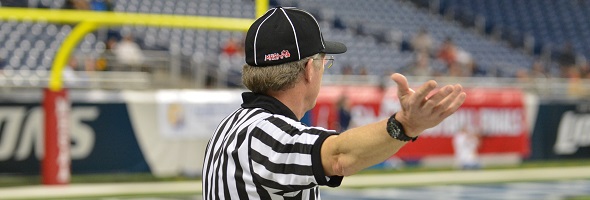
Be the Referee: Soccer Rule Change
September 13, 2018
In this week's edition, MHSAA officials coordinator Sam Davis explains a significant change in soccer regarding fouls in the penalty area.
Be The Referee is a series of short messages designed to help educate people on the rules of different sports, to help them better understand the art of officiating, and to recruit officials.
Below is this week's segment – Soccer Rules Change - Listen
There’s a big change in soccer rules this year on plays where a defender denies an obvious goal-scoring opportunity within his or her own penalty area.
The penalty has been amended depending on whether or not the referee determines that the defensive player was attempting to play the ball when committing the foul. If so, the defender will receive a yellow card rather than a red card – and a penalty kick will be awarded. This eliminates the previous double jeopardy on the play – a P-K and a red card.
Of course, in those circumstances where there was no attempt to play the ball, the defender is still disqualified. This brings the high school rule in line with college and international rules.
Past editions
September 3: You Make the Call: Face Guarding - Listen
August 30: 40-Second Play Clock - Listen
August 23: Football Rules Changes - Listen
Be the Referee: Football Rules Changes
August 23, 2018
In this week's edition, assistant director Brent Rice discusses a pair of rules changes coming to high school football this fall.
Be The Referee is a series of short messages designed to help educate people on the rules of different sports, to help them better understand the art of officiating, and to recruit officials.
Below is this week's segment – Football Rules Changes - Listen
The biggest rules changes in high school football across the country this year involve player safety.
When any required player equipment is missing or worn improperly, an official's time-out shall be declared, and the player must come out of the game for one down. This includes players not wearing knee or thigh pads or rolling their pant legs up over their knees and equipment such as shoulder pads or back pads being exposed.
The other change continues to hone the definition of a defenseless player, this time affecting the quarterback once he has thrown the ball and becomes a passer. Until that time, he is defined as a runner. As a passer, he continues to be defenseless until the pass ends or he moves to participate in the play.
The penalty for hitting a defenseless player is 15 yards.