


Be the Referee: Soccer Rule Change
September 13, 2018
In this week's edition, MHSAA officials coordinator Sam Davis explains a significant change in soccer regarding fouls in the penalty area.
Be The Referee is a series of short messages designed to help educate people on the rules of different sports, to help them better understand the art of officiating, and to recruit officials.
Below is this week's segment – Soccer Rules Change - Listen
There’s a big change in soccer rules this year on plays where a defender denies an obvious goal-scoring opportunity within his or her own penalty area.
The penalty has been amended depending on whether or not the referee determines that the defensive player was attempting to play the ball when committing the foul. If so, the defender will receive a yellow card rather than a red card – and a penalty kick will be awarded. This eliminates the previous double jeopardy on the play – a P-K and a red card.
Of course, in those circumstances where there was no attempt to play the ball, the defender is still disqualified. This brings the high school rule in line with college and international rules.
Past editions
September 3: You Make the Call: Face Guarding - Listen
August 30: 40-Second Play Clock - Listen
August 23: Football Rules Changes - Listen
Be the Referee: Minimum Number of Volleyball Players
By
Paige Winne
MHSAA Director of Brand Management
September 29, 2026
Be The Referee is a series of short messages designed to help educate people on the rules of different sports, to help them better understand the art of officiating, and to recruit officials.
Below is this week's segment – Minimum Number of Volleyball Players - Listen
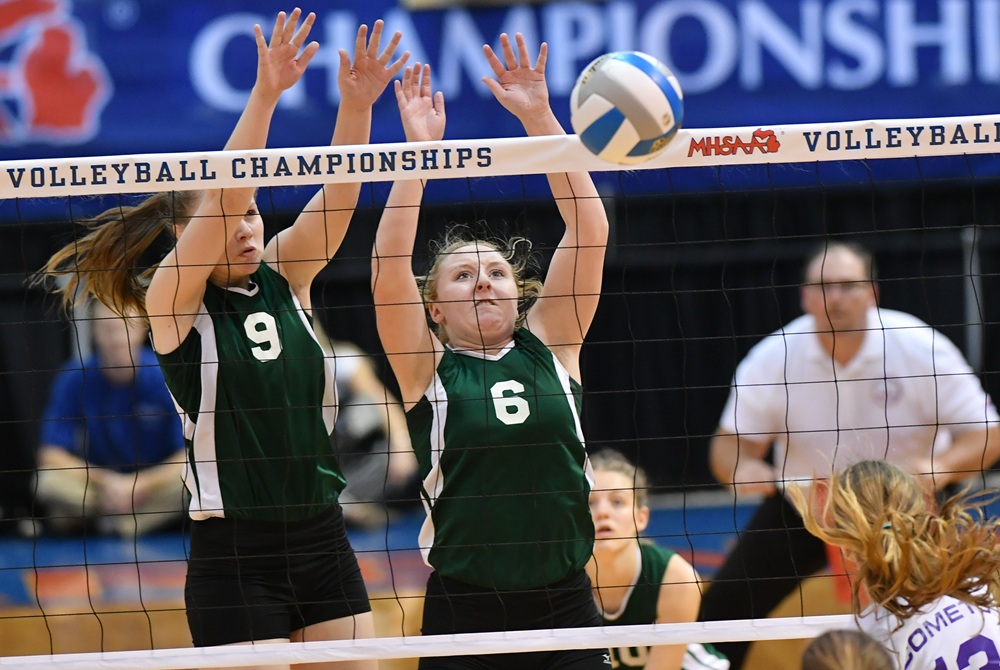
We’re on the volleyball court today, where the home team starts the match with only six players.
Midway through the first set, one of those six players suffers an ankle injury and can’t continue – leaving the home team with just five players.
What should happen?
Is the home team forced to default the match for not having enough players?
Does the home team just continue playing with five?
Or do they continue playing with five, but with the loss of rally or point every time the player lost to injury’s position rotates to serve?
If you said they can continue playing but lose a rally or point every time the injured player’s position rotates to serve, you are correct!
A minimum of six is needed to start – but you can finish a match with fewer than that.
Previous 2026-27 editions
Sept 22: Soccer Changes - Listen
Sept: 15: Dead Ball Penalty - Listen
Sept. 8: Libero Ejected - Listen
Sept. 1: Soccer Foul After Shot on Goal - Listen
Aug. 25: Fumble Out of Bounds - Listen