


Be the Referee: Spearing
September 3, 2015
This week, MHSAA assistant director Mark Uyl explains the expanded definition of spearing added for football this season.
Be The Referee is a series of short messages designed to help educate people on the rules of different sports, to help them better understand the art of officiating, and to recruit officials.
Below is this week's segment - Spearing - Listen
One of the new changes to the high school football rules for this year is an expanded definition of spearing an opponent with the helmet. With all the attention on player safety and reducing the head-to-head collisions between players, this new definition of illegal helmet contact will better help officials, coaches, players and fans with what is illegal and must be penalized by rule.
Simply put, a spearing foul has taken place when any player hits an opponent with the crown, or top portion, of his helmet as the first point of contact. These fouls where contact has been initiated by a player first with the crown of the helmet must be called and enforced consistently throughout the season.
Past editions:
Aug. 27: Missed Field Goal - Listen
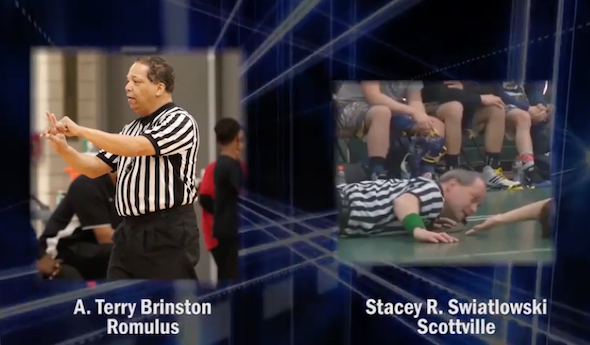
Officials Honored for Service Milestones
By
Geoff Kimmerly
MHSAA.com senior editor
June 25, 2020
The MHSAA annually honors high school game officials with 20, 30, 40, 45 and 50 years of service at its Officials’ Awards & Alumni Banquet.
However, this spring’s banquet was canceled due to COVID-19. Instead, we present this virtual recognition for 322 officials who celebrated a milestone school year.
Twenty-three officials with 50 years of service are honored below, along with 55 officials with 45 years. A 40-year award has been presented to 55 officials. In addition, 108 officials with 30 years and 181 officials with 20 years of experience are honored.