

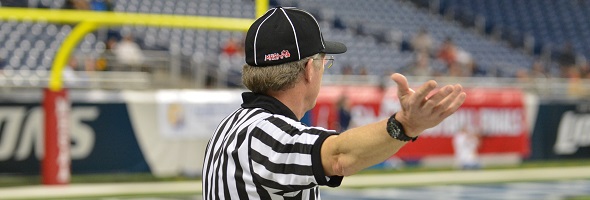
Be the Referee: Trickery & Communication
October 24, 2018
This week, MHSAA officials coordinator Sam Davis explains a key piece of communication that takes place between football referees and coaches during pregame.
Be The Referee is a series of short messages designed to help educate people on the rules of different sports, to help them better understand the art of officiating, and to recruit officials.
Below is this week's segment – Trickery & Communication - Listen
One of the long-time strategies in the game of football is deception. It has lots of other names, and most often goes these days by the name of trickery. Catching an opponent off-guard can break a game wide open. But catching the officiating crew off-guard is something you don’t want to have happen or else your big play may be blown dead inadvertently.
That’s why during the pre-game meeting the officiating crew has with each head coach, one of the questions that will be asked is – “Coach, do you have any trick plays we should be watching for?” And coaches, who are usually tight lipped about a lot of their strategies, will be very open and describe in detail anything fancy that’s in the playbook for that game.
This type of communication gets coaches and officials on the same page and ensures that when trickery comes visiting, only the opponents are surprised.
Past editions
October 18: Punts & Missed Field Goals - Listen
October 11: What Officials Don't Do - Listen
October 4: Always 1st-and-Goal - Listen
September 27: Unique Kickoff Option - Listen
September 20: Uncatchable Pass - Listen
September 13: Soccer Rules Change - Listen
September 6: You Make the Call: Face Guarding - Listen
August 30: 40-Second Play Clock - Listen
August 23: Football Rules Changes - Listen

Be the Referee: Why No Shot Clock?
January 4, 2018
In this week's edition, assistant director Mark Uyl explains why Michigan, and many other states, have chosen to not adopt a shot clock for basketball.
Be The Referee is a series of short messages designed to help educate people on the rules of different sports, to help them better understand the art of officiating, and to recruit officials.
Below is this week's segment – Why No Shot Clock - Listen
One of the more hotly debated topics in world of high school basketball over the last six or seven years has been the topic of the shot clock. There are some parts of the country that advocate the use of a shot clock. However, Michigan along with many of the other Midwest states, have opposed adding the shot clock to high school basketball.
One reason is the feedback we get from our basketball coaches that the shot clock is not needed or necessary. That by adding this new rule, it would not improve or increase the level of play at the high school level. Plus, there are logistical considerations at all schools, that if we used the shot clock would have to have personnel to run that equipment correctly.
Past editions
December 21: Coaches Responsible for Equipment - Listen
December 14: Mentoring New Officials - Listen
December 7: Dive on the Floor - Listen
November 30: Wrestling Weight Monitoring - Listen
November 23: Ejections - Listen
November 16: Toughest Call - Listen
November 9: Hurdling - Listen
November 2: The Survey Says - Listen
October 26: Helmet Comes Off - Listen
October 19: Goal Line Rules - Listen
October 12: No 1st-Year Fee - Listen
October 5: Athletic Empty Nesters - Listen
September 28: Misunderstood Football Rules: Kicking - Listen
September 21: Preparation for Officials - Listen
September 14: Always Stay Registered - Listen
September 7: Other Football Rules Changes - Listen
August 31: Pop-Up Onside Kicks - Listen
August 24: Blindside Blocks - Listen