

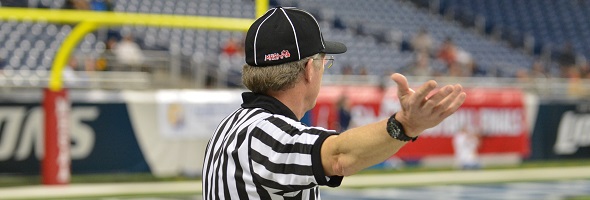
Be the Referee - Unique Kickoff Option
September 27, 2018
This week, MHSAA officials coordinator Sam Davis explains a little-known option unique to high school football regarding kickoffs.
Be The Referee is a series of short messages designed to help educate people on the rules of different sports, to help them better understand the art of officiating, and to recruit officials.
Below is this week's segment – Unique Kickoff Option - Listen
Here’s a football rule you may not know about or have ever seen applied.
After a touchdown or a field goal, the opponent of the scoring team may designate which team kicks off. That’s right! The team just allowing the points can decide who will kick off.
Now why would a team want to do that? Strategically, a team may elect to pin the other team deep in its own end with its own kicker late in a close game rather than risk successfully receiving an onside kick.
Though it is not often used by teams, it is a very clever way to manage the game. I’m sure the national rules makers had other reasons, but now you know about a unique rule that’s unique to high school football.
Past editions
September 20: Uncatchable Pass - Listen
September 13: Soccer Rules Change - Listen
September 6: You Make the Call: Face Guarding - Listen
August 30: 40-Second Play Clock - Listen
August 23: Football Rules Changes - Listen
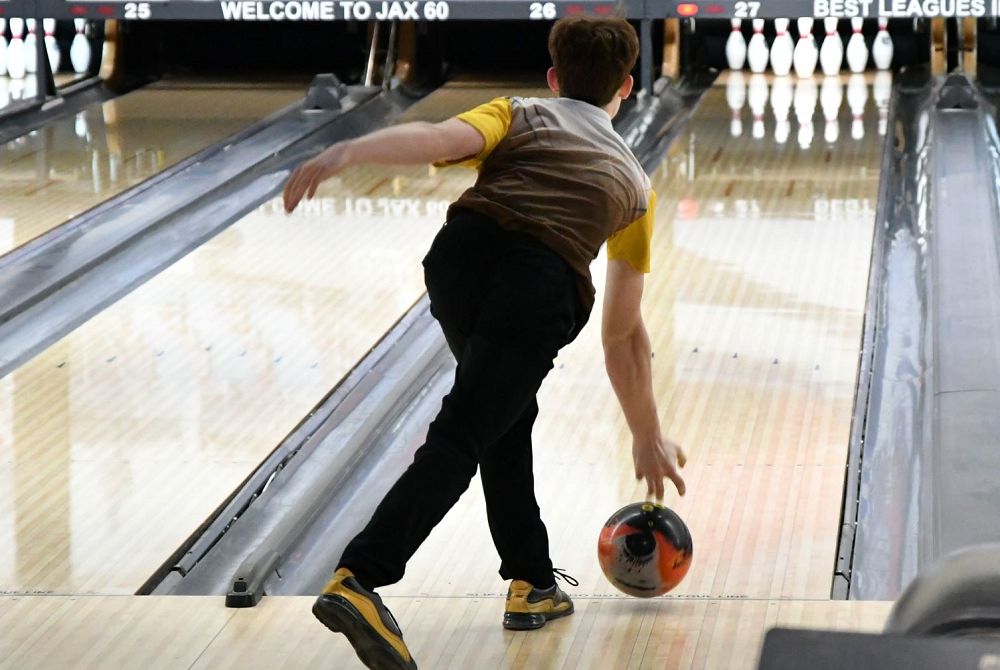
Be the Referee: Baker Bowling
By
Paige Winne
MHSAA Director of Brand Management
February 28, 2023
Be The Referee is a series of short messages designed to help educate people on the rules of different sports, to help them better understand the art of officiating, and to recruit officials.
Below is this week's segment – Baker Bowling - Listen
What happens if a player bowls out of turn during a Baker game?
First – what’s a Baker game? That’s when the five members of a team alternate bowling frames. The number one bowler goes in frames 1 and 6 … and on down the line.
If a bowler goes out of turn during MHSAA competition, in accordance with USBC Rule 8, Item d, a dead ball would be declared – the delivery does not count, the pins must be re-spotted, and the correct bowler is then required to continue play.
While a recent change to NCAA Bowling rules would penalize bowling out of order on the wrong lane with a zero for the attempt starting with the first infraction, the NCAA rule is not used for MHSAA competition.
Instead, the frame is re-set, and the correct bowler is free to continue.
Previous Editions:
Feb. 21: Ski Finish - Listen
Feb. 14: Swimming Touchpads - Listen
Feb. 7: In or Out-of-Bounds in Wrestling - Listen
Jan. 31: Over the Back - Listen
Jan. 24: Competitive Cheer Judges - Listen
Jan. 17: More Lines - Listen
Jan. 10: On the Line - Listen
Jan. 3: Basketball Measurements - Listen
Dec. 13: Pregame Dunks - Listen
Dec. 6: Gymnastics Judges - Listen
Nov. 22: Football Finals Replay - Listen
Nov. 15: Back Row Illegal Blocker - Listen
Nov. 8: Swim Turn Judges - Listen
Nov. 1: Soccer Referee Jersey Colors - Listen
Oct. 25: Cross Country Tie-Breaker - Listen
Oct. 18: Soccer Shootouts - Listen
Oct. 11: Safety in End Zone - Listen
Oct. 4: Football Overtime Penalty - Listen
Sept. 27: Kickoff Goal - Listen
Sept. 20: Soccer Timing - Listen
Sept. 13: Volleyball Replays - Listen
Sept. 6: Switching Sides - Listen
Aug. 30: Play Clock - Listen
Aug. 23: Intentional Grounding Change - Listen