

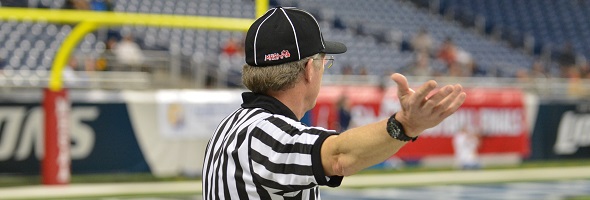
Be the Referee: What Officials Don't Do
October 11, 2018
This week, MHSAA officials coordinator Sam Davis discusses some of the things that do not fall under officials' many game-day responsibilities.
Be The Referee is a series of short messages designed to help educate people on the rules of different sports, to help them better understand the art of officiating, and to recruit officials.
Below is this week's segment – What Officials Don't Do - Listen
Game officials at all levels have a lot of responsibilities. But there are some critical things that take place at local high school games where officials don’t have the authority that some folks think they do.
Let’s start with injuries – specifically concussions. Concussion management starts and ends with the local school. If an official suspects a concussion – or any injury – all he or she can do is notify the coach of the team. The school makes the decision about whether or not a player stays in the game.
We often get calls about whether or not an official is responsible for enforcing MHSAA Handbook rules. Again, it’s up to the school, which agrees to follow and enforce the rules when joining the Association. Even if the official suspects an ineligible player is in the game, it’s not his or her role to enforce that rule. It’s all on the school.
Past editions
October 4: Always 1st-and-Goal - Listen
September 27: Unique Kickoff Option - Listen
September 20: Uncatchable Pass - Listen
September 13: Soccer Rules Change - Listen
September 6: You Make the Call: Face Guarding - Listen
August 30: 40-Second Play Clock - Listen
August 23: Football Rules Changes - Listen
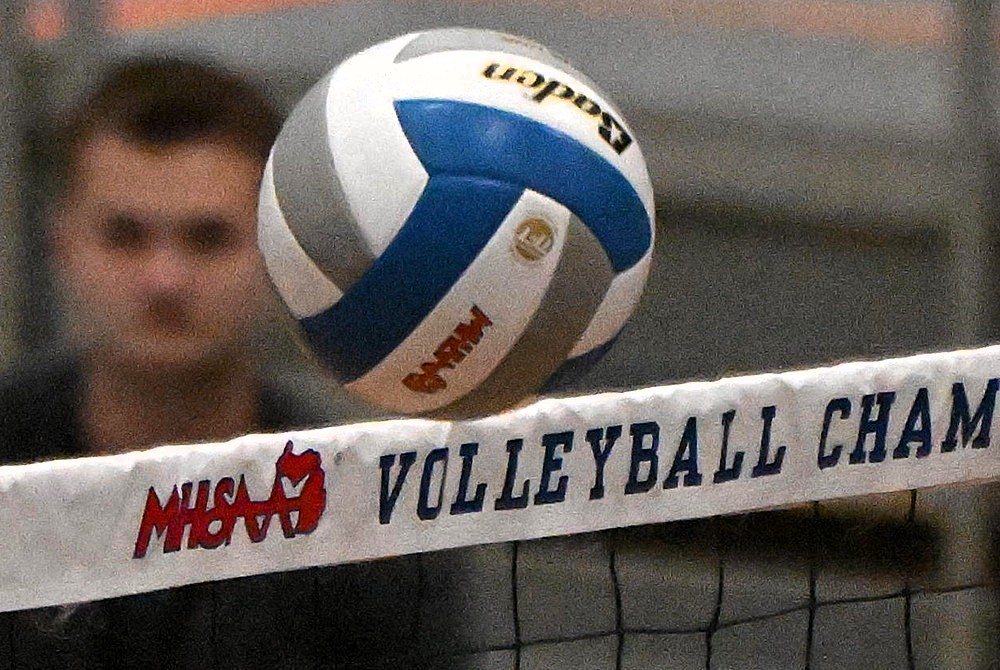
Be the Referee: Libero Ejected
By
Paige Winne
MHSAA Director of Brand Management
September 8, 2026
Be The Referee is a series of short messages designed to help educate people on the rules of different sports, to help them better understand the art of officiating, and to recruit officials.
Below is this week's segment – Libero Ejected - Listen
We’re on the volleyball court today, where the home team only had one libero listed.
In the middle of the first set, that libero is disqualified for making vulgar comments to the first referee.
Can the home team now designate a new libero? Or do they play without a libero for the rest of the match? Or for just the rest of that set before picking a new libero?
If you said they must play the rest of the set without a libero and then can designate a new one before the start of the second set, you are correct.
Remember, a libero is a back-row defensive specialist who focuses on passing and digging. They can’t attack the ball above the net or play on the front row – but can substitute in and out freely for back-row players without counting against official substitution limits.
Previous 2026-27 editions
Sept. 1: Soccer Foul After Shot on Goal - Listen
Aug. 25: Fumble Out of Bounds - Listen