

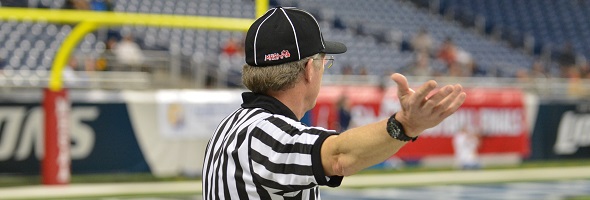
Be the Referee: YMTC - Face Guarding
September 6, 2018
In this week's edition, MHSAA officials coordinator Sam Davis takes us through a "You Make the Call" scenario regarding football face guarding.
Be The Referee is a series of short messages designed to help educate people on the rules of different sports, to help them better understand the art of officiating, and to recruit officials.
Below is this week's segment – You Make the Call: Face Guarding - Listen
Let’s check out your knowledge of high school football rules with a “you make the call.”
The quarterback drops back to pass, and his intended receiver gets a step on the cornerback. As the ball approaches the receiver, the defensive player sticks his hands and arms out in front of the receiver’s face without contact. The receiver loses sight of the ball, and the pass falls to the ground.
What’s the call?
A national high school playing rule instituted last year removed the penalty for face guarding without contact. The change brought high school football rules in line with collegiate and professional rules. The pass is incomplete and there is no flag for defensive pass interference.
Past editions
August 30: 40-Second Play Clock - Listen
August 23: Football Rules Changes - Listen
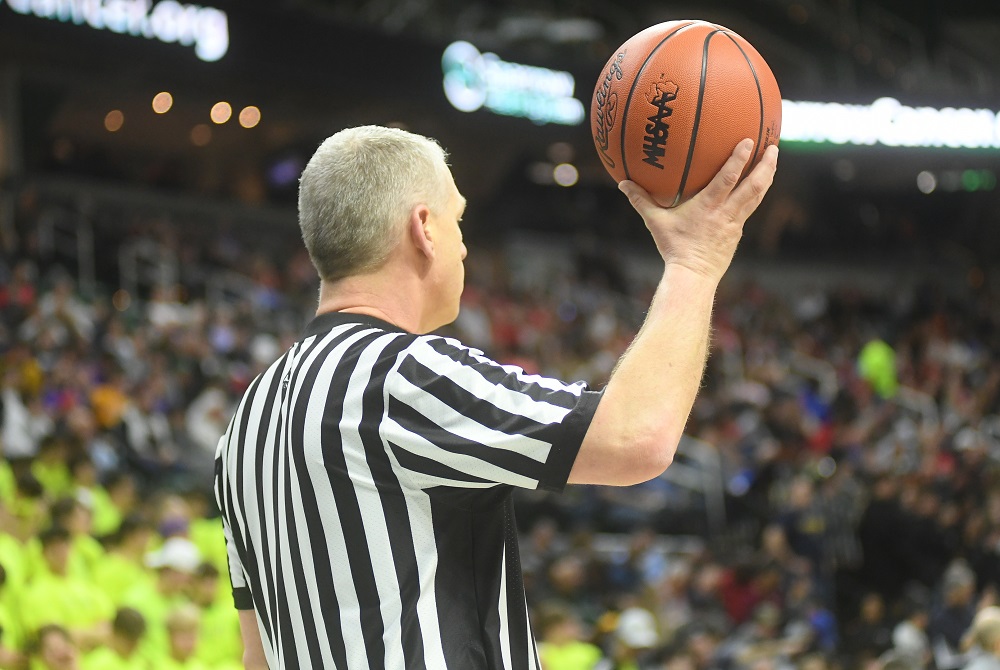
Be the Referee: Pregame Dunks
By
Sam Davis
MHSAA Director of Officials
December 13, 2022
Be The Referee is a series of short messages designed to help educate people on the rules of different sports, to help them better understand the art of officiating, and to recruit officials.
Below is this week's segment – Pregame Dunks - Listen
Both basketball teams are on the court warming up before the game starts. All three officials are on the floor, as teams are in their traditional lay-up lines.
In an attempt to get their fans fired up, a player for the home team dunks it when it’s his turn in line, followed by a teammate also dunking one.
Can they do that? What’s the call?
Once the officials are on the floor, as they are in this example, they should assess a technical foul to any player who dunks in pregame warmups. In this case, the visiting team would receive four free throws to start the game – two for each dunking violation – and would start with possession. The technical fouls would also count as personal fouls and count towards the team foul count. And the head coach would receive an indirect technical foul.
Dunking or grabbing the rim during warmups is not allowed.
Previous Editions:
Dec. 6: Gymnastics Judges - Listen
Nov. 22: Football Finals Replay - Listen
Nov. 15: Back Row Illegal Blocker - Listen
Nov. 8: Swim Turn Judges - Listen
Nov. 1: Soccer Referee Jersey Colors - Listen
Oct. 25: Cross Country Tie-Breaker - Listen
Oct. 18: Soccer Shootouts - Listen
Oct. 11: Safety in End Zone - Listen
Oct. 4: Football Overtime Penalty - Listen
Sept. 27: Kickoff Goal - Listen
Sept. 20: Soccer Timing - Listen
Sept. 13: Volleyball Replays - Listen
Sept. 6: Switching Sides - Listen
Aug. 30: Play Clock - Listen
Aug. 23: Intentional Grounding Change - Listen