


Beyond Fairness
April 11, 2017
One of the lessons I learned decades ago when I was employed at the National Federation of State High School Associations (NFHS) is that sometimes the playing rules are not fair.
The NFHS is the publisher of playing rules for most high school sports, and its rule books govern competition for most of the contests for most of the high schools in the U.S.
But the NFHS doesn’t publish the most fair rules. On purpose.
The rules for the high school level attempt to do much more than promote competitive equity, or a balance between offense and defense; they also attempt – without compromising participant health and safety – to simplify the administration of the game.
Unlike Major League Baseball, where umpires officiate full-time, and professional basketball, football and ice hockey where they officiate nearly full-time, the officials at the high school level are part-timers. They have other jobs. This is their avocation, not their vocation.
So the NFHS develops and publishes rules that minimize exceptions to the rules. In football, for example, there are fewer variables for determining the spot where penalties are enforced.
At the high school level, the rule makers intend that the rules be – for players, coaches and officials alike – quicker to learn, simpler to remember, and easier to apply during the heat of contests.
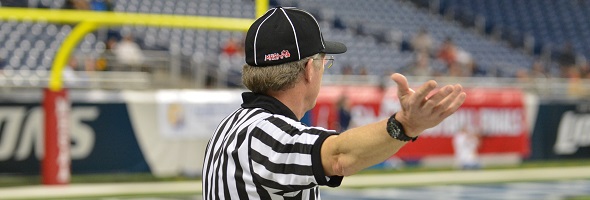
Be the Referee: Ejections
November 24, 2017
In this week's edition, assistant director Mark Uyl discusses the penalties that come with a player or coach ejection.
Be The Referee is a series of short messages designed to help educate people on the rules of different sports, to help them better understand the art of officiating, and to recruit officials.
Below is this week's segment – Ejections - Listen
Good sportsmanship is at the foundation of what high school sports is all about. Whenever a coach or player is ejected for unsportsmanlike conduct or behavior, that individual is suspended for the rest of that day of competition.
In some sports, that means that they’re done for the rest of that game on that day; or in sports where there are doubleheaders or tournament play involved, the person is disqualified from that entire day of competition.
The rule then also requires that the coach or player is ineligible for the subsequent day of competition, essentially being a one-day suspension for anyone who is ejected.
Past editions
November 16: Toughest Call - Listen
November 9: Hurdling - Listen
November 2: The Survey Says - Listen
October 26: Helmet Comes Off - Listen
October 19: Goal Line Rules - Listen
October 12: No 1st-Year Fee - Listen
October 5: Athletic Empty Nesters - Listen
September 28: Misunderstood Football Rules: Kicking - Listen
September 21: Preparation for Officials - Listen
September 14: Always Stay Registered - Listen
September 7: Other Football Rules Changes - Listen
August 31: Pop-Up Onside Kicks - Listen
August 24: Blindside Blocks - Listen