


Counting On Officials
August 26, 2014
In addition, a half dozen local officials associations have developed programs that regularly support their closest CMN facility. For example:
- The Metro Detroit Officials Association sponsors the Referees for Reading Program at Beaumont where monies raised help fund a pediatric ward book cart which is replenished annually with new titles for patients and parents to enjoy. The MDOA has sent its members to the pediatric unit to read to young patients. This year, the Eighth Annual MDOA Officials for Kids Golf Outing was held in Livonia, benefiting Beaumont Children’s Hospital and the reading program.
- The West Michigan Officials Association has included Officials for Kids in its annual community service initiatives for several years, assisting with a Helen DeVos Children’s Hospital event for visually impaired pediatric patients in Grand Rapids.
- The West Michigan Volleyball Officials Association has used the proceeds of an annual volleyball invitational it hosts to support Officials for Kids.
- Several associations, including the Capital Area Officials Association this spring, have sponsored a “Give-A-Game” event during the season where all officials on the same day contribute their game fees to Officials for Kids.
People can say what they want about sports officials. For my part, if my car breaks down anywhere in Michigan and I’m in need of quick assistance, I’ll check my officials directory. I know there will be an official nearby that I can count on.
Be the Referee: Football Finals Replay
By
Sam Davis
MHSAA Director of Officials
November 22, 2022
Be The Referee is a series of short messages designed to help educate people on the rules of different sports, to help them better understand the art of officiating, and to recruit officials.
Below is this week's segment – Football Finals Replay - Listen
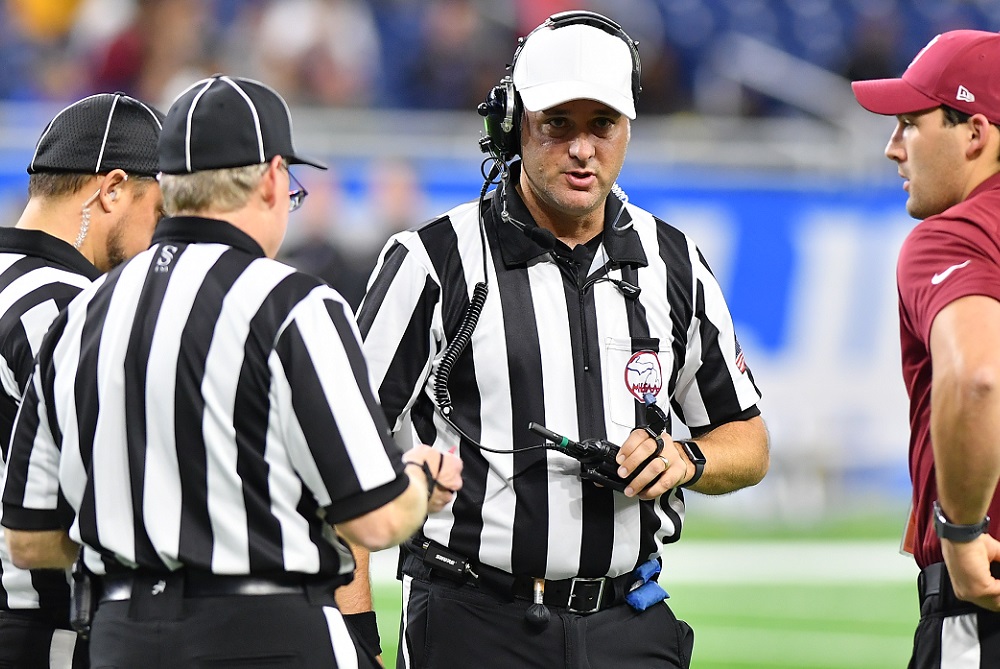
There’s a change to the instant replay process for the Football Finals at Ford Field.
All potential scoring and turnover plays will continue to be automatically reviewed. But new this year, coaches will be allowed to challenge one play per regulation, with some restrictions.
First, a team must have a time-out available and call it to initiate a review.
Second, there are a limited number of items that can be reviewed. Those include catch or no catch. Ball carrier in or out of bounds. Forward or backward pass. And a handful of others.
If successful, the coach will be given back the timeout and can make one more challenge in regulation.
In overtime, coaches can challenge once, no matter how many overtime periods are played – and only if they have a time out.
Previous Editions:
Nov. 11: Back Row Illegal Blocker - Listen
Nov. 4: Swim Turn Judges - Listen
Oct. 25: Soccer Referee Jersey Colors - Listen
Oct. 18: Cross Country Tie-Breaker - Listen
Oct. 11: Soccer Shootouts - Listen
Oct. 11: Safety in End Zone - Listen
Oct. 4: Football Overtime Penalty - Listen
Sept. 27: Kickoff Goal - Listen
Sept. 20: Soccer Timing - Listen
Sept. 13: Volleyball Replays - Listen
Sept. 6: Switching Sides - Listen
Aug. 30: Play Clock - Listen
Aug. 23: Intentional Grounding Change - Listen