

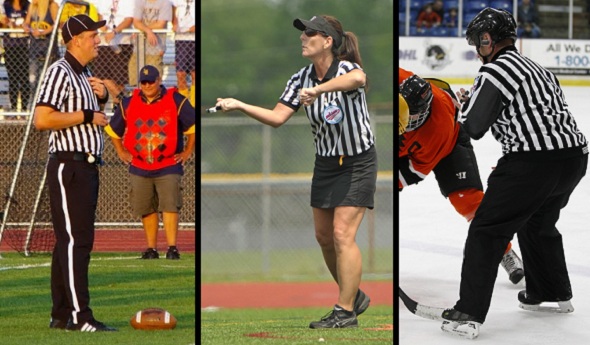
Making - and Answering - the Call
September 28, 2012
By Rob Kaminski
benchmarks editor
“Life is a game with many rules but no referee. Small wonder, then, that so many play dirty, that so few win, that so many lose.” – Joseph Brodsky, Russian Poet and Essayist
To varying degrees, the world of athletics mirrors society. There are winners and losers. There are participants who look for ways to skirt the rules. However, in considering Mr. Brodsky's quotation above, there is one glaring difference between sports and life. Our games do have referees. Because of that, dirty play is less rampant and our games have more winners than losers, for the scoreboards only tell part of the story. There are lessons in winning and losing within the framework of enforced rules, lessons which equip young people with the tools to make society a little better in the future.
In life, the deck is stacked in favor of the players. According to one 2010 census, there were 1.8 police officers per 1,000 citizens in Michigan, a ratio which ranked 40th in the United States.
In contrast, during the 2011-12 school year, there were 37.2 registered MHSAA officials per 1,000 high school participants. Maybe, just maybe, that’s why school sports are at odds with Brodsky’s depiction of society; there are simply more cops on the beat.
At the very least, officials play a vital role in the existence of school sports. The games can’t go on without these men and women, and the MHSAA annually seeks improved recruitment and retention methods to promote growth of this group so integral to the health of its product.
They answer the call
So who are these people whose best work goes unnoticed; of whom perfection is the expectation; and who automatically alienate 50 percent of interested parties each time they make a decision? Who applies for this job? Why are some suited for the task, and others not? Asking why people leave the officiating life can often reveal just as many clues as talking to those who stay.
 In 2004, the MHSAA conducted a survey targeting former officials to reveal their reasons for leaving the avocation and ask what might be done to bring them back.
The top three reasons people hung up their whistles or other tools of the trade were as follows: 1) career change/job demands; 2) poor sportsmanship by coaches and fans; 3) local association politics. Time spent away from family was also cited as a prime reason for leaving the games.
Eight years later, in a survey this August, the MHSAA again called upon former officials to generate data which can be helpful in recruiting new officials or luring back “retired” veterans.
Of more than 600 respondents at press time, the consensus of comments indicate a shift in culture. Career and personal demands no longer top the chart as reasons for leaving. Today’s barometer indicates that local association politics (the ability to receive games and advance through the ranks) and a lack of adequate training for new, younger, officials rank as the prime reasons for people exiting the game relatively early in their quest.
Sportsmanship concerns for the behavior of coaches, parents and participants still rates as the second-greatest deterrent.
“It is imperative to survey our constituents on a frequent basis so we can react to the various factors which prompt trends in the industry,” said Mark Uyl, MHSAA assistant director who oversees the state’s 12,000 registered officials. “I think we’ve successfully addressed some issues based on the findings from the 2004 survey, and we expect to analyze this year’s questionnaire at length to address the most pressing issues accordingly.”
The majority of the slips filling the suggestion box from the August survey: 1) provide increased training opportunities for new officials; 2) work with local associations to create more opportunities for new people to receive a greater number of games; 3) allow officials to rate schools and coaches, and develop programs for peer evaluation, rather than receiving ratings from coaches only.
The MHSAA has made strides in tackling each issue, and this year’s data will further focus its efforts to improve the officiating environment.
In recent years, the MHSAA has conducted officials camps in basketball and football (see stories on pages 14 and 33) and created an officials video training page on MHSAA.com.
While the officials ratings still come from the schools, local approved officials associations now submit candidates for MHSAA tournament assignments, and the nominations hold more weight with the MHSAA than ever before. As a result, local associations are better evaluating their members.
Additionally, officials can now access and submit a school sportsmanship feedback form to rate school facilities and coach, player and spectator behavior. Findings from this year’s survey indicate that officials would like a more detailed system, and a greater emphasis on sportsmanship education for coaches. To that end, the MHSAA offers one of the most comprehensive coaches education programs in the nation through its Coaches Advancement Program, and offers incentives to those who register for classes, many of which tout sportsmanship.
“We also encourage local associations to communicate with leagues and conferences outside the playing boundaries,” Uyl said. “Several associations invite coaches to a meeting or two each year for honest, face-to-face discussion. We’ve also been told of schools which invite a veteran official to parents meetings or team meetings prior to the season to help explain rules and their role in the games. Conversation in these settings serve our members well and assist in breaking down barriers.”
Key to growth and improvement of MHSAA sports officials are the efforts of local approved associations.
“There is no question that any successes we enjoy as a state association are directly related to the leadership of our local associations,” Uyl said. “Through programs like our train-the-trainers sessions each summer we can put the wheels in motion, but the real grass-roots education of our men and women happens in communities throughout the state. And, the people in place to carry out our officials education are second to none.”
Recruitment starts with family
If there’s anything you’ll take from this issue of benchmarks, it’s that there are no better recruiters, – no more qualified individuals to blare the trumpets – than officiating’s own family members. It’s a recurring theme repeated by numerous individuals.
Carl Van Heck, assigner for the West Michigan Umpires Association, said his association attempts to identify MHSAA-registered umpires in the area not currently members of the WMUA and invite them to join. His association also attracts a few individuals per year through an ad in the Grand Rapids Press. The real recruitment and retention begins once the rookies are in the association.
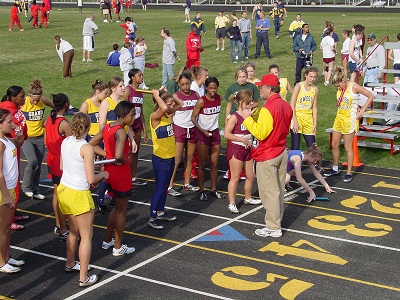 “Our executive board recently voted to install a mentoring program which will pair a veteran official to work a number of games with a new official to get him or her started on the right foot,” said Van Heck. “This is on a voluntary basis for both the veteran and the newcomer, and they are assigned these games in addition to their regular schedule.
“We also conduct an annual clinic on a Saturday at Grand Valley State University that is free to all of our members. We want the best-trained umpires both new and old to put on the field for the schools we work for.”
That’s the hook; making new officials feel comfortable while increasing their skill level and affording them ample opportunities to work.
While much of this responsibility falls to the local level, much is also expected of the MHSAA to assist in this process.
“The biggest obstacles young referees face in officiating high school soccer matches are legalistic rule changes, lack of expert feedback and lack of opportunity,” said Alex Smith, president of the Greater Lansing Area Soccer Referees Association. Smith opines that onfield issues in soccer are often met with the addition of a new rule, and in many instances there aren’t enough knowledgeable leaders to assist the younger soccer officials.
“For excited young or new referees looking to improve, there are few, if any, options for unbiased or expert feedback for them to consult,” Smith said, while adding that continued efforts between GLASRA and the MHSAA could soothe development issues.
“Certainly, in recent years GLASRA and others have given MHSAA credit for beginning to address these weaknesses. It's our hope that MHSAA continues to refine, streamline and improve its development and retention of new officials,” Smith said.
Uyl agrees, and welcomes input from all entities around the state.
“Some of the areas identified from GLASRA and other associations in other sports continue to be on the radar for improvement and change,” Uyl said. “Frank, honest and professional feedback is the only way we can keep moving forward in the right direction together with all of our officials.”
Onward and upward
At times, it seems, the biggest roadblock to officials advancement is officials themselves, resulting from a collision of two eras.
When it comes to younger officials proclaiming a lack of training opportunity and game assignments, how much of it is a reflection of societal change? Newer officials are raised in a world of instant gratification; from fast food, to satellite TV, to smart phones and the Internet, they are of the culture that gets anything it wants, when it wants.
Older officials, who tend to be the assigners, have an understanding of what it takes to work the highest levels of a sport. They know what they’ve been through to move up the ranks, and they know who they’ve moved up with. It becomes a matter of trusting the known, and being suspicious of the unknown. Yes, at times, the industry can be a “good ol’ boy network.”
The challenge is to make sure the new kids are aware of existing training opportunities and the investment necessary for advancement, while opening the veterans’ eyes to a pool of new talent and identifying those best suited to lead the neophytes.
“Again, I think this is an area that’s improving as we try to encourage our leaders around the state to take ownership in the development of our young officials,” Uyl said. “We constantly encourage our associations to nominate ‘new blood’ for our tournaments, and I think associations can take pride in turning out young people who are knowledgeable, physically fit and passionate about this business we’re in. It’s a people business, first and foremost, so it’s paramount that our own kind work together.”
As mentioned, the MHSAA began seeking greater input from approved associations for its tournament selection a few years back. While the coaches rating system still serves as one of the gauges, the ratings are not the be-all, end-all when it comes to assignments. Local associations need to take that lead.
“We promote our officials from the subvarsity level to the varsity level based on ratings, and there is a lack of ratings from our local schools for officials working on the subvarsity level,” Van Heck said. “We tend to lose officials who after the third year are not advancing due to lack of ratings.”
The WMUA’s new mentor program can serve to change the culture there. As more feedback is gathered from veteran officials working with the newcomers, less weight can be attached to coaches ratings which seldom arrive.
In any line of work, people want to be rewarded for their efforts, or, at the very least, appreciated by their peers. If it’s motivation, education and affirmation that young officials are seeking, there will be no better place to look than Grand Rapids next July. A day-long event tailored to high school officiating in Michigan takes place Saturday, July 27, preceding the 2013 National Sports Officials Association Summit. All registered MHSAA officials are encouraged to attend. Registration information will be posted to MHSAA.com later this fall.
Last call
Survey examines reasons for calling it quits
Following is a sampling of responses from former officials offering reasons for leaving the playing fields and arenas, along with suggestions for retention. Complete survey results can be found on the Officials page of MHSAA.com.
- “Maybe some further education for the coaches, who in turn can educate their parents, might help the process. We, as officials, don't question the play calls of the head coach publicly. Why should it be fair for the coach to question the calls of the official publicly?”
- “Find a way to schedule officials who want to work games. People want to work, but no one wants to schedule them. I often hear it is a lack of experience, but you can't get experience unless you work games.”
- “When a new member comes on board, have an experienced official contact him or her immediately about assignments. This will make his or her first game more comfortable. Officials are team players just like those who they will officiate.”
- “The time away from family, the cost and effort to stay certified, and the commitment to staying conditioned and prepared for the level of play unfortunately does not surpass the "lack of fun" that refereeing soccer has become. A solution seems unrealistic because of the scope of the problem – but it needs to start somewhere. Great idea to send this survey and begin the process of improvement.”
- “I was woefully unprepared and lacked the knowledge necessary to be an effective official. If it weren't for an optional clinic I took part in, I would have been a disaster. A lot of that is on me, but I can't believe I was let on the field by the MHSAA considering how little training and information I was provided. Rookie officials need more shadowing and more observation before being put into a game.”
- “I just wanted to officiate middle school sports and was very comfortable with this level. I quickly learned being part of a local association of officials and going through that hoopla was more of a pain. I got a couple games because I knew the middle school administration, but that was too short-lived.”
- “Legislate how much the assigners can charge young official to attend camps. I found that the amount of instruction was not commensurate with the charge. I don't have a major problem with assigners being compensated for their organizing and other things they might being doing. However, officials should not have to break even or operate at a loss when the assigners are padding their pockets.”
- “Improve education on how to prepare for unreasonable fans, coaches and parents. Also improve on the efforts of team’s comprehension of rules. Coach and fan behavior: I’ve officiated 25-30 minor league baseball games. We take more abuse at the high school level. It just got old.”
- “I believe coaches and athletic directors should introduce graduating seniors to local associations. This would get younger people involved.”
Teaching at Heart of Norris Honoree's Work
April 17, 2019
By Geoff Kimmerly
Second Half editor
David Buck’s degree in education did not lead him into a fulltime job in the classroom.
But the longtime St. Joseph baseball umpire and basketball referee has had an undeniable impact as a teacher and trainer of officials in southwest Michigan, across the state and far beyond its borders.
Buck, one of the state’s most highly-respected officials on the court and considered among the nation’s top collegiate baseball umpires, will be recognized for his vast contributions to the high school games with the MHSAA’s Vern L. Norris Award for 2019.
 The Norris Award is presented annually to a veteran official who has been active in a local officials association, has mentored other officials, and has been involved in officials’ education. It is named for Vern L. Norris, who served as executive director of the MHSAA from 1978-86 and was well-respected by officials on the state and national levels.
Buck has earned similar regard. He’s also a mentor as part of southwest Michigan’s Fruit Belt Officials Association, and considered an elite clinician who has taught the baseball umpiring trade on the national level.
“Dave Buck generously gives of his time to teach and instruct at clinics all over the country. He is an outstanding teacher who relates to all officials, from the rookies and up-and-comers to the veterans still working at improving their craft,” MHSAA Executive Director Mark Uyl said. “Dave also has brought a level of enhanced professionalism to the officiating landscape in southwestern Michigan, where he has improved the continuing education, recruitment and retention efforts and assignment process for many officials. I cannot think of a more worthy Vern Norris Award winner than Dave Buck.”
Buck will be honored at the 40th Officials’ Awards & Alumni Banquet on May 4 at the Kellogg Hotel & Conference Center in East Lansing.
He also will be recognized with his 40-year service award and remains registered with the MHSAA for basketball. He previously officiated football for 16 years, volleyball for his first seven and baseball for his first five beginning with the 1979-80 school year.
He has focused solely on basketball for the MHSAA since 2002-03 and officiated Boys Basketball Semifinals in 2012 and 2013 and the Class B Final in 2009. Additionally, he officiated 30 college basketball seasons, stepping away from that level a year ago, and has begun his 21st at the NCAA Division I baseball level, working in the Big Ten, Mid-American, Pac-12 and Big West conferences. He earned College World Series assignments in 2004 and 2007 and umpired in minor league baseball for 11 seasons, including four at the Triple-A level. Buck also is in his 15th year observing and evaluating umpires for Major League Baseball.
As noted, those experiences on the field have supplied valuable knowledge he gladly continues to pass on. After attending the prestigious Harry Wendelstedt Umpire School – he was named the “outstanding student” in 1984 – Buck also served there as an instructor for eight years. He has taught for 24 years at Doane Umpire Camps and instructed at the Division I Baseball Regional Umpire Camp.
On the high school level, he’s been a member of the Fruit Belt Officials Association for more than three decades including more than 15 years serving on its Board of Directors. He developed the FBOA’s mentoring program that pairs novice basketball officials with experienced partners for low-level games, and he also developed the FBOA website and continues to serve as its webmaster.
“We want people to succeed so much … and I still get a lot of joy out of seeing someone who discovers the world we’re in with officiating,” Buck said. “The camaraderie part of it, the feeling you get from doing the job properly, although for the most part you’re not getting pats on the back from people other than your own. It’s a unique group of people at all levels.”
Buck graduated from North Adams-Jerome High School in 1978, then earned his bachelor’s degree in education from Central Michigan University. In addition to the College World Series and nine Division I Super Regional assignments, Buck umpired two Olympic Qualifier tournaments and the Baseball World Cup in 2007.
Locally, in addition to officiating basketball, Buck has served as an assigner and evaluator for multiple southwest Michigan conferences for 15 years.
Buck most recently has been affiliated with the FBOA, Amateur Baseball Umpires’ Association, Collegiate Baseball Umpires Alliance and National Association of Sports Officials. He currently works as an electronic health records analyst at Lakeland Health in St. Joseph.
While officiating has played a significant part during the majority of Buck’s adult life, he’s equally passionate about his fundraising work to find a cure for cystic fibrosis. Buck’s oldest daughter Hannah battles the disease; he’s personally raised more than $175,000 for the Cystic Fibrosis Foundation and served as the co-chairperson of St. Joseph’s “Great Strides Walk” from 2002-16. Hannah, who was diagnosed at age 5, will graduate from University of Michigan earlier in the day May 4.
Previous recipients of the Norris Award
1992 – Ted Wilson, East Detroit
1993 – Fred Briggs, Burton
1994 – Joe Brodie, Flat Rock
1995 – Jim Massar, Flint
1996 – Jim Lamoreaux, St. Ignace
1997 – Ken Myllyla, Escanaba
1998 – Blake Hagman, Kalamazoo
1999 – Richard Kalahar, Jackson
2000 – Barb Beckett, Traverse City; Karl Newingham, Bay City
2001 – Herb Lipschultz, Kalamazoo
2002 – Robert Scholie, Hancock
2003 – Ron Nagy, Hazel Park
2004 – Carl Van Heck, Grand Rapids
2005 – Bruce Moss, Alma
2006 – Jeanne Skinner, Grand Rapids
2007 – Terry Wakeley, Grayling
2008 – Will Lynch, Honor
2009 – James Danhoff, Richland
2010 – John Juday, Sr., Petoskey
2011 – Robert Williams, Redford
2012 – Lyle Berry, Rockford
2013 – Tom Minter, Okemos
2014 – Hugh R. Jewell, West Bloomfield
2015 – Sam Davis, Lansing
2016 – Linda Hoover, Marshall
2017 – Michael Gentry, Shelby Township
2018 – Jill Baker-Cooley, Big Rapids
High school game officials with 20, 30, 40, 45 and 50 years of service also will be honored at the Officials’ Awards & Alumni Banquet on May 4.
Thirteen officials with 50 or more years of service will be honored, along with 53 officials with 45 years. A 40-year award will be presented to 66 officials. In addition, 99 officials with 30 years and 160 officials with 20 years of experience will be honored. With the induction of this year’s group of 391, the honor roll of officials who have aided young student-athletes grows to 11,397 since the inception of the banquet in 1980.
Tickets for the banquet are available to the public and priced at $20. They will not be sold at the door. Tickets can be ordered by calling the MHSAA office at (517) 332-5046 or by sending the order form available at this link. Deadline to order is April 22.
MICHIGAN HIGH SCHOOL ATHLETIC ASSOCIATION
20, 30, 40, 45 & 50-YEAR OFFICIALS
The officials on this list will receive their 20, 30, 40, 45 or 50-year service awards at the 40th annual Officials’ Awards & Alumni Banquet on May 4 at the Kellogg Hotel & Conference Center in East Lansing.
20 YEAR OFFICIALS
Ada - Dawn M. Hart
Adrian - Aaron S. Crowley
Alden - Gerald R. Grieve
Allen Park - Scott M. Antioch
Allen Park - Ronald B. Rowland
Allendale - Brent J. Clark
Allendale - Alison M. Haraburda
Ann Arbor - Kevin S. Behmer
Ann Arbor - Bradley R. Mutnick
Athelstane - Robin G. Elsner
Bad Axe - Mark J. Schultz
Battle Creek - Kim M. Leach
Battle Creek - Mark J. Nabozny
Battle Creek - Marty D. Whalen
Bay City - Rosalinn I. Hardy
Beaverton - Susan J. Walker
Belleville - John R. Cast
Berkley - Daniel J. Monaco
Berkley - Chet Ostrowski
Bronson - Al Sosinski
Brownstown Township - Mark D. Johnson
Byron Center - Alicia S. Foote
Cadillac - Roger A. Fauble
Calumet - Marc J. Norton
Canton - Luther A. Bradley
Carleton - Michael R. Norgren
Caro - Manuel J. Sapien
Carsonville - William E. Wheat
Cass City - Russell P. Biefer
Cassopolis - Jim Foster
Cassopolis - Gerald Stewart
Cheboygan - Stephen R. Warren
Clark Lake - James M. McKinley
Clarkston - Kurt N. Haines
Columbiaville - Lenny Chaltraw
Concord - Kelly Khon
Crystal - James L. Brown
Dearborn - Barry M. Morang
Detroit - Walter R. Strong Jr.
DeWitt - Scott A. Helmic
Dorr - Lynne F Hunter
East Jordan - Peter A. Elliott
Escanaba - Scott E. Kwarciany
Farmington Hills - Raymond Washington Jr.
Fenton - Juli A. Brown
Fenton - Wayne M. Mentier
Flat Rock - Nichole Mullins
Flushing - Brian R. Conover
Flushing - Matthew D. McLaughlin
Flushing - William R. White
Fort Gratiot - Steven P. Goudy
Fraser - Nicole D. Cuello La O
Fremont - Ann L. Pell
Fremont - Randall W. Pell
Fruitport - Shaun M. Danicek
Gaylord - Kent Bowen
Grand Ledge - Bruce A. Vida Jr.
Grand Rapids - Michael A. Bauer
Grand Rapids - Thomas V. Oliver
Grand Rapids - Darrian C. Thompson
Grandville - Michael S. Baio
Grandville - Robert J. Powers
Greenville - John J. Forton
Grosse Pointe Shores - Daniel F. Moffitt
Haslett - Brian M. Smith
Hillsdale - Joe P. Burkhart
Holland - Rick P. Haskins
Howard City - Alan J. Parker
Indian River - Thomas B. Stone
Ionia - Denny M. Ferguson
Ionia - Steven L. Gross
Ionia - Tim J. Swain
Ira - Harry A. Thomas Jr.
Iron River - Crystal L. Bongi
Jackson - Everton G. Davidson Sr.
Jackson - Brian A. Draper
Jackson - Tony W. Griggs
Jenison - Leisa A. Lobbezoo
Kalamazoo - Priscilla L. Bagley
Kalamazoo - Brent J. Bos
Kalamazoo - Cory M. Hinga
Kalamazoo - Susan M. Riksen
Kalamazoo - Daniel B. Stahr
Kimball - Clarence Wendell II
Lansing - Jerry L. Armstrong
Lansing - Richard C. Preston
LaPorte - Kendall L. Schaeffer
Livonia - Kire Bosnjakovski
Macomb - Dennis M. Kennedy
Marquette - Steven Paul Ritenour
Mason - Kirk R. Petee
Mason - Donald R. Sherwood
Mattawan - Anthony W. Coulter
Midland - Edward E. Saunders
Millington - Gailan R. Reinert
Monroe - Daniel W. Jukuri
Monroe - Marvin A. Krueger
Montague - Darric E. Roesler
Mt. Clemens - Jack C. Robinson
Mt. Pleasant - Todd Heller
Muskegon - James A. Allen Jr.
Muskegon - Lon C. Cross
Muskegon - Kevin D. Floyd
Muskegon - Matthew R. Koekkoek
North Branch - Jason Castle
North Branch - Lyle D. Jamison
Norvell - Trenton A. Withrow
Onsted - David C. Lauer
Petoskey - Gregory B. Brown
Pickford - Vance M. Barber
Pierson - Andrew D. Paulen
Port Austin - Michael L. Rea
Portage - Thomas L. Crook
Portage - Scott A. Muffley
Portland - Michael J. Hilley
Rochester Hills - Kevin M. May
Romulus - Victor R. Lambert
Rudyard - Sarah E. Kwiatkowski
Saginaw - Scott R. Helmka
Saginaw - Jeremy M. Mueller
Sanford - Keith Steele Stewart
Sault Ste. Marie - Todd M. Menard
Schoolcraft - Paul M. Rigby
Scottville - Nicholas T. Marshall
Shelby - Thomas E. Morningstar
South Haven - Wayne A. Wilkinson
South Lyon - Julie L. Fisette
South Lyon - Jason E. Rigley
Southfield - Kim F. Bell
Southfield - Thomas E. Marshall
Southfield - Kendall G. Sherman
Southfield - Jerome A. Shipp
Spring Lake - Marty D. Gravelyn Sr.
Spring Lake - Patrick N. Stegeman
St. Clair Shores - Michael Drake
St. Clair Shores - James E Haddad
St. Clair Shores - Randy Stuart
St. Ignace - Stacy McNamara-Perry
St. Louis - Julie G. Anderson
Sterling Heights - James P. Collier
Stevensville - Ron A. Waldvogel
Swartz Creek - Tashema M. Hayter
Sylvania - Gary F. Grycza
Taylor - Michael A. Daniel
Trenton - William T. Sanfilippo
Troy - Anthony T. Howard
Vermontville - Brian A. Hopkins
Waterford - Jeffrey P. Harnack
Weidman - John A. Cotter
West Bloomfield - Dennis J. Hannon
West Bloomfield - Michael Tarnopol
West Branch - Harold W. Wangler
West Olive - Jan Milek
West Olive - Cort E. Musolf
West Olive - Dan D. Zwick
Westland - Stephen R. Shiner
Westland - Mark J. Wludyka
Williamston - Roger F. Blasey
Wyoming - Bradley T. Brunet
Wyoming - Dennis J. Hodges
30 YEAR OFFICIALS
Allegan - Thomas D. Collins
Alpena - Terry W. King
Battle Creek - Damon J. Fox
Battle Creek - James R. Hughes
Bay City - Raul Gonzales
Bay City - Paul L. Sevilla
Bay City - Holly L. Watson
Bear Lake - Ross E. Schuch
Belleville - James M. Neal
Bloomfield Hills - Bette Norman
Brooklyn - Kevin R. Carpenter
Caledonia - Greg L. Pilbeam
Calumet - Sean D. Jacques
Carleton - Rick Grant
Carney - Paul A. Polfus
Charlotte - Ronald B. Beegle
Commerce Township - Brian R. Conley
Comstock Park - Robert L. Neier
Comstock Park - Terri L. Richards
Davison - Michael E. McKenna
Detroit - Troy Campbell
Detroit - Johnny P. Green
Detroit - John L. Walton
DeWitt - Dennis M. Beecham
Dowagiac - William J. Ward
Dundee - Robert L. Kroeger
East Leroy - Dale A. Traister
Eastpointe - David W. Vojinov
Edwardsburg - Roger A. Hostetler
Escanaba - Raymond Robitaille
Farmington Hills - Derek S. Adolf
Farmington Hills - David P. Drake
Farwell - Fred L. Witchell
Fenton - Earl L. Coad
Flint - Anthony A. Lewis
Flint - Michael L. Tipton
Flint - Gregory G. Waller
Fort Gratiot - Lowell W. Spiess
Goodrich - Kathleen S. Schollar
Grand Haven - Mark Knopf
Grand Rapids - Dawn D. Brackmann
Grand Rapids - Michael S. Dolce
Grand Rapids - James G. VanEenennaam
Grandville - Gary A. Jandernoa
Granger - Richard A. Cox
Hastings - Mark E. Martin
Holland - Duane D. Baker
Holland - Robert J. Durham
Holland - Brent T. Gawlik
Holt - David P. Gonzalez
Jenison - Jack H. Blauwkamp
Kalamazoo - Mark B. Heineman
Kalamazoo - Paul E. Kampen
Kalamazoo – R. Scott Ryder
Kalamazoo - Bradley J. Stapert
Kewadin - Jan R. Veliquette
Lacota - Ted S. Krzemen Jr.
Lansing - Robert C. Troub
Livonia - David C. Robitaille
Lowell - Randall C. Halstead
Marne - Mary J. Gavin
Marquette - Scot C. Fure
Midland - Cathy L. Bourne
Midland - Brian L. Taglauer
Monroe - Ben F. Budzios
Monroe - James O. Bunkelman
Naubinway - Elmer H. Albright
New Lothrop - Richard L. Ustishen
Norway - Donald R. Lofholm
Owosso - Randy L. Nesbit
Petoskey - Mark W. Lennemann
Plainwell - Nancy J. Snyder
Plymouth - Michael J. Craig
Rogers City - Valerie S. Peacock
Romulus - Debbie L. Dick
Royal Oak - Michael C. DeVuyst
Sandusky - Daniel W. Guibord
Sault Ste. Marie - Anthony D. Abramson
Shelby Township - Rock Dedvukaj
Shelby Township - Donald E. Schima
Southfield - Steven E. Woodfork
St. Clair Shores - Joseph S. Denomme
St. Louis - Matthew T. Chovanec
Sterling Heights - Martin A. Hacias
Sterling Heights - Brian S. Hopp
Stevensville - Charles D. Jager
Tecumseh - Lori Spotts
Thompsonville - Scott W. Lonoconus
Toledo - Thomas P. Donovan
Walker - Joseph A. Geluso
Warren - Kenneth A. Seidenwand
Waterford - Charles A. Inama
Waterford - Christopher P. Lund
Watervliet - Brian E. Hall
Wayne - Dan F. Kimberlin
West Bloomfield - Bernard Muhammad
Williamston - Norman H. Gozalka
Wyoming - Jon M. Hendrickson
Ypsilanti - Howard Portis
40 YEAR OFFICIALS
Adrian - Darwin L. Hukill
Alger - Leroy A. Oliver
Alpena - Phil C. Schultz
Bay City - Brian F. Dugan
Berrien Springs - Jamie L. Stacey
Big Rapids - Jill E. Baker-Cooley
Brighton - Thomas J. Mora
Cadillac - William T. Bartholomew
Caledonia - Conroy Zuiderveen
Cass City - Craig A. Weaver
Cheboygan - Lynwood Leightner Jr.
Concord - Charles T. Ewing
Crystal - Bruce E. Waldron Sr.
Daggett - Michael P. Lyons
Davisburg - William J. Davis
DeWitt - Perry M. Costello
Eaton Rapids - David E. Harns
Essexville - Robert J. Adamowski
Flushing - Dennis L. Harland
Franklin - Fred Tenorio
Galesburg - William W. Weese
Grand Blanc - Roy H. Linkowski
Holland - Fred C. Schmitt
Ionia - Kaye Breining
Jackson - David L. Clouse
Jackson - Chuck D. Walters
Kalamazoo - Willie B. Watson
Lake Orion - Michael J. Callahan
Lansing - Michael R. Conlin
Lansing - David D. Shipman
Lewiston - Jim Hilgendorf
Manistee - Jo L. Arnold
Marshall - Linda K. Hoover
Marysville - Thomas J. Ridas
Midland - Robert Baillie
Midland - Ken P. Beaudin
Midland - Eldon J. Dean
Midland - James A. Gillis
Monroe - Barry P. Little
Nashville - Brian D. Pufpaff
Okemos - Jay Marcotullio
Otisville - Douglas R. Fillmore
Plymouth - Henry L. George Jr.
Portage - Mike T. Hinga
Ravenna - Thomas C. Wright
Riverview - Ronald J. Barger
Rochester - Brian E. York
Rochester Hills - Fred B. Castelvetere
Saginaw - Brian D. Wakeman
Sandusky - Alan DeMott
Shelby - Edmundo Flores
South Haven - Patrick J. Conroy
Southgate - Douglas M. Pastor
St. Clair Shores - Tom P. Frattini
St. Ignace - Donald P. Gustafson
St. Joseph - David J. Buck
St. Louis - Kathleen V. Hutfilz
Toledo - Jon Everhart
Traverse City - Mark E. Stewart
Trenton - Daniel K. Whaley
Wallace - Bruce A. Pearson
Waterford - Mark W. Richer
Westland - Robert W. Allen
White Cloud - Tony A. McHattie
Whitmore Lake - David L. Wint
Wyandotte - Thomas S. Palamara
45 YEAR OFFICIALS
Ada - Bryan D. Cullens Jr.
Adrian - Judith A. Walter-Kohn
Albion - Raymond Drysdale
Alpena - David M. Kuznicki
Battle Creek - Steven K. Higgs
Birmingham - Robert S. Stark
Britton - Kenneth W. Kormos
Brooklyn - Michael Timms
Burton - Patrick M. O'Reilly
Byron Center - Andrew J. DeVries
Calumet - Bruce Coppo
Canton - Dennis J. Bostwick
Canton - Terry A. Wash
Carrollton - Ralph S. Gnotek
Chesterfield - Harold T. Younce
Davison - James L. Eastman
Dearborn Heights - Lou Giroux
East Leroy - James Alday
Fenton - Martin R. Covert
Grandville - Pat Folkertsma-Garrett
Grandville - Andrew J. Kovac
Grosse Pointe Park - Mike C. Dempsey
Holland - Bruce E. Kruithoff
Holly - Paul W. Matson
Hudsonville - Allan J. Owens
Lexington - Richard R. Hug
Livonia - Ann K. Hutchins
Macomb - Ronald L. Minoletti
Marquette - Leonard M. Angeli
Middleville - Bruce F. Bender
Milan - Brad D. Susterka
Mio - Edwin L. Cline
Monroe - Eric E. Jenkins
Mt. Pleasant - Dale P. Brecht
Mt. Pleasant - James R. MacLean II
Muskegon - Craig W. Weirich
Newaygo - Dave Baldus
Norway - Milt J. Krznarich
Petoskey - Edward L. Gunderson
Portage - Allan R. Thompson
Rives Junction - Dale A. Baum
Rochester Hills - Tom Delia Jr.
Royal Oak - Byron A. Photiades
Saginaw - Ronald L. Dressler
Saugatuck - Catherine Dritsas
South Haven - Henry L. Allen
Swartz Creek - Larry L. Schutt
Tawas City - Robert L. Ritsema
Troy - Kenyon D. Shively
Warren - Hugh R. Jewell
Waterford - Frederick A. Cohen
Wayland - Norman L. Taylor
Wyoming – H. Joseph Perrin
50 YEAR OFFICIALS
Canton - Pamela G. Yockey
Dryden - Louis W. Miramonti
Grand Rapids - Robert J. Rodenhouse
Holt - Denny Fulk
Jackson - Dennis K. Lautzenheiser
Lakeport - Donna H. Frohm
Lansing - Donald R. Murray
Lansing - Darwin S. Petersen
Negaunee - Rodney J. Guizzetti Sr.
Portage - William H. Rapley Jr.
Spring Lake - Daniel L. Bouma
Toledo - William J. Lauer
Warren - Dolores A. Marquis
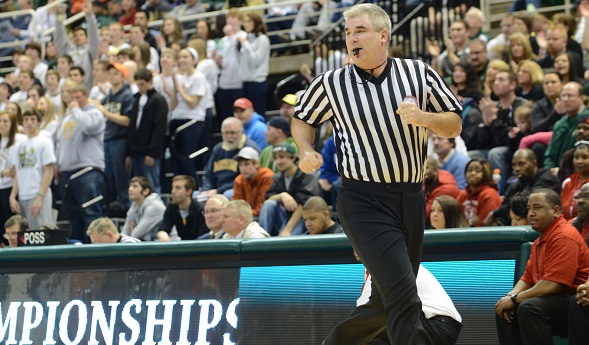
PHOTO: (Top) David Buck officiates a 2013 Class C Boys Basketball Semifinal between Flint Beecher and Monroe St. Mary Catholic Central at the Breslin Center.