


Official Results
August 15, 2017
We enjoy some privileges serving on the Michigan High school Athletic Association staff. However, one privilege we do not have is to ignore rules when we don’t enjoy their application.
One of the rules of Michigan school sports for very many years is that there is no protest of or appeal to the decisions of contest officials. Whether it is a traveling call in basketball, a safe/out call in baseball or softball, a five-yard illegal motion call, a 10-yard holding call, or a 15-yard unsportsmanlike conduct call in football with player or coach ejection, the call is final; and if the penalty calls for next-game disqualification, that is final too.
If after a contest, an official wishes he or she could take back a call, it’s too late. If after a contest, folks pressure an official to rescind the next-game disqualification, the outcome is unchanged: ejection from one contest for unsportsmanlike conduct requires suspension from the next day of competition.
The finality of high school officials’ calls has been challenged multiple times in courts across the country – twice in Michigan – and the nearly unanimous result nationwide has been that judges will not allow themselves to become super-referees, second guessing onsite contest officials.
On some higher levels of sports – e.g., college and professional – where there are dozens of cameras covering a handful of contests each week, league offices may review some decisions. But our level of sports lacks sophisticated cameras positioned at all angles, and it involves many hundreds of contests in several different sports every week. We have neither the time nor the technology at every venue to be involved in reviewing the calls of contest officials.
Last school year, there were nearly 1,000 player ejections and more than 200 coach ejections. School sports is not equipped to review 30 to 40 of these situations that arise each week; nor should we do so.
Officials see a play and make an instantaneous decision. Their calls are final; and living with the outcome is one of the valuable lessons we try to teach and learn in school-based sports.
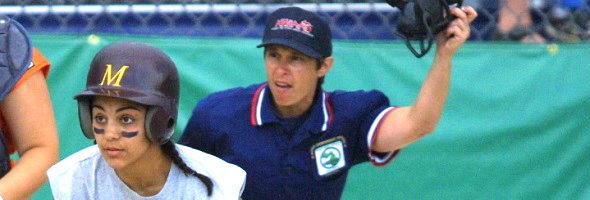
Be the Referee: Summer Camps
June 6, 2019
This week, assistant director Brent Rice explains how officials, like athletes, will be sharpening their skills during the summer.
Be The Referee is a series of short messages designed to help educate people on the rules of different sports, to help them better understand the art of officiating, and to recruit officials.
Below is this week's segment – Summer Camps - Listen
Student-athletes aren’t the only ones heading off to camp this summer to improve their game. Many MHSAA officials also attend camps and clinics during the summer to continue to hone their skills and stay up-to-date on rules and interpretations.
The MHSAA is hosting two camps this year in conjunction with the Reaching Higher basketball and volleyball events. The MHSAA basketball officials camp will be held on June 23, and the new volleyball officials camp will take place on July 18 – both at Milford High School.
There are a number of other terrific camps and clinics around the state this summer and throughout the year. If you’re interested in attending one to learn the sport or sharpen your skills, you can check out available opportunities on the Officials page of MHSAA.com.
Past editions
May 23: Girls Lacrosse Self Start - Listen
May 16: Lodged Ball - Listen
May 9: Bounced Pitch - Listen
May 2: Boys Lacrosse Safety - Listen
April 25: Softball Illegal Pitch - Listen
March 21: Instant Replay in Basketball - Listen
March 14: Basket Interference - Listen
March 7: Primary Areas - Listen
February 28: Under the Bus - Listen
February 21: You Make the Call - Listen
February 14: Because They Love It - Listen
February 7: Coach/Official Communication - Listen
January 31: Backcourt Violation? - Listen
January 24: Required Hockey Equipment - Listen
January 17: You Make the Call: 10-Second Clock - Listen
January 10: Tripping in Hockey - Listen
January 3: Sliding in Basketball - Listen
December 27: Stalling in Wrestling - Listen
December 20: Basketball: You Make the Call - Listen
December 13: Basketball Uniform Safety - Listen
December 6: Coaching Box Expansion - Listen
November 29: Video Review, Part 2 - Listen
November 22: Video Review, Part 1 - Listen
November 15: You Make the Call - Sleeper Play - Listen
November 8: 7-Person Football Crews - Listen
November 1: Overtime Differences - Listen
October 25: Trickery & Communication - Listen
October 18: Punts & Missed Field Goals - Listen
October 11: What Officials Don't Do - Listen
October 4: Always 1st-and-Goal - Listen
September 27: Unique Kickoff Option - Listen
September 20: Uncatchable Pass - Listen
September 13: Soccer Rules Change - Listen
September 6: You Make the Call: Face Guarding - Listen
August 30: 40-Second Play Clock - Listen
August 23: Football Rules Changes - Listen