

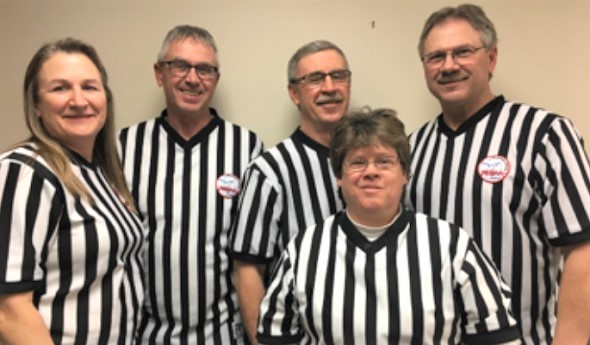
Wozniak 'Crew' Serves Together in Stripes
May 1, 2019
By Tim Miller
Mio teacher, former coach and graduate
If you were to attend a high school basketball game in northeast Michigan, or watch the local sports highlights from the evening on TV, you might see a member of the Wozniak family running up and down the basketball court.
You won’t see them dribbling the ball, or pulling up for a jump shot. The pressure to get a rebound, or to play defense, is no longer part of the game plan for them. The red jersey they once wore so proudly in high school has been replaced by a black and white uniform that’s worn only by referees.
Take a drive north on M-65 and you will eventually reach the home of the famous Potato Festival, located in Posen, Michigan. Don’t expect to see a McDonald’s, Subway, or even a stoplight when you arrive. The town consists of a few small businesses, managed by a group of people who take pride in calling Posen their home.
One such family is Stanley and Virginia Wozniak, who just finished celebrating 68 years of marriage. During this time, they became the proud parents of Chuck, Ken, Cheryl, Frank, Donna, Mary Ellen, Michelle, and Linda.
Although I’ve never met Mr. and Mrs. Wozniak, it’s obvious to me, and anyone who knows their children, that they instilled some very important life lessons in them while raising them. One such lesson was getting involved. At one time Stanley was an official, so I guess it’s no surprise to see his children follow in his footsteps.
Living in northern Michigan during the winter can be brutal. Frigid temperatures and a large accumulation of snow can make it challenging. The key to surviving these long hard winters is staying busy. One such way is to attend a high school sporting event, and like so many people throughout the area, I watch as many games as I can.
Whether I’m attending a home game, or traveling out of town to an away game, it’s not uncommon to walk into a high school gym and see the Wozniak officiating crew from Posen standing courtside, patiently waiting to start the game.
What’s been striking to me over the years is to see them working as a unit, game after game. Rarely have I seen one of them working on another crew. Another lesson learned from home: family staying together. Years of experience has allowed them to officiate a regular-season game or much-anticipated playoff game with confidence.
When the game begins, I like sitting by myself. I look for the little things that players do or don’t do. I also watch the officials and compare my observations with their calls. Having watched them for many years in a variety of games, I’ve been impressed with their ability to call a game, regardless of whether it’s two teams battling to stay out of last place or a championship game packed full of screaming fans. Their passion for the game and commitment to getting it right has earned the respect of coaches, players and fans throughout northern Michigan.
They would be the first to admit they’ve made a mistake or missed a call here and there. Another lesson learned from home: be honest and stay humble. There have been games where the fans, players and coaches have disagreed with them, and a variety of facial expressions and comments have been made. It doesn’t stop them; they just keep moving forward.
They know this type of behavior comes with the territory, even though it’s the reason why so many officials have decided to quit. Another lesson learned from home: don’t give up.
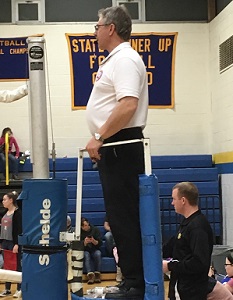 The same drive that earned Donna and Mary Ellen both Female Athlete of the Year at Posen Consolidated Schools – in 1978 and 1981, respectively – fuels them on the court. While attending a girls junior high game, I witnessed Donna put an end to a loud-mouth fan. She calmly stopped the game, walked over to him, looked him square in the eyes and said, “Are you done?”
To which he replied “yes.” After speaking with him and making her point, she continued to officiate the game all by herself. For some reason, she was the only official for the game. She didn’t complain or make excuses; she simply made the best of the situation in front of her. Another lesson learned at home: don’t complain and do your best.
I’ve also seen Mary Ellen straighten out a few coaches and players during her career. Like her sister Donna, she’s not afraid to put an end to poor sportsmanship during the game.
Being an official isn’t easy. They’re constantly under scrutiny and harassment by unruly fans, coaches and players. The sacrifices they make to officiate a game often go unnoticed or are rarely even discussed. I wonder how many dinners they’ve missed with their families.
The technology used at the games has changed over time. From the Kodak camera, to the 35 millimeter, to the camcorder. And now the popular cell phone, perhaps the best and worst device ever created. Now anyone can snap a picture or record a video of an official. Spend a few minutes adding disrespectful comments, and post it online. Even through this evolution of tasteless unwarranted behavior, the Wozniaks keep rolling on.
Like all officials, they don’t do it for the money! What little they make can’t possibly offset the cost of maintaining their vehicles, gas, tires and worn out parts along the way. They do it because they love and respect the game. As spectators, we often place the blame on officials when we lose. However, I’ve never heard anyone say we won because of the officials. In my 40-plus years of watching sports, I have never seen an official miss a free throw or turn the ball over during the game, nor have I seen an official play sloppy defense. I’ve never seen them get out-coached or out-hustled by the opposing team.
We also have a tendency to undervalue the officials. Instead, we put our focus on the coaches, players and the games. That all changes in a split second when we think a foul should be called. Then, all eyes are fixed on the official, and immediate results are expected. The official is expected to see everything, which is an unrealistic expectation.
As officials, the Wozniaks do an outstanding job. Running up and down the court with a whistle in your mouth can’t be easy. I wonder how many of us could do that. I can only imagine how many inadvertent calls would be made as we tried keeping up with the players. Trying to spot every rule infraction is impossible, and yet, they keep striving to do their best. They’re not perfect, nor would you ever hear one of them claim to be. However, they’re doing something that the majority of fans, coaches and players would never even consider! They’re willing to put that official’s uniform on and have the courage, determination and commitment to doing the best job they can.
Over the years, I’ve had the pleasure of getting to know them. They have the ability to look past those negatives. They choose to remember the big games, the respectful players, the quality coaches, the new friendships they made, and most important of all, spend time on the court with one another.
Here are some of their amazing accomplishments:
• Chuck has been an official for 46 years. During this time, he has officiated multiple playoff games for girls and boys basketball, including MHSAA Semifinal and Final games. He was the track coach at Posen Consolidated Schools for 38 years and is currently a member of the Posen Fire Department.
• Ken has been an official for 43 years. He has officiated multiple playoff games for girls and boys basketball as well, including Semifinal and Final games. He currently serves on the Posen Consolidated School Board and has for the last 19 years – 17 as school board president.
• Frank has been an official for 42 years and has been selected to work a Basketball Semifinal. He coached junior varsity boys basketball for four years and umpired youth softball and basketball for many more. He was also the director of the local softball tournaments in Posen for 13 years.
• Donna has been an official for 41 years, working multiple playoff games for girls and boys basketball including Semifinals and Finals – including a boys Semifinal. She may be one of the most respected officials in Michigan, at any level! She coached softball at Posen Consolidated Schools and coached youth softball and basketball in the community for many years.
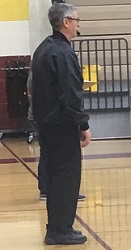 • Mary Ellen has been an official for 34 years and was selected to officiate a Girls Basketball Semifinal. She coached the varsity girls basketball team at Posen Consolidated Schools for nine years. She is currently an assistant coach for the Alpena Community College softball team.
• Linda officiated volleyball for 13 years. She volunteers at a variety of youth events throughout the community. She runs the scoreboard at athletic events, along with keeping the books. She is currently the class advisor for the graduating class of 2019 at Posen Consolidated Schools. She’s also involved in the chamber of commerce, where she served as treasurer for eight years.
• Although Cheryl doesn’t officiate, she’s involved in her community in many ways. She volunteers her time in the sports booster program and the little league programs. She was the secretary of the sports boosters for 15 years and selected as its “Volunteer of the Year.” She’s a strong supporter of promoting youth sports in her community.
• Michelle is also a strong supporter of youth programs in Posen and Alpena. She was selected as Female Athlete of the Year at Posen Consolidated Schools in 1983 and was appointed by former Governor Rick Snyder to serve on the Michigan Public Health Advisory Council. Like the rest of her siblings, she continues to stay involved in her community and volunteers in a variety of ways.
Aside from high school basketball games, the Wozniaks also have officiated other sports such as volleyball, track, and softball, and basketball at the college level.
I’m not sure how many more years the Wozniaks will continue to officiate. Hopefully for the coaches, players and fans, they’ll continue until they can’t run up and down the court anymore.
I can’t imagine how many whistles they’ve went through, or how many shoes they’ve bought along the way. The miles they’ve put on their vehicles, or the worn out tires they’ve replaced. The time they’ve missed with their families, or the TV shows they couldn’t watch. The quick meals eaten on the road, or the leftovers waiting at home.
Jonathan Lockwood Huie once said, “The path to your own happiness is usually found in service.” With all those years of officiating games and volunteering in their community, the Wozniaks understand the value of service. My guess is they’ve never heard of Johnathan Lockwood Huie, but his quote is deeply embedded in their DNA. They learned it from their parents; it’s the Wozniak way. Get involved, stay close to family and cherish your time together.
It’s the same formula that Stanley and Virginia used to spend 68 years together in marriage. So, Mr. and Mrs. Wozniak, thanks for teaching your children all those life lessons. To their spouses and families, thanks for sharing them. To the Wozniak crew, thanks for all the years you’ve dedicated to high school sports!
I can only imagine what they’ve seen and experienced during this time span. My guess is they could write a book filled with memories. The long drives, the late nights, the fall colors, the cornfields, the pumpkin patches, the icy roads, the snowstorms, the road construction, the price of gas, the vehicle mishaps, the missed deer, the big bucks, the coaches both good and bad, the great players and the not-so-great, the big games, the ejections, the technicals, the broken scoreboards, the athletic directors, the uniform styles, those ugly tube socks, the hairstyles, the rule changes, the news clips, the gyms, the good fans and the bad ones, the songs on the radio, the tickets, those aching body parts, who drove the most, who napped the most and the friendships made along the way.
Finding a family like the Wozniaks is rare. Becoming an official is one thing; doing it for 30 to 40 years is remarkable. What an impressive run – what a commitment to high school sports. So many games, so many stories, a lifetime of memories in the gym, on the track, at the softball field and in the car.
Eventually, the time will come when they decide to hang up their whistles for good. After it happens, I can picture them all sitting around the table on a cold winter night, drinking a cup of hot coffee, reflecting on their careers and all those games, all those memories, all those years, the stories, the laughs, and the time spent together as a family.
PHOTOS provided by Tim Miller.
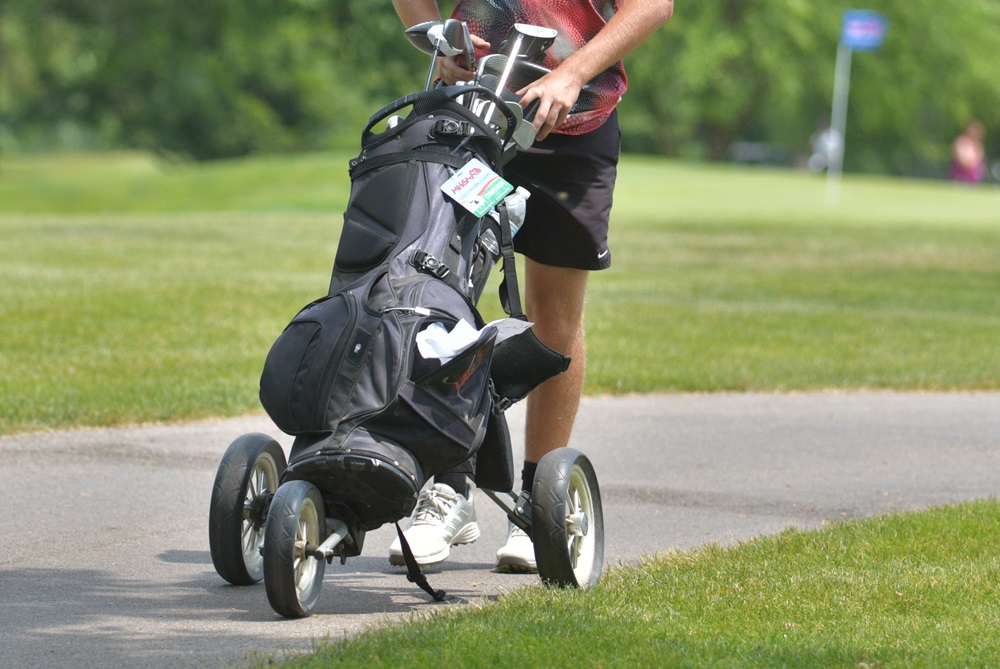
Be the Referee: Golf Cart Path Roll
By
Paige Winne
MHSAA Director of Brand Management
May 13, 2025
Be The Referee is a series of short messages designed to help educate people on the rules of different sports, to help them better understand the art of officiating, and to recruit officials.
Below is this week's segment – Golf Cart Path Roll - Listen
We’re back on the course today for a golf rules question.
You hit your drive up the left side of the fairway on a hole that slopes up towards the green. Your ball bounces a couple of times and then rolls to the left. Unfortunately, the last bounce it takes is onto the cart path and it proceeds to roll down the path, back towards you, about 50 yards.
Are you allowed to place your ball where it last touched before rolling down the cart path?
No.
You are allowed to take relief from the cart path where the ball stopped rolling, but you can’t move your ball up to where it was before rolling down the path. And the relief you take can’t put the ball closer to the hole than where it stopped rolling. An unlucky break on an uphill hole.
Previous 2024-25 Editions
May 6: Damaged Softball Bats - Listen
April 30: Golf Relief - Listen
April 22: Soccer Scoring Area Penalty - Listen
April 15: Fair or Foul? - Listen
April 8: Girls Lacrosse New Stoppage Rule - Listen
April 1: Base Runner Interference - Listen
March 25: Pine Tar Usage - Listen
March 11: Basketball Replay - Listen
March 4: Gymnastics Deduction - Listen
Feb. 25: Competitive Cheer Inversion - Listen
Feb. 18: Ice Hockey Delay of Game - Listen
Feb. 11: Ski Helmets - Listen
Feb. 4: Wrestling In Bounds or Out? - Listen
Jan. 21: Block or Charge? - Listen
Jan. 14: Out of Bounds, In Play - Listen
Jan. 7: Wrestling Scoring - Listen
Dec. 17: Bowling Ball Rules - Listen
Dec. 10: Neck Laceration Protector - Listen
Dec. 3: Basketball Goaltending - Listen
Nov. 26: 11-Player Finals Replay - Listen
Nov. 19: 8-Player vs. 11-Player Football - Listen
Nov. 12: Back Row Setter - Listen
Nov. 5: Football OT - Listen
Oct. 29: Officials Registration - Listen
Oct. 22: Volleyball Serve - Listen
Oct. 15: "You Make the Call" - Soccer Offside - Listen
Oct. 8: Roughing the Passer - Listen
Oct. 1: Abnormal Course Condition - Listen
Sept. 25: Tennis Nets - Listen
Sept. 18: Libero - Listen
Sept. 10: Cross Country Uniforms - Listen
Sept. 3: Soccer Handling - Listen
Aug. 24: Football Holding - Listen