

Ramping Up for Prepapalooza 2014
May 27, 2014
By Geoff Kimmerly
Second Half editor
Over the next five days, thousands of teams representing more than 700 MHSAA high schools will compete for championships at the District, Regional and Finals levels in 11 sports in what annually is the busiest week in Michigan high school sports.
MHSAA.com and Second Half are the places to be for results, coverage and live video from championship events all over both Peninsulas.
Total, 26 Finals champions will be crowned in girls and boys tennis, girls and boys track and field and Upper Peninsula girls and boys golf, with 36 Regional champions rewarded in girls and boys lacrosse and Lower Peninsula boys golf and 320 winners earning trophies in softball, baseball and girls soccer. All tournament rounds combined, more than 8,000 medals will be presented to individual winners or contributors on those team champions.
 Game scores as they are reported for baseball, softball, soccer and lacrosse will be available on the MHSAA Score Center throughout the week. Full results from golf Regionals also will be posted over the next five days, as will Finals tennis and golf results as we receive them from Lower and Upper Peninsula hosts (Lower Peninsula tennis opening rounds late Friday evening). Track and Field Finals results will be posted Saturday evening.
All MHSAA Finals from both peninsulas will be covered with stories and photos on Second Half by a crew of valuable correspondents from around the state. Second Half will continue its coverage at the Lacrosse and LP Boys Golf Finals on June 14 and the Baseball, Softball and Girls Soccer Finals from June 19-21.
Live championship races from all seven sites of MHSAA Track and Field Finals will be available on a subscription basis on MHSAA.TV, beginning with the 3,200-meter relays at 10 a.m. at each site. The rest of the Upper Peninsula races then will continue, with Lower Peninsula championship races beginning again at 1 p.m. Highlights from this week's golf and tennis championship events will debut on MHSAA.TV in July.
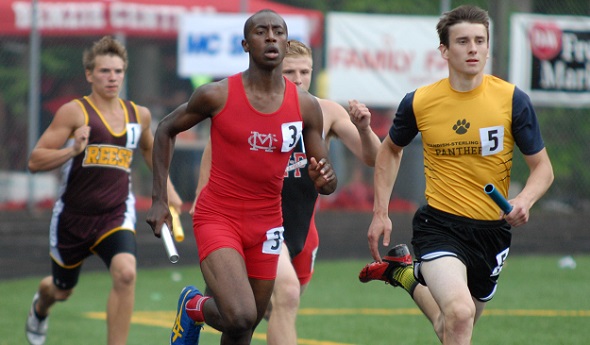
PHOTOS: (Top) Runners push toward the finish during the 2013 LP Division 3 Final. (Middle) Members of the Bloomfield Hills Academy of the Sacred Heart tennis team hold up number ones to signify their place at last season's LP Division 4 Final.

Marquette, Saginaw, Ann Arbor & Grand Rapids to Host MHSAA Sportsmanship Summits
By
Geoff Kimmerly
MHSAA.com senior editor
October 13, 2026
The MHSAA’s annual Sportsmanship Summit series will return this November with four stops across the Lower Peninsula, providing training on sportsmanship topics affecting students both on and off the field of play.
The MHSAA has conducted Sportsmanship Summits across Michigan for 30 years. This year’s series kicks off Nov. 9 in Marquette and finishes Nov. 18 in Grand Rapids.
MHSAA staff, with assistance from school administrators and the MHSAA Student Advisory Council, conduct Sportsmanship Summits. Up to 800 students are expected to take part in the four workshops, where they will discuss the line that separates good from bad sportsmanship, both as athletes during competition and while participating in off-field activities including as spectators at sporting events.
Workshop sessions will include discussions and hands-on activities on topics including working with game officials, building appropriate student cheering sections, social media behavior and parent conduct at school sports events. Summits also will feature a session developed and instructed by members of the Student Advisory Council. At the end of the day the delegation from each participating school will meet to develop a school sportsmanship campaign.
Sessions will take place at the following:
• Marquette – Nov. 9 – Northern Center at NMU – 9 a.m. - 1:30 p.m.
• Saginaw – Nov. 12 – The Conference Center at Saginaw Valley State University – 9 a.m. - 1:30 p.m.
• Ann Arbor – Nov. 16 – Sheraton Ann Arbor – 9 a.m. - 1:30 p.m.
• Grand Rapids – Nov. 18 – Sheraton Grand Rapids – 9 a.m. - 1:30 p.m.
The Sportsmanship Summit schedule rotates locations every year. In 2025, MHSAA staff conducted summits in Lansing, Troy, Traverse City and Kalamazoo.
Schools are welcome to bring as many as 10 total representatives, including two administrators. For additional registration information, contact Andy Frushour at the MHSAA office – [email protected] or (517) 332-5046. Registration information also is available on the Sportsmanship Resources page.