

Acupuncture Can Enhance Performance
January 5, 2021

Henry Ford Health System
In the ancient Chinese medicine of acupuncture, thin needles are gently inserted into specific areas of the body, stimulating blood flow to speed the recovery of certain ailments.
It can be used as a treatment for everything from headaches and unbalanced hormones to joint pain and weakened immune systems. Acupuncture is also popular among athletes, as many of them incorporate it into their wellness regimens to stay in peak physical condition.
“Back in the day, athletes ate steak, smoked cigars and drank whiskey during the week and then played football on Sunday,” says Thomas Betts, a sports medicine acupuncturist with Henry Ford Health System. “But today, to improve their performance, athletes are attacking the body from every angle possible with diet, lifestyle and exercise. NBA players, for example, have talked about how acupuncture keeps them feeling their best.”
But you don’t have to be an NBA star to reap the benefits of acupuncture. Whether you’re a professional or student athlete, or you exercise and play sports for fun or to challenge yourself, here are ways acupuncture can boost your game:
- Acupuncture can help you recover more quickly from an injury. “If a muscle is torn, acupuncture won’t put it back together, but for sprains and strains, muscle soreness and tendonitis, acupuncture can decrease inflammation and speed the healing process,” says Betts.
- Acupuncture can reduce the need for “rest days.” If you just had an intense workout and your muscles are sore, getting acupuncture afterward can loosen the muscles and decrease soreness so you don’t have to take a day off to recuperate before training again.
- Acupuncture can improve flexibility, decrease muscle tension and increase muscle activation. “This is done with motor point acupuncture,” says Betts. “The motor point is where the brain attaches to the muscle via the motor nerve. By using needles to stimulate a motor point, it is like rebooting a phone or computer that isn’t working well: Motor point acupuncture is autoregulating, in that it can deactivate a tight muscle or reactivate an inhibited or weak muscle.”
- Acupuncture can provide immediate pain relief. “Some studies show that acupuncture can provide as much as, if not more pain relief than medication,” Betts says. “It differs for everyone, and it depends on what is being treated, but some people say they feel a difference right after a session, and others say they feel better about 20 to 30 minutes later.” Pain relief can last from a few hours to a few days.
- Acupuncture can help prevent injury. Because acupuncture can reactivate weak muscles and decrease muscle tension, it can also be used as a preventative measure against injury, Betts says. But you should always still stretch before and after exercising!
Learn more about acupuncture and other integrative medicine services at Henry Ford. To make an appointment, you can request one online or by calling 1-833-246-4347.
Thomas Betts, DOAM, RAc, is a certified sports acupuncturist with Henry Ford Health System. He sees patients at the Henry Ford Center for Athletic Medicine in Detroit.
Century of School Sports: From Nearly A to Z, Schools Repped by 221 Nicknames
By
Geoff Kimmerly
MHSAA.com senior editor
May 20, 2025
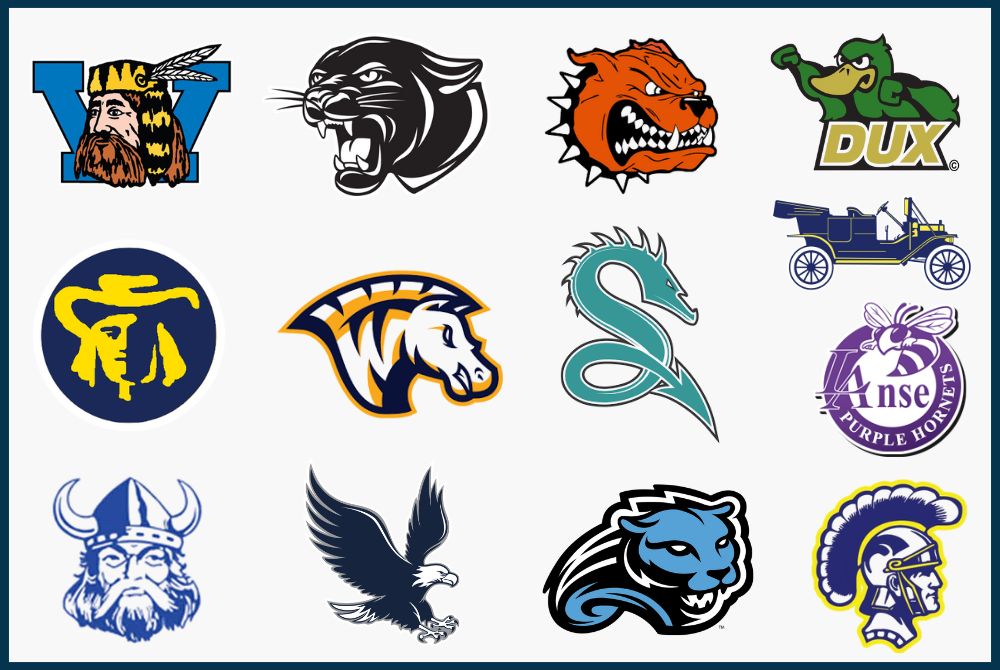
Combine all the Bronchos, Cubs, Loggers, Purple Hornets and Tractors running around Michigan’s sports fields on any given day, and they still would have some work to catch up with the wide scattering of Eagles representing their Michigan high schools across the state.
There are a combined 221 mascots representing the MHSAA’s 754 member high schools this 2024-25 school year.
A total of 127 schools have a mascot reserved all to themselves, including those five listed above – Holly (Bronchos), Detroit U-D Jesuit (Cubs), Boyne Falls (Loggers), L’Anse (Purple Hornets) and Dearborn Fordson (Tractors).
And then there are the Eagles. A total of 48 schools are represented by the fearsome birds of prey, and that’s not counting the Golden Eagles (Brooklyn Columbia Central), Aztec Eagles (Detroit Cesar Chavez Academy) and Soaring Eagles (Hannahville Nah Tah Wahsh).
The next-most popular nickname – Panthers – is adorned by 28 schools, followed by 26 Bulldogs, 23 Vikings and 22 Wildcats. Rounding out the top 10 are Falcons and Cougars (both 20 schools), Trojans (19), and Tigers and Warriors (both 18). The Mustangs (15 schools), Pilots (11) and Comets, Lakers and Spartans (10) also reach double digits.
There have been several mascot changes of late as a number of schools have moved away from Native American names and imagery. Those have resulted in a few new sets of Red Devils, Red Wolves/Wolves, and RedHawks/Red Hawks as the most popular selections among those making a switch.
Another fun fact: Every letter but “U” and “X” start at least one MHSAA member high school nickname.
Big assist to the Quakers (Lansing Eastern) and Zebras (Wayne Memorial) for cutting down that list – and keep an eye out for Underdogs and Xylophones coming to a school near you.
Previous "Century of School Sports" Spotlights
May 13: These Record-Setters were Nearly Impossible to Defeat - Read
May 6: 200+ Representatives Fill All-Time Council Roster - Read
April 29: MHSAA Programs Prioritize Health & Safety - Read
April 23: Patches Signify Registered Officials' Role in MHSAA Story - Read
April 16: Student Advisory Council Gives Voice to Athletes - Read
April 9: State's Storytellers Share Spring Memories - Read
April 2: Sharp Leadership Synonymous with MHSAA Success - Read
March 25: Athletic Directors Indispensable to Mission of School Sports - Read
March 18: 2025 Finals Begin Next Half-Century of Girls Hoops Championships - Read
March 11: Boys Basketball's Best 1st to Earn MHSAA Finals Titles - Read
March 5: Everything We Do Begins with Participation - Read
Feb. 25: Slogans & Logos Remain Unforgettable Parts of MHSAA History - Read
Feb. 19: MHSAA Tickets Continue to Provide Fan-Friendly Value - Read
Feb. 11: We Recognize Those Who Make Our Games Go - Read
Feb. 4: WISL Conference Continues to Inspire Aspiring Leaders - Read
Jan. 28: Michigan's National Impact Begins at NFHS' Start - Read
Jan. 21: Awards Celebrate Well-Rounded Educational Experience - Read
Jan. 14: Predecessors Laid Foundation for MHSAA's Formation - Read
Jan. 9: MHSAA Blazes Trail Into Cyberspace - Read
Dec. 31: State's Storytellers Share Winter Memories - Read
Dec. 17: MHSAA Over Time - Read
Dec. 10: On This Day, December 13, We Will Celebrate - Read
Dec. 3: MHSAA Work Guided by Representative Council - Read
Nov. 26: Finals Provide Future Pros Early Ford Field Glory - Read
Nov. 19: Connection at Heart of Coaches Advancement Program - Read
Nov. 12: Good Sports are Winners Then, Now & Always - Read
Nov. 5: MHSAA's Home Sweet Home - Read
Oct. 29: MHSAA Summits Draw Thousands to Promote Sportsmanship - Read
Oct. 23: Cross Country Finals Among MHSAA's Longest Running - Read
Oct. 15: State's Storytellers Share Fall Memories - Read
Oct. 8: Guided by 4 S's of Educational Athletics - Read
Oct. 1: Michigan Sends 10 to National Hall of Fame - Read
Sept. 25: MHSAA Record Books Filled with 1000s of Achievements - Read
Sept. 18: Why Does the MHSAA Have These Rules? - Read
Sept. 10: Special Medals, Patches to Commemorate Special Year - Read
Sept. 4: Fall to Finish with 50th Football Championships - Read
Aug. 28: Let the Celebration Begin - Read