


Be Proactive with Concussions
October 22, 2019

Most people have seen the headlines about concussions as a common sports injury, and it's natural that parents may be concerned for their young athlete.
A large misconception in sports is that previous concussions are to be blamed for ongoing headaches, blurred visions and memory loss, among other symptoms.
“It’s really important to think about concussions in concert with overall brain health,” says Jeffrey Kutcher, M.D., a sports neurologist who treats athletes at the Henry Ford Concussion and Sports Neurology Clinic. “Concussions can be concerning, but they shouldn’t be looked at in a vacuum. The best way to prevent brain injury begins before the injury occurs.”
One way to do that is to consult with your child’s doctor or a sports neurologist for an annual evaluation. A sports neurologist focuses on managing sports-related brain and nervous system injuries and conditions in athletes, such as concussions, post-concussion syndrome, peripheral nerve injuries, migraines, epilepsy, and more.
“Having an annual evaluation of your athlete’s brain function when they are healthy and uninjured can help diagnose and treat issues when they arise,” says Dr. Kutcher.
Results from the baseline test can be used as an important tool for comparison by a qualified healthcare professional later if an athlete has a suspected concussion.
Best Practices to Ensure Your Athlete Stays Safe
Dr. Kutcher shares these tips for parents to make sure you’re keeping your child’s brain health and safety – not just their athletic performance – at the forefront:
• Get a brain health baseline. A proper baseline test should include a personal and family neurological history, with a focus on any active issues. It is important to note any neurological conditions that may influence concussion recovery, such as ADHD, depression, anxiety, or migraine headaches.
• Teach your kid to listen to her or his body. With any sport, there is a calculated risk to play. Teaching kids to listen to and be honest about how their body is feeling is the best way to prevent and treat injuries.
• In the event of an injury, look for the signs. Within 24 hours after an injury, an athlete should be evaluated if they are experiencing:
· Headaches
· Fatigue
· Dizziness and nausea
· Changes in sleep habits
· Trouble with memory
· Confusion
· Irritability and anxiety
· Light sensitivity
• Brain injuries don’t just occur with a blow to the head. They can also occur from falls, car accidents, or even through whiplash. If your child is experiencing any symptoms, be sure to consult your physician.
• Brain health is more than just concussions. If your athlete is complaining of chronic headaches, migraines, dizziness, memory or mood issues, there may be an underlying issue.
“There is no magic number of concussions a brain can sustain. Each individual is different,” Dr. Kutcher explains. “The impact severity and recovery time can greatly affect an athlete’s brain. By getting a baseline before the injury, we can establish a goal to work towards in recovery.”
Want to learn more? Henry Ford Health System sports medicine experts are treating the whole athlete, in a whole new way. From nutrition to neurology, and from injury prevention to treatment of sports-related conditions, they can give your athlete a unique game plan.
Visit henryford.com/sports or call (313) 972-4216 for an appointment within 24 business hours.
Graduation of Multi-Sport Athletes
December 8, 2014
By David Smith
Boyne City athletic director
Editor’s Note: This is reprinted with permission from the Petoskey News-Review, which is publishing semi-regular columns written by athletic directors for the northwest region of the Lower Peninsula. Click for more sports coverage from the News-Review.
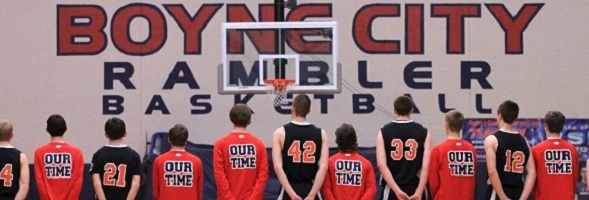
There are many important topics today that relate to high school sports. I was honored when asked to write a brief column about a current topic of my choice in the high sports world. This particular topic, student-athletes specializing in one sport, is something that is happening more and more.
It’s hard to pinpoint exactly why this is, but it often times seems to boil down to unrealistic expectations from several parties that an athlete is capable of being a legitimate college or higher-level athlete.
Don’t get me wrong, we have a plethora of outstanding athletes in Northern Michigan. The facts are, however, that about 98 out of 100 high school athletes never play collegiate sports of any kind at any level. Also, less than one percent of high school athletes receive a scholarship of any kind to a Division I school.
I don’t want to tell someone not to have that dream. In fact, I think that is an awesome dream to have. I had that goal growing up and was fortunate to be able to play a few different sports at a small Division III college. It helped me grow immensely as a person, and I’m very thankful for that experience. I just can’t emphasize enough how we need to all have realistic expectations for our student athletes, whether it’s the athletes themselves, or parents, coaches, administrators, etc.
I think one thing we can all do to help this is to emphasize the process more than the outcome. The funny thing is getting the process right and enjoying it almost always leads to positive outcomes. The process is where all the hard work is put in. The process is where good character is developed, and that’s one of the most important traits we can help young individuals develop.
Many high school athletes are also too busy and compete too much. The amount of young athletes competing year-round for sports is getting out of control. Sure, sometimes it works out and an athlete will really improve by doing this, but more often than not, they get burned out and when it’s actually that sport in-season, they are toast and go through the motions. I know from a coaching standpoint I want athletes hungry to compete every time out.
Being that busy also means very little time for athletes to improve their overall athleticism (stronger, faster, quicker, more explosive, better endurance, etc.). Skills take a back seat too because most athletes are just playing games and not focusing on skill work. I’d rather take an athlete who trains to become more athletic and works on skills for several months than one who plays AAU or something of that nature. I know that has its place for a very few individuals, but most young athletes need way more work on their athleticism and skills before being ready for something like AAU.
I get specializing in one sport if you are undoubtedly a Division I athlete that will likely play professionally. Or maybe it’s someone who goes to a big high school and they aren’t very talented so the only way they can play is to focus really hard on one sport. I get those occurrences.
I would argue, however, that even the Division I-type individuals will nine times out of 10 benefit more from playing another sport because they aren’t going to work hard enough by themselves to make the gains. They would then also be refreshed and ready to get after it once the season arrives. With that, our schools up here will always have a hard time competing at the regional and state level if we don’t have all of our best athletes playing two or three sports. It blows me away how good some of our teams in the area could fare if this happened.
This column is not meant to be negative. It’s just some food for thought. I haven’t been at this very long, but it’s something I’ve seen happen more and more in the last 10 years. I’ve just always been a big fan of the multiple sport athlete and experienced first-hand how much a school can benefit when a group of talented athletes go through and they all play a minimum of two sports.
At the end of the day, we cannot forget what I’d consider the main purpose of athletics at this level. That is, to help young individuals leave our schools with experiences and life lessons that will help them as they pursue careers and go on with other facets of their lives.