

Choose the Right Sports Medicine Expert
July 7, 2020

By Christina Eyers, Ed.D., AT, ATC
Henry Ford Health System
If you're an athlete, chances are you'll require specialized care from a health professional during your career.
Confused about the differences between athletic trainers, sports medicine physicians and exercise physiologists, among other experts? You're not alone!
Each of these professionals has different levels of training, expertise and certifications, but the care they provide often overlaps. That's one reason why they often work together.
Sports Professionals Defined
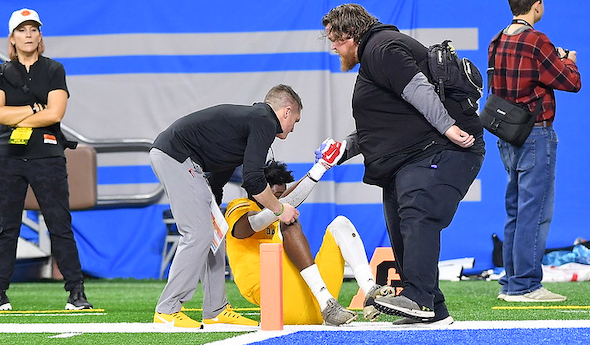
Caring for athletes isn't always clear-cut. In fact, most athletes require a full team of professionals working in concert to stay at the top of their game. Yet confusion remains about which professionals you need to see for training, injury prevention, and recovery and treatment after an injury.
Each type of professional has its own set of experience, training and certifications. Here’s how they measure up:
· Sports medicine doctor: Sports medicine physicians are typically trained in orthopedic surgery, primary care or emergency medicine. These professionals have medical degrees as well as specialized training in sports medicine, including the prevention and treatment of injury. In addition to caring for conditions ranging from concussion to head colds, sports medicine physicians also focus on helping people return to sports safely and effectively after illness or injury.
· Athletic trainer: Athletic trainers take care of athletes from prevention through rehabilitation. In collaboration with a physician, these professionals offer insights that help minimize risk and prevent injuries. They evaluate athletes and provide immediate care and treatment, sometimes even on the sidelines. They also provide rehabilitation and reconditioning after an injury or illness.
· Exercise physiologist: Exercise physiologists study the effect of exercise on the muscular, cardiovascular, and sympathetic and parasympathetic nervous systems. They examine functional capacity and strength due to endurance training or strength training. These professionals may also test athletes for VO2max (your oxygen volume while training) and body composition (the ratio of fatty mass to lean mass).
· Physical medicine and rehab physician: These professionals treat a variety of medical conditions that affect the brain, spinal cord, nerves, bones, joints, ligaments, muscles and tendons. They take the whole body into account to pinpoint problems and enhance performance without surgery.
· Physical therapist: Physical therapists diagnose and treat individuals of all ages with conditions that limit their ability to move and perform daily activities.
Other Specialized Professionals Who Care for Athletes
In addition to the health care professionals described above, athletes may meet with a host of experts, including:
· Nurses and medical assistants
· Occupational therapists
· Cardiologists
· Neurologists
· Behavioral health specialists
· Dietitians
· Complementary medical practitioners, such as acupuncturists and chiropractors
None of these individuals are "fitness professionals," a term nearly anyone can use to describe a range of professional activities. Rather, these sports medicine experts are part of a comprehensive team that includes at least one physician. They are each licensed by the state to provide specialized care to athletes.
Personal trainers, on the other hand, focus on helping people find their way around the gym, hold them accountable to achieve their goals and help new exercisers and seasoned fitness enthusiasts stick to a workout regimen.
If you're an athlete, you need a team of health professionals who can provide comprehensive care to reach your highest potential.
Christina Eyers, Ed.D., AT, ATC, is the Director of Athletic Training & Community Outreach with Henry Ford Sports Medicine.
Want to learn more? Henry Ford Health System sports medicine experts are treating the whole athlete, in a whole new way. From nutrition to neurology, and from injury prevention to treatment of sports-related conditions, they can give your athlete a unique game plan.
Visit henryford.com/sports or call (313) 972-4216 for an appointment within 24 business hours.
This Week in High School Sports: 2/19/25
By
Jon Ross
MHSAA Director of Broadcast Properties
February 19, 2025
In this week's edition, we celebrate Detroit Central's Antonio Gates, who was recently selected for induction to the NFL Hall of Fame; award Game Balls to high achievers in swimming and basketball; and delve into details about this year's MHSAA/Farm Bureau Insurance Scholar-Athlete Awards.
 The 5-minute program each week includes feature stories from MHSAA.com or network affiliates, along with "Be the Referee," a 60-second look at the fine art of officiating.
"This Week in High School Sports" is powered by MI Student Aid, a division within the Department of Lifelong Education, Advancement, and Potential (MiLEAP).
Listen to this week's show by Clicking Here.
Previous 2024-25 Editions
Feb. 12: MHSAA officials in Super Bowls, Ice Hockey Tournament primer - Listen
Feb. 5: MHSAA Tournament broadcasts, growth of girls sports in Michigan - Listen
Jan. 29: 2024-25 Scholar-Athlete Award finalists, 1958 Hall of Fame matchup - Listen
Jan. 22: Salem legend Dena Head, MHSAA's Sam Davis selected to Wrestling Hall of Fame - Listen
Jan. 15: MHSAA.com history, officials recruitment news - Listen
Jan. 8: MHSAA Basketball Tournament schedule, 2023-24 attendance report - Listen
Dec. 18: Ice Hockey season underway, Representative Council presidential succession - Listen
Dec. 11: 2024-25 MHSAA Winter Tournament schedule, inaugural girls wrestling team title - Listen
Dec. 4: 11-Player Football Finals review - Listen
Nov. 27: 8-Player Football Finals review, 1975 Football Finals recollection - Listen
Nov. 20: 8-Player Football Finals history, Southwest 10 Conference Legacy officials - Listen
Nov. 13: "Flashback 100" series, flashback to Escanaba's football championship - Listen
Nov. 6: Boys Soccer Finals, Lower Peninsula Cross Country Finals review - Listen
Oct. 30: 2024 Football Playoffs, Lower Peninsula Boys Tennis Finals review - Listen
Oct. 23: Lower Peninsula Girls Golf Finals, Upper Peninsula Cross Country Finals reviews - Listen
Oct. 16: MHSAA Football Playoffs primer, MHSAA/Farm Bureau Scholar-Athlete Awards - Listen
Oct. 9: National High School Hall of Fame, Upper Peninsula Girls Tennis Finals - Listen
Oct. 2: MHSAA record book, 2024 Boys Soccer Tournament schedule - Listen
Sept. 25: NFHS Network streaming, DeWitt's high-scoring football matchup - Listen
Sept. 18: Cheboygan broadcaster Mike Grisdale, Michigan's national participation ranking - Listen
Sept. 11: MHSAA baseball stars in MLB, 2024 Boys Soccer Tournament - Listen
Sept. 5: Highlighting MHSAA record setters, 50th Football Playoffs - Listen
Aug. 28: MHSAA Summer Olympians, "Century of School Sports" celebration - Listen