

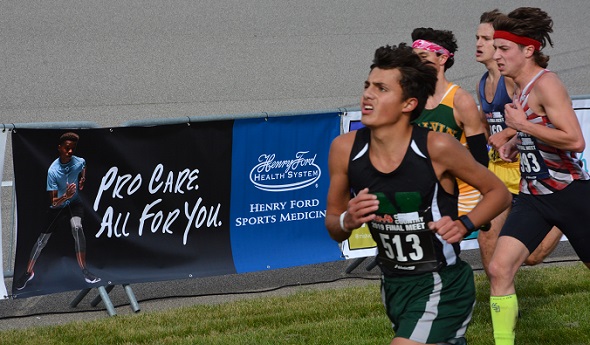
Enhancing Your Running Performance
August 4, 2020

Henry Ford Health System
With summer now in full swing and many people still avoiding gyms, lots of us are hitting the track, the streets and the trails to get and stay fit.
Whether you run marathons or prefer a quick lap around the block, there are many ways to adjust your running routine to get the most out of your workout.
"It's not uncommon for runners to get into a regular running routine," says Jamie Schwab, an athletic trainer at Henry Ford Health System. "They'll find a comfortable pace and stick with it, often even doing the same route." Unfortunately, doing the same run day after day not only leads to boredom, but it can also prevent you from reaching your full potential.
5 Tips to Run Smarter
It’s no secret that running is tough on the body. In fact, runners frequently develop muscle imbalances that make the body work harder. But you can take steps that can help you improve your run, maximize efficiency and get the most out of your running workout. Here's how:
1. Listen to your body: Whether you're a seasoned runner or just starting out, pay close attention to what your body is telling you. If your hips and knees are sore, back off. Feeling strong? Run another mile. The key to improving your run is to gradually increase distance and intensity over time. At first, you may only be able to handle a 10- or 15-minute jog. But if you keep at it, you'll be running for 30 minutes straight in no time.
2. Get the right footwear: If you're not a competitive runner, you might think any pair of running shoes will do. In reality, properly fitted running shoes not only enhance your performance but also reduce your risk of injury. Find a running store that can analyze your form and recommend shoes based on your unique gait and foot strike.
3. Pay attention to your target heart rate: Your target heart rate is 220 minus your age. Once you hit that rate during your run, you're working at maximum capacity. Don't want to invest in a heart rate monitor or be bothered with another tracking device? You're probably hitting the zone if you can still carry on a conversation during your run.
4. Focus on strength: If you're an avid runner but you aren’t strength training, you're setting yourself up for injury. "You're asking your body to do a lot during a run," Schwab says. "Weak glutes or hips add stress to your knees and ankles." Want to stabilize your run? Pay special attention to your core muscles. Solid strength training exercises include lunges, planks, squats and pushups.
5. Keep it interesting: Doing the same running routine day after day can be exhausting. Break out of your comfort zone by trying a different route, playing with your pacing, or running stairs or hills. You might even incorporate plyometric activities into your run. These explosive motions — hopping, skipping and jumping — help build power, strength and performance.
Running Safe
Eating well and getting regular exercise are key to enhancing overall health. Plus, a fit body is better equipped to avoid and battle infection. Running can also protect your sanity.
"Running is a great escape for many exercise enthusiasts," Schwab says. "Many people find they not only feel physically healthier, but their mental and emotional health also gets a boost."
The caveat: When you're running, you're placing double or triple your body weight on one side of your body at a time. So it's critical to pay attention to what shape your body is in before you take to the track. A few questions to ask yourself:
• Am I in good cardiovascular shape?
• Am I recovering from shin splints, knee injuries or hip problems?
• Am I at risk of falls?
• Am I suffering from osteoporosis?
It’s always important to check with your doctor before making changes in your exercise regimen. If running isn't appropriate for you, plenty of other activities, such as swimming, hiking and biking, can get your heart pumping.
Jamie Schwab, AT, ATC, SCAT, CSCS, is an athletic trainer with Henry Ford Sports Medicine and works with student athletes at Edsel Ford High School. She is a National Strength and Conditioning Association certified strength and conditioning specialist.
Want to learn more? Henry Ford Health System sports medicine experts are treating the whole athlete, in a whole new way. From nutrition to neurology, and from injury prevention to treatment of sports-related conditions, they can give your athlete a unique game plan.
Visit henryford.com/sports or call (313) 972-4216 for an appointment within 24 business hours.

Classy Competitor
December 20, 2013
 By Scott Westfall
MSU Institute for the Study of Youth Sports
It goes without saying that coaches and many of their student-athletes are highly competitive individuals.
I know from my time as a student-athlete, along with 11 years as a coach, that on game days I was a little bit edgy, tunnel-visioned, and ready to compete.
Competition, after all, is what makes sports exciting; it keeps the games fun for the players & coaches and exhilarating for the fans. However, there is a balancing act that all coaches and athletes face between having a ferocious will to win, while also displaying appropriate body language, speaking the right words, and being a part of a positive team culture.
There can be a dark underside to competition when coaches, athletes, and even fans let the heat of the moment hijack their emotions, thereby turning their competitive spirit into brashness or poor sportsmanship altogether. In today’s magnified world of camera phones, voice recorders, and social media, what may not have been intended for public consumption might now end up on Twitter, YouTube, or even the front page of the newspaper.
One moment of stupidity can often mean a lifetime of regret. Thus, today’s coaches and athletes need to take extra steps to ensure that only their absolute best self is what’s seen and known to be the true representation of them and their schools.
Coaches must remember that most athletes do not arrive in their program knowing how to be good sports. Therefore, coaches must lay the groundwork, well in advance, before their team’s first competition.
While players may have been given simple instructions in the lower levels to shake hands after the game, it is unlikely that they have been completely mentored on how to travel respectfully, properly execute pregame routines, compete with grace, keep their emotions under control in the face of adversity, and walk off the playing surface with composure regardless of the outcome. While we would like to assume these things are innate, the reality is that most kids have never been instructed in these areas.
Today, what kids see from professional, and sadly, even college athletics, is often a poor example of sportsmanship. If a young person watches sports on TV, she or he frequently sees taunting, touchdown dances, unsportsmanlike penalties, and bench-clearing brawls. Heck, even if they missed it live, it will be replayed on Sports Center the next morning and viewed over one million times on the Internet.
Kids today have grown up being led to believe that this type of negative behavior is the norm in the upper levels of sports; therefore, it is only a matter of time before this negativity begins seeping into the lower ranks – if it hasn’t already.
High school coaches must be the gatekeepers! Coaches, whether you like it or not, your words, actions, and tolerance for bad sportsmanship will be the key as to whether your athletes and your school are viewed as classy competitors or an epicenter for sportsmanship implosion.
High school athletics are the last bastion of clean, uninfected competition, and we must keep it this way. Below are some coaching recommendations on how to send the right message and keep your team classy and competitive:
• On game days, have your players dress-up for school, the bus ride, entrance into the hosting school’s building, and trip home. If the players on your team do not own or cannot afford dress clothes, start a donation box. Many times players will grow out of dress shirts, shoes, and other clothes. This donation box can be a way for some of the older players and their families to leave something behind to help the younger players whose families struggle to make ends meet.
• When hosting an athletic contest, ask your athletic director to greet the visiting team at the front door. An appropriate greeting should sound something like, “Hello coach. Welcome to ________ High School. We are glad you and your players are here today. Let me show you your locker room. Is there anything (water, cups, tape, etc.) that I can get for you?” If your athletic director is busy handling other administrative duties, take on this duty yourself. These small gestures send a clear message that your school and athletic program are classy and that people at your school care.
• When traveling, make sure that your team behaves appropriately on the bus. The best coach I ever played for always insisted that we focus and visualize, rather than talk and socialize on trips. In addition, establish a team norm that every player thanks the bus driver. “Thank you sir,” or “Thank you ma’am.” These small gestures instill manners in your players and give them the message that wherever they go they are to carry themselves with class.
• When entering a building, have your players remove their hats and headphones and put them in their backpacks. They can put them back on after entering the locker room or while warming up (if it’s allowed as part of your team policies). By doing this, your athletes send the message that they are polite, attentive, and acknowledge their hosts with respect. Also, before entering, double-check to make sure all of your players have their outfits properly equipped (shirts tucked in, ties tied, pants at waist level, dresses at the proper length, shoes tied, etc.). Finally, make sure that you get off the bus as a team, enter the building as a team, and enter the locker room as a team.
• Always inspect the locker room before your enter. Take inventory and make sure there is no damage. If there is damage such as graffiti, broken equipment, spills, or trash strewn about, let the host school know about it before your players start getting ready.
• Let it be known during warm-ups that players are never to taunt, showboat, or attempt to intimidate the opposing team. If the other team’s fans are trying to get into your players' heads, instruct them to smile confidently and continue warming up as they always do.
• During the National Anthem all players are to remove anything from their heads, face the American flag, and place their hands on their hearts.
• Instruct your players to play passionately at all times. They represent you, their school, the players who came before them, and their community. Let your players know that it’s okay to play hard as long as it’s always within the rules. As a football coach I used to always tell my players, “Knock them down, and after the whistle, help them back up.”
• The referees are not your enemies! While communicating with officials (if it’s allowed in your particular sport), players should always address them with reverence & respect (“Yes sir – Yes ma’am”), and NEVER question their calls – Coaches this goes for you too!
• Teach your players there is a right way and a wrong way to handle adversity!
Always model the appropriate way to act; if something unfair happens to your team, you must remember that your players are looking to you for how to respond. There will be times when calls do not go your way, players from the other teams commit hard fouls, or something occurs that you, your team, or your fans believe is completely unjust. However, it is important to remember that when adversity strikes, your reactions are what matter the most as they have a trickle-down effect on your team. You and your players are always under the microscope – and how you respond, with your words and body language, in the seconds after something negative occurs can be the identity of the program and school for years to come.
• Always keep your opponent’s dignity intact. If you are winning by a comfortable margin, let your second and third-string players receive playing time. Don’t ever run up the score – running up the score by playing only your first string is a surefire way to be labeled a classless coach.
• Be humble in victory and gracious in defeat. When you and your players are shaking hands, take the time to truly let your competitors know the amount of respect you have for them, their commitment and sacrifices. Just like you, your opponents are spending every day after school working to become their best and improve as players, students and people. Regardless of rivalries or close games, the mentality in the handshake line should always be respect for your opponents’ hard work, preparation, and will to compete.
• Instruct your players to always leave the field with their heads held high! No matter the score – win or lose, if they have played with passion – went all out every play, and displayed honor and integrity in their conduct on the field, they should always be proud of their performance.
• Make it part of your program’s culture that your parents and fans applaud both teams at the end of the contest. This salute to the opposition is an ultimate sign of sportsmanship and class, and will become the culture and reputation of your program.
• Always leave the locker room in better condition than you found it. Regardless of whether the locker room was pristine or a pigsty when you entered, make sure that you leave the place immaculate. Changing areas, rest rooms, training rooms, etc. should all be spotless. Also, your players will have a better attitude about cleaning if they see their coaches setting the example and cleaning alongside them!
• Upon returning home, make sure your athletes pick up the bus and thank the bus driver once more, “Thank you sir,” or “Thank you ma’am.” Have your captains stay behind to make sure the bus looks better than how your team found it (windows are all up, no spills, floor swept, etc.). Bus drivers transport a lot of kids and when they find a group as polite and respectful as yours, not only will they appreciate it, but also they will begin telling other community members how classy of a program you run!
“What you tolerate is what you teach.” When I was coaching, if I saw something that I disagreed with but perhaps didn’t think I had the time or the energy to deal with it, I would often start negotiating with my conscience (Do I really want to spend the extra time just to cover this minor detail?). I found that every time my conscience lost the negotiation, I ended up regretting it later in the season. Coaches, you are teaching every minute of every day! If a norm, policy, rule, or law is being broken and you choose the easy path of letting it go or ‘sweeping it under the rug’ you will send a message that the rules don’t always apply. Thus, keep in mind that if you tolerate rule breaking in your program then that is exactly what you will get.
Coaches, at the end of your career, you will undoubtedly reflect on your seasons, and ask yourself the questions: “What did my program stand for?” “What sort of impact did I have on my players?” and “What was my legacy?" If you have read the checklist above and many of these suggestions seem foreign, then perhaps you should reassess your program’s mission statement.
However, if you have looked at the list and have said, “Check…check…. check,” then you are probably known as one of the class programs of your area. What your players see on TV from pro and college sports is NOT the new norm of high school athletics – nor should it be. High school coaches stand on an incredibly influential platform and their expectations, teachings, along with what they tolerate, will establish the athletic culture at their school for years to come.
Scott Westfall has spent the last 10 years as a teacher, coach, and athletic director in Fort Collins, Colo. He currently is working on his Doctorate at Michigan State University, with an emphasis in Sport Psychology and Athletic Administration, and assisting the MHSAA with its student leadership programs. Westfall is a former athlete who participated in football, wrestling, tennis and cross country at the high school level, and rugby at the collegiate level. He can be reached at [email protected].