


Involvement vs. Meaningful Involvement
November 27, 2012
 By Jed Blanton
MSU Institute for the Study of Youth Sports
As I've worked with the MHSAA in student leadership development and through my role in performance consulting and mental training, a number of coaches and athletes have asked me how to “get kids to buy in” or see the vision of their coach/captain, etc.
Particularly in high school sports, rosters consist of players with reasons for participating in their sport that range from pure enjoyment and social life, all the way to kids with aspirations and ability to play in the highest level of college athletics.
Having a range of talent, and then a range of desire and commitment can be a difficult load to balance as a coach.
Based on the questions I've been posed over the years, it seems that the magic answer lies somewhere in this notion of “buy-in” and if, just if, the coach could trigger that “buy-in” everything would work out. A winning season or at least a more successful season would be a certainty, and all the athletes would be emotionally involved, or more so, emotionally invested, as well as completely and fully physically and mentally committed to THE GAME.
This almost sounds like the ideal ending of a Disney sports movie … but that doesn't mean it isn't a possibility, and we can find some ways to make your reality closer to this vision.
The trick is … there is no trick; there is no magic formula. The ability to create “buy-in” means giving up something that might make a coach shudder and cringe just a bit. My challenge to coaches is this: Give up control. SHARE some of the duties and tasks you feel are your job, with … your players.
DON’T hit the back button or close your browser just yet. Let me explain.
The first thing to understand here is how people learn. If we want our athletes to “buy in,” we may have to teach “buy-in” first, which involves understanding how people learn behaviors and adopt a mentality, as the state of “buy-in” would be considered.
Psychologically, we know that people can learn merely from watching and modeling others. But in the short-term, this tends to include only behaviors, not the more abstract notions of passion or commitment which is seemingly what coaches desire more of in their players when we talk about “buy-in.”
However, it is important. So the first thing a coach needs to do is behave in such ways that indicate they are “bought in,” more so than just telling kids to be more committed. Have you ever stopped to think about what it looks like when someone has “bought in” to an athletic team’s vision? Do you have a team vision statement to guide behaviors and goals?
The next step in how people learn new behaviors upon watching others is having those behaviors they are attempting to mimic reinforced. Encouraging players and showing gratitude to those who demonstrate the desired mentality will help foster the expectations you have for your players. I must point out here that punishing or dismissing players and behaviors that stray from this desired state won’t help the learning process.
Next, and here is where the challenge lies, is sacrificing some control and sharing some responsibilities with your players. This entails involving them in the process of the sport. So often our high school athletes experience sport very passively. They are told what to do, how to do it, and when to do it. Then critiqued, sometimes put down and constantly judged on their abilities to do very little else than act in the ways they are told to act.
There is no option for personal investment here. Trust is the guiding factor. And while trust is extremely important, it’s not what may ultimately create “buy-in.”
Involvement fosters ownership. Meaningful involvement requires an emotional investment because the amount of responsibility increases. So what does being meaningfully involved look like? Being meaningfully involved in the sport as an athlete would mean being able to make decisions that are then actually carried out before they are critiqued. If you ask a player what they think about any given decision, then tell them what you think (which is also what they’ll do), you are merely seeking input rather than allowing them to be involved. What would it look like if the captain or senior players were able to set the starting line-up or batting order? Or what if the athletes were in charge of running a two-hour practice once a week? How about letting one or two of the athletes decide what play is going to be run in the final minutes of a close game? I mentioned the word “trust” earlier, and the key in these examples is coaches are showing athletes “trust.” This just might be what fosters the all important “buy-in.”
The hardest part on the coaches’ end is letting the decision play out, and then talking about why it may have failed. Discussing it rationally, debriefing the decision, and allowing them to process where the mistake was made without placing blame on them is where athletes can really learn about their sport, their role on the team, and how to make tough decisions while sharing in the full experience of the competition and preparation.
There is always a chance they’ll make the same decision you would make as the coach. After all, they have been practicing in your system. This is a great way to assess if you are having an impact and if your athletes are learning rather than just passively participating.
As a former athlete, I can honestly say I never truly understood my sport (distance running) until I was asked to serve as a race director or create training programs for younger athletes and people interested in taking their running to a more competitive level. I’m sure for most first-time coaches, the number of decisions you have to make humbles your former-athlete self rather quickly.
Watching the student leadership program participants I work with struggle with projects and presentations they are asked to design is tough, and I want nothing more than to help them and make sure that it’s “right.” But I can also say that in those times when I've been able to see the end result in those instances when they made the decisions, they created something on their own, they are happier, more knowledgeable, and certainly “bought in,” as they have control for the first time.
Blanton is a doctoral candidate at Michigan State University in the department of Kinesiology, specializing in the PsychoSocial Aspects of Sport and Physical Activity, and a research assistant for MSU's Institute for the Study of Youth Sports. He has served as a facilitator at MHSAA Captains Clinics the last three years and currently is assisting the association with its student leadership programs.
Choose the Right Sports Medicine Expert
July 7, 2020

By Christina Eyers, Ed.D., AT, ATC
Henry Ford Health System
If you're an athlete, chances are you'll require specialized care from a health professional during your career.
Confused about the differences between athletic trainers, sports medicine physicians and exercise physiologists, among other experts? You're not alone!
Each of these professionals has different levels of training, expertise and certifications, but the care they provide often overlaps. That's one reason why they often work together.
Sports Professionals Defined
Caring for athletes isn't always clear-cut. In fact, most athletes require a full team of professionals working in concert to stay at the top of their game. Yet confusion remains about which professionals you need to see for training, injury prevention, and recovery and treatment after an injury.
Each type of professional has its own set of experience, training and certifications. Here’s how they measure up:
· Sports medicine doctor: Sports medicine physicians are typically trained in orthopedic surgery, primary care or emergency medicine. These professionals have medical degrees as well as specialized training in sports medicine, including the prevention and treatment of injury. In addition to caring for conditions ranging from concussion to head colds, sports medicine physicians also focus on helping people return to sports safely and effectively after illness or injury.
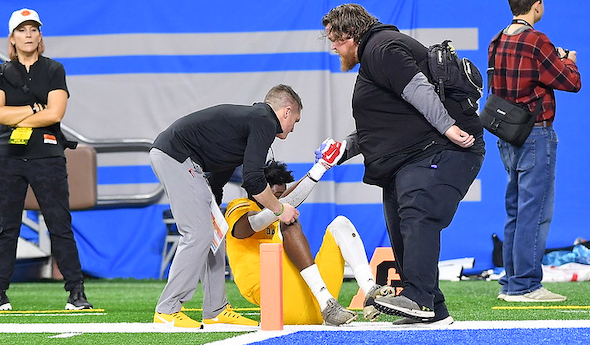
· Athletic trainer: Athletic trainers take care of athletes from prevention through rehabilitation. In collaboration with a physician, these professionals offer insights that help minimize risk and prevent injuries. They evaluate athletes and provide immediate care and treatment, sometimes even on the sidelines. They also provide rehabilitation and reconditioning after an injury or illness.
· Exercise physiologist: Exercise physiologists study the effect of exercise on the muscular, cardiovascular, and sympathetic and parasympathetic nervous systems. They examine functional capacity and strength due to endurance training or strength training. These professionals may also test athletes for VO2max (your oxygen volume while training) and body composition (the ratio of fatty mass to lean mass).
· Physical medicine and rehab physician: These professionals treat a variety of medical conditions that affect the brain, spinal cord, nerves, bones, joints, ligaments, muscles and tendons. They take the whole body into account to pinpoint problems and enhance performance without surgery.
· Physical therapist: Physical therapists diagnose and treat individuals of all ages with conditions that limit their ability to move and perform daily activities.
Other Specialized Professionals Who Care for Athletes
In addition to the health care professionals described above, athletes may meet with a host of experts, including:
· Nurses and medical assistants
· Occupational therapists
· Cardiologists
· Neurologists
· Behavioral health specialists
· Dietitians
· Complementary medical practitioners, such as acupuncturists and chiropractors
None of these individuals are "fitness professionals," a term nearly anyone can use to describe a range of professional activities. Rather, these sports medicine experts are part of a comprehensive team that includes at least one physician. They are each licensed by the state to provide specialized care to athletes.
Personal trainers, on the other hand, focus on helping people find their way around the gym, hold them accountable to achieve their goals and help new exercisers and seasoned fitness enthusiasts stick to a workout regimen.
If you're an athlete, you need a team of health professionals who can provide comprehensive care to reach your highest potential.
Christina Eyers, Ed.D., AT, ATC, is the Director of Athletic Training & Community Outreach with Henry Ford Sports Medicine.
Want to learn more? Henry Ford Health System sports medicine experts are treating the whole athlete, in a whole new way. From nutrition to neurology, and from injury prevention to treatment of sports-related conditions, they can give your athlete a unique game plan.
Visit henryford.com/sports or call (313) 972-4216 for an appointment within 24 business hours.