

NFHS Voice: MLK Provides Reminder
January 22, 2020
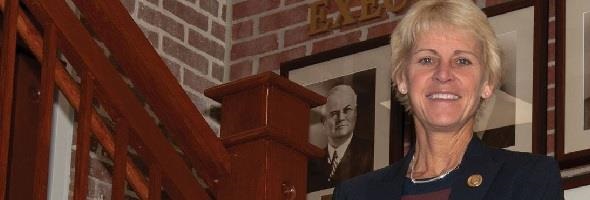
By Karissa Niehoff
NFHS Executive Director
On Monday, the nation observed Martin Luther King Jr. Day for the 35th time. This annual remembrance of the civil rights leader and his remarkable efforts in the 1950s and 1960s to combat racism in the United States continues as one of the most significant days on the calendar every year.
King’s “I Have a Dream” speech in Washington, D.C. in 1963 – one of the most iconic speeches in history – was the defining moment of the civil rights movement and led to the Civil Rights Act of 1964, which made desegregation a prerequisite to school funding and further strengthened the Supreme Court’s 1954 ruling in Brown v. Board of Education of Topeka.
As a result, separate schools for African Americans ended and King’s dream of equality for everyone began to occur.
Thanks, in part, to the efforts of King, who was a member of his school’s debate team at Booker T. Washington High School in Atlanta, blacks and whites were assimilated in schools and in athletics and other activities such as speech and debate.
A few years later in the early 1970s with the passage of Title IX, girls – both white and black – were provided the opportunity to participate in high school sports. With this landmark legislation on the heels of the civil rights movement, high school sports and activities were for EVERYONE.
Amazingly, participation in high school sports increased from 3.9 million to 6.4 million in seven years between 1971-72 and 1977-78 – a jump of about 2.5 million. Why? The opportunity to participate was now available to all.
High school athletes – male and female, black and white and other races – began to work together and excel both individually and as teams. Many have seized these opportunities and had a profound impact within their communities and nationally.
In the past five classes of the NFHS National High School Hall of Fame, 13 of the 22 athletes were minority males and females, including the likes of Derrick Brooks, Dusty Baker, Seimone Augustus, Nicole Powell, Lisa Fernandez, Nikki McCray and Marlin Briscoe. Other females were Tracey Fuchs, Carrie Tollefson, Missy West, Joni Huntley, Jackie Stiles and Cindy Brogdon.
In previous classes, there were Ozzie Newsome, Chauncey Billups, Kevin Johnson, Janet Evans, Sean Elliott, Cheryl Miller, Archie Griffin, Jackie Joyner-Kersee and Kim Mulkey.
Can you imagine the storied history of high school sports without these individuals?
Thanks to the efforts of many people in the 1960s and 1970s, there are more women and minorities in leadership positions today. Nine of our member state high school associations are led by minorities, including three females – Que Tucker of North Carolina, Sally Marquez of New Mexico and Rhonda Blanford-Green of Colorado.
Despite these advances in opportunities the past 50-plus years, the late Dr. King would be disappointed to hear about some of the disrespectful behavior in and around high school sports the past few years. Since our column in late October, we have heard of other racially-related incidents. Indeed, pain still occurs.
As we reflect on the tremendous efforts of Dr. Martin Luther King Jr. to bring everyone together, let it be a further reminder that all student activity participants – regardless of race, religion, political views or gender identity – should be treated with respect.
Dr. Karissa L. Niehoff is in her second year as executive director of the National Federation of State High School Associations (NFHS) in Indianapolis, Indiana. She is the first female to head the national leadership organization for high school athletics and performing arts activities and the sixth full-time executive director of the NFHS, which celebrated its 100th year of service during the 2018-19 school year. She previously was executive director of the Connecticut Association of Schools-Connecticut Interscholastic Athletic Conference for seven years.
This Week In High School Sports: 10/23/20
October 22, 2020
This edition features the Okemos boys tennis team's MHSAA Finals championship, presents Game Balls to Muskegon football's Myles Walton and the Houghton girls and boys cross country teams, presents a "You Make the Call" for football and concludes with a review of the weekend's Lower Peninsula Girls Golf Finals.
The 5-minute program leads off each week with feature stories from around the state from the MHSAA’s Second Half or network affiliates. "Be The Referee," a 60-second look at the fine art of officiating, comes in the middle of the show and is followed by a closing MHSAA "Perspective."
Listen to this week's show by Clicking Here.
Past editions
Oct. 16: Byron Center volleyball, girls golf aces - Listen
Oct. 9: Grand Rapids Union football, first 2020-21 champions - Listen
Oct. 2: East Lansing football, late Port Huron sportswriter Jim Whymer - Listen
Sept. 25: Sturgis football, soccer official Alexus Little - Listen
Sept. 18: COVID-19 review, this year's broadcast opportunities - Listen