


NFHS Voice: Participants Show Resilience
September 28, 2020
By Karissa Niehoff
NFHS Executive Director
The resiliency of players, coaches and leaders in high school activity programs the past seven months has been amazing. As attempts continue to offer all sports and performing arts this year, these individuals are making the most of tough times and demonstrating great resolve to change.
No doubt, high school juniors and seniors involved in high school sports and performing arts would have preferred a less turbulent end to their high school days, but many have been willing to go to great lengths to have an opportunity to participate.
In Michigan, when football was initially moved to the spring, student-athletes had two choices: be upset that their sport was postponed or seize the moment and look for new opportunities. Royce Daugherty of Watervliet High School chose the latter.
A 6-foot-3, 300-pound two-way starter last year as a freshman on the Watervliet football team, Daugherty opted to join the cross country team! He said he decided to run cross country because it would help him get tougher mentally and physically.
Daugherty’s decision was perhaps predictable given that he played four sports – football, wrestling, basketball and baseball – as a freshman. Although the switch was short-lived with Michigan reinstating football a couple of weeks ago, Daugherty’s resilience is remarkable and a good predictor of future success.
In Colorado, with football on hold this fall, members of the Limon High School two-time defending Class 1A state football championship team petitioned the school administration to resurrect the golf program.
“Sports are our lifeline,” said Andy Love, the school’s baseball coach who agreed to coach the golf team, in an article posted on CHSAANow. “Our community follows our sports so strongly. It gives our kids this great atmosphere and environment whether it’s the football field, the basketball court or whatever. Our community rallies around our kids.”
Turning a problem into an opportunity, the Limon High School football players and staff demonstrated the never-give-up spirit of high school activities.
In Kansas, with the heading of “the show must go on,” the Goodland High School athletic director and superintendent stepped in to coach the football team a few weeks ago because the head coach and assistant coach were quarantined during the week. The result? Goodland, a Class 3A school, defeated Liberal High School, a Class 5A school!
Coaches have demonstrated resiliency as well by finding new ways to conduct competition and keep students engaged. In Minnesota, at a swimming meet between Chaska High School and Bloomington Kennedy High School, Chaska swimmers occupied lanes 1 to 4, while Kennedy swimmers were in lanes 5 to 8 for social distancing purposes.
In the same state, the South Suburban Conference decided to conduct virtual swim meets this fall. Each team competes in 11 races in their own pool, and the coaches compare times to determine scoring. Two methods in the same state, both done to keep students engaged but to minimize risks of the virus.
On the performing arts side, teachers and leaders have benefited from an aerosol study conducted by the NFHS and more than 125 other organizations to determine best practices. In some cases, band and other music programs were moved to the spring, but leaders continued to engage with students in many innovative ways.
Larry Friend, assistant principal of Caesar Rodney High School in Camden, Delaware, in a Dover Post article, told his students, “This is not the time to put the instruments aside. This is not the time to stop singing. This is not the time to run away from your passion. This is an opportunity to run toward your passion and to find what it is that motivates you to reconnect.”
Band directors in Michigan – like those in many other states – are finding new ways to keep music going during the pandemic – from outdoor band camps to all-virtual rehearsals.
“We have some really incredible band directors doing some really neat things locally,” said Josh Bartz, director of bands at Portage Northern High School in an interview with WWMT-TV in Kalamazoo.
In the same interview, Chris Ludwa, assistant professor of music at Kalamazoo College, said, “I think you will always find ways to make art. Oftentimes, when in society there is deep need, deep pain, struggle, oppression – that’s the time when art flourishes.”
These are but a few of the great stories that have occurred across the country as players, coaches, administrators, officials, parents and fans are making the most of tough times. While these student participants may not become stellar athletes at the next level or excel at higher levels in the arts, their resiliency through these tough times will play a major role in their future success.
High school activity programs – building resilient people for the future of our nation.
Dr. Karissa L. Niehoff is starting her third year as executive director of the National Federation of State High School Associations (NFHS) in Indianapolis, Indiana. She is the first female to head the national leadership organization for high school athletics and performing arts activities and the sixth full-time executive director of the NFHS, which celebrated its 100th year of service during the 2018-19 school year. She previously was executive director of the Connecticut Association of Schools-Connecticut Interscholastic Athletic Conference for seven years.
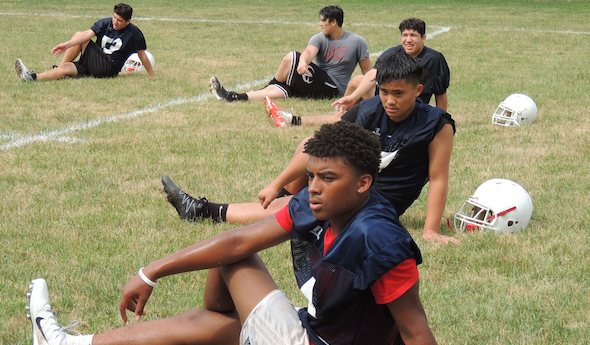
Add Rest Days to Your Workout Routine
June 2, 2020

Henry Ford Health System
Whether you're new to exercise or a seasoned enthusiast, it's tempting to adopt an all-go, no-quit attitude. This is especially common when you're are trying to achieve a fitness goal. Maybe you want to run a 5K, or maybe you have 10 pounds you want to shed before going on vacation.
"Whatever the driver, it's important to remember that scheduling time for rest and rejuvenation is a critical component of any workout regimen," says James Moeller, M.D., a sports medicine specialist at Henry Ford Health System.
Building in Rest Days
From high-intensity interval training (HIIT) and spin to barre and Zumba, popular workouts increasingly push exercisers to go faster, longer, stronger. This prolonged physical stress can lead to overuse injuries, such as stress fractures, muscle strains and joint pain. Excessive exercise can also lead to hormonal changes, disrupted sleep patterns, decreased immunity and mood swings.
“Working out, especially resistance training, breaks tissues down, causing microscopic damage,” Dr. Moeller says. "Rest days allow your muscles time to rebuild."
So how much rest do you really need? There isn't a one-size-fits-all prescription. Factors like your age, fitness level, the intensity of your workout and the amount of training you do weekly will impact the amount of recovery time you need. But there are some basic guidelines for rest days:
1. Go easy: Rest is a relative term. "It's not just sitting on the couch with an iced tea," says Dr. Moeller. "You may still be exercising on 'rest' days, but at a lower intensity." Maybe you go for a brisk walk or ride your bike to work. Take a yoga class or do some dynamic stretching. The key is to make sure you're not overworking the same body parts.
2. Get sufficient sleep: Sleep is a key component of muscle repair and rebuilding. During sleep, your body’s production of growth hormone increases. Not getting quality shuteye thwarts your body's production of growth hormone and can impact your performance.
3. Give overtaxed muscles a break: You don't need to skip the gym on specific days each week, but you do need to rotate which body parts you're working. The general rule is to give muscles 48 hours to recover after a workout. So it's a good idea to take two to three days off before working the same muscle groups again.
4. Stay hydrated: Make sure to restore lost fluids before, during and after a workout. Dehydration can lead to overheating, headaches and muscle fatigue, among other ailments. You don’t need a sports drink; water is best. "Sports drinks aren't required unless you're getting into very high intensity activity, or exercising for more than one hour at a time," Dr. Moeller says.
5. Pay attention to your body: A lot of people try to work out through pain and fatigue. If there's a heaviness to your movements, or if you feel like your muscles are not responding appropriately to the stress you're providing, take a time out. "It's really about learning to read your body's signals," says Dr. Moeller.
Health authorities and news headlines widely publicize the health benefits of exercise — and the consequences of inactivity. The American Heart Association recommends that adults get at least 150 minutes of moderate-intensity exercise per week, plus strength training two or three days per week. Less discussed are the negative effects of not allowing your body sufficient time to rest.
Getting sufficient rest between workouts is just as important as participating in regular exercise. "Both are part of the total process required to build strength, endurance and muscle mass," Dr. Moeller says.
Want to learn more? Henry Ford Health System sports medicine experts are treating the whole athlete, in a whole new way. From nutrition to neurology, and from injury prevention to treatment of sports-related conditions, they can give your athlete a unique game plan.
Visit henryford.com/sports or call (313) 972-4216 for an appointment within 24 business hours.