

NFHS Voice: Salute Seniors with Spring on Hold
March 27, 2020
By Karissa Niehoff
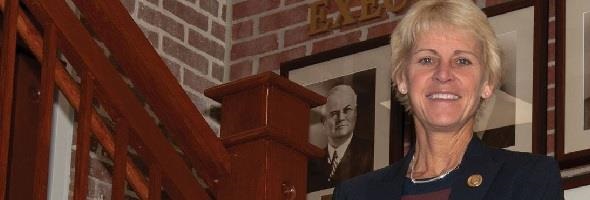
NFHS Executive Director
A visitor to the local high school in late March would normally find boys and girls engaged in track and field, baseball, softball and lacrosse practices. Inside the building, some students would be involved with speech or debate activities. Unfortunately, this is not a normal year – far from it.
Spring sports playing fields are empty. High school sports and activities, with more than 12 million participants, are on pause, and high school athletes, coaches, athletic directors, parents and other fans are trying to determine when these programs will return.
The ever-changing news we are receiving almost on an hourly basis is more than one can comprehend as we all deal with this global health crisis. Each day, with the spread of the coronavirus, we try to determine what has changed since the day before. Can we go to work? Can we leave our house to go to the store?
Like every other activity in our nation, high school sports and activity programs are on hold. With all schools closed for varying amounts of time – some to the end of the academic year – millions of participants in spring sports and activities are on the sidelines awaiting the green light for competition to resume.
In past years, our member state associations and the 19,500 high schools across the country have had to postpone or cancel events for short periods of time due to weather or other factors, but this is unprecedented. The reality is that spring sports may never occur in some states – particularly those where schools are closed for the academic year. And this would be doubly disappointing in those states that were not able to conduct or complete state basketball championships.
The possibility of losing spring sports is particularly disappointing for graduating seniors. While everyone is affected by this health crisis and has their own issues to confront, it is important for everyone involved in high school activity programs to salute those seniors – boys and girls in sports and activities programs who have sacrificed for 3½ years but may not be able to reach the finish line.
While they may miss some of the final games and events, the benefits of being involved in these programs will carry them for a lifetime. The early-morning practices, offseason workouts and late-night studying after a day of activities will undoubtedly make them stronger and more dedicated in their future professions.
We thank all high school athletes and performing arts participants for the great memories – especially those who may not be able to complete their races or sing in the music ensemble this year. While some will have more competitive opportunities in sports and activities, for others that continued involvement may be in the form of coaching or officiating, but the impact of involvement in these programs will last a lifetime.
There have been times in the past when high school sports and performing arts helped individuals in communities through difficult times – events like weather-related disasters or school shootings as examples. We believe that these programs will play an even larger role once the coronavirus pandemic subsides and we are able to return to normalcy.
Why? Because after our days, weeks and perhaps months of social distancing, teamwork will help us all come back together, and there is no better demonstration of teamwork than education-based high school sports and activity programs.
We all anxiously await the day when the whistles blow and the curtains rise again.
Dr. Karissa L. Niehoff is in her second year as executive director of the National Federation of State High School Associations (NFHS) in Indianapolis, Indiana. She is the first female to head the national leadership organization for high school athletics and performing arts activities and the sixth full-time executive director of the NFHS, which celebrated its 100th year of service during the 2018-19 school year. She previously was executive director of the Connecticut Association of Schools-Connecticut Interscholastic Athletic Conference for seven years.

Parents, Make a Pledge
October 24, 2012
By Scott Westfall
MSU Institute for the Study of Youth Sports
NOTE: This is the second of a two-part viewpoint explaining the importance of coaches and parents setting proper examples for young athletes in their treatment of game officials. Click to read Part 1.
 From time to time, even the most well-intentioned parents yell at officials things they are not proud of later.
As the head coach, it is essential to communicate expectations at the annual preseason parent meeting. Let parents know you want this to be classy program, and you need their help. Inform them that you, your assistant coaches, and the players (their children) will not be yelling at officials, and that you would be grateful if they would do the same.
Let them know that although other teams and their fans might holler at the officials, this team will be above the fray.
Encourage parents to applaud players from both sides. While they undoubtedly want your team to win, it is a sign of class to applaud the opposition for a good effort and/or performance at the end of the contest. In addition, ask your parents to sign a Parent Pledge Form stating that they will hold themselves to a higher standard. See an example below:
I. I pledge to respect the sport. I understand the importance of setting a good example for my child. No matter what others may do, I will show respect for all involved including coaches, players, opposing coaches, opposing players, opposing fans and officials. I understand that officials make mistakes. If the official makes a bad call against our team, I will respect the sport and remain silent.
Initials: ________ Initials: ________
II. I pledge to contribute to a positive team culture. I will not be the parent in the stands or behind the scenes who puts down the kids or the team. I understand this creates a negative atmosphere and can damage a team’s culture. If I have any problem, I pledge to either bring it to the coach with a solution-oriented mindset, or choose to remain silent. In either case, I will contribute only in a positive way to my child’s team culture.
Initials: ________ Initials: ________
After instituting this practice, the first season might seem like more of an experiment. The second season may become a work in progress. But by the time the kids and parents have been in the program for three and four years, it will have become the norm and soon a tradition that is gladly passed down to the new families in the program.
The mantra of your parents will change, and they will take pride in acting differently than what they see at other schools. Other teams will see your parents stand up and applaud participants from both sides during wins and losses, and this act of class will become your team’s identity.
Respecting authority is essential in any society. This respect must be given to judges, policemen and school principals, to teachers, coaches and even referees.
Reinstituting this respect for officials is going to be a challenge, but a challenge that is worthwhile. A coach has the power to transform a program, which will in turn affect the way assistant coaches, parents, and fans conduct themselves.
In the end, the individuals who will receive the greatest benefit are the ones you are doing your job for in the first place – the kids.
Scott Westfall has spent the last 10 years as a teacher, coach, and athletic director in Fort Collins, Colo. He currently is working on his Doctorate at Michigan State University, with an emphasis in Sport Psychology and Athletic Administration, and assisting the MHSAA with its student leadership programs. Westfall is a former athlete who participated in football, wrestling, tennis and cross country at the high school level, and rugby at the collegiate level. He can be reached at [email protected].