


NFHS Voice: Viewership Continues to Climb
February 28, 2020
By Karissa Niehoff
NFHS Executive Director
Often, the public’s concept of high school sports is a football or basketball game televised on a national cable channel between highly-ranked prep teams from different parts of the country – or the game-by-game tracking of “star” players like LeBron James or Zion Williamson by national media sources.
And why not? That is the way we follow college and professional sports. While there are certainly fans with loyalties to hometown teams, most viewers want to watch the best teams. When it comes to prime-time games, the networks are only going to feature the top teams and players.
The answer to the above question, very simply, is that high school sports are different. While there are about three percent of the almost eight million participants in high school sports who may play in those marquee college or professional games on television, the true stories of education-based athletics reside with the other 97 percent.
As the national leader and advocate for high school sports and performing arts programs in the United States, the NFHS is always looking for ways to showcase education-based activities in our nation’s schools and to demonstrate the accomplishments of the millions of participants in all sports.
And for the past seven years through the NFHS Network, we have been doing just that. In addition to the estimated 350 million fans who attend high school games annually, the NFHS has added opportunities for millions of others to watch high school sports through the streaming of more than 100,000 events last year at www.NFHSNetwork.com.
While viewers – and there were more than 14 million visits to the site last year – may be able to watch future college and pro players on the NFHS Network, that’s not the focus of those watching games on their phones, tablets or computers. Instead, the Network provides an opportunity for individuals to support their high school teams – perhaps in another part of the country years after graduating from high school. With the 100,000-plus events last year featuring numerous sports and events and divided 50-50 between girls and boys sports, the Network also offers parents or grandparents the chance to watch their kids’ and grandkids’ games when distances prevent attending games.
Although there was concern by some when we started this venture that streaming high school games on the Internet would adversely affect in-stadium attendance, such has not been the case. About 70 percent of NFHS Network subscribers watch games from beyond a drivable distance.
And the best stories are when the driving distances are REALLY not favorable – as in some other parts of the world. Easily the most heartwarming aspect of the NFHS Network has been the opportunity for men and women overseas in the military to watch their sons and daughters play high school sports. These are truly priceless moments.
While there is still nothing like actually watching a high school game in person, we recognize that technology has provided options for people in all areas of daily life. So, the opportunity to bring high school sports right into the home through the NFHS Network has been a dream come true.
Dr. Karissa L. Niehoff is in her second year as executive director of the National Federation of State High School Associations (NFHS) in Indianapolis, Indiana. She is the first female to head the national leadership organization for high school athletics and performing arts activities and the sixth full-time executive director of the NFHS, which celebrated its 100th year of service during the 2018-19 school year. She previously was executive director of the Connecticut Association of Schools-Connecticut Interscholastic Athletic Conference for seven years.
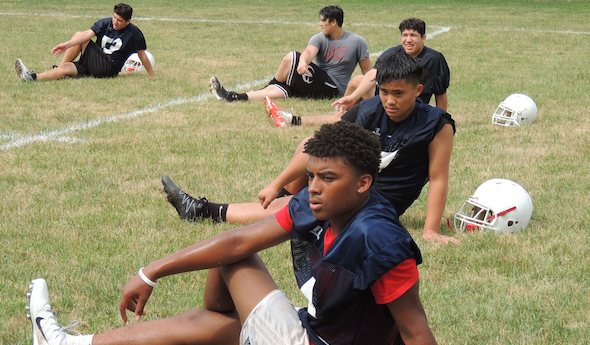
Add Rest Days to Your Workout Routine
June 2, 2020

Henry Ford Health System
Whether you're new to exercise or a seasoned enthusiast, it's tempting to adopt an all-go, no-quit attitude. This is especially common when you're are trying to achieve a fitness goal. Maybe you want to run a 5K, or maybe you have 10 pounds you want to shed before going on vacation.
"Whatever the driver, it's important to remember that scheduling time for rest and rejuvenation is a critical component of any workout regimen," says James Moeller, M.D., a sports medicine specialist at Henry Ford Health System.
Building in Rest Days
From high-intensity interval training (HIIT) and spin to barre and Zumba, popular workouts increasingly push exercisers to go faster, longer, stronger. This prolonged physical stress can lead to overuse injuries, such as stress fractures, muscle strains and joint pain. Excessive exercise can also lead to hormonal changes, disrupted sleep patterns, decreased immunity and mood swings.
“Working out, especially resistance training, breaks tissues down, causing microscopic damage,” Dr. Moeller says. "Rest days allow your muscles time to rebuild."
So how much rest do you really need? There isn't a one-size-fits-all prescription. Factors like your age, fitness level, the intensity of your workout and the amount of training you do weekly will impact the amount of recovery time you need. But there are some basic guidelines for rest days:
1. Go easy: Rest is a relative term. "It's not just sitting on the couch with an iced tea," says Dr. Moeller. "You may still be exercising on 'rest' days, but at a lower intensity." Maybe you go for a brisk walk or ride your bike to work. Take a yoga class or do some dynamic stretching. The key is to make sure you're not overworking the same body parts.
2. Get sufficient sleep: Sleep is a key component of muscle repair and rebuilding. During sleep, your body’s production of growth hormone increases. Not getting quality shuteye thwarts your body's production of growth hormone and can impact your performance.
3. Give overtaxed muscles a break: You don't need to skip the gym on specific days each week, but you do need to rotate which body parts you're working. The general rule is to give muscles 48 hours to recover after a workout. So it's a good idea to take two to three days off before working the same muscle groups again.
4. Stay hydrated: Make sure to restore lost fluids before, during and after a workout. Dehydration can lead to overheating, headaches and muscle fatigue, among other ailments. You don’t need a sports drink; water is best. "Sports drinks aren't required unless you're getting into very high intensity activity, or exercising for more than one hour at a time," Dr. Moeller says.
5. Pay attention to your body: A lot of people try to work out through pain and fatigue. If there's a heaviness to your movements, or if you feel like your muscles are not responding appropriately to the stress you're providing, take a time out. "It's really about learning to read your body's signals," says Dr. Moeller.
Health authorities and news headlines widely publicize the health benefits of exercise — and the consequences of inactivity. The American Heart Association recommends that adults get at least 150 minutes of moderate-intensity exercise per week, plus strength training two or three days per week. Less discussed are the negative effects of not allowing your body sufficient time to rest.
Getting sufficient rest between workouts is just as important as participating in regular exercise. "Both are part of the total process required to build strength, endurance and muscle mass," Dr. Moeller says.
Want to learn more? Henry Ford Health System sports medicine experts are treating the whole athlete, in a whole new way. From nutrition to neurology, and from injury prevention to treatment of sports-related conditions, they can give your athlete a unique game plan.
Visit henryford.com/sports or call (313) 972-4216 for an appointment within 24 business hours.