


Parents, Make a Pledge
October 24, 2012
By Scott Westfall
MSU Institute for the Study of Youth Sports
NOTE: This is the second of a two-part viewpoint explaining the importance of coaches and parents setting proper examples for young athletes in their treatment of game officials. Click to read Part 1.
 From time to time, even the most well-intentioned parents yell at officials things they are not proud of later.
As the head coach, it is essential to communicate expectations at the annual preseason parent meeting. Let parents know you want this to be classy program, and you need their help. Inform them that you, your assistant coaches, and the players (their children) will not be yelling at officials, and that you would be grateful if they would do the same.
Let them know that although other teams and their fans might holler at the officials, this team will be above the fray.
Encourage parents to applaud players from both sides. While they undoubtedly want your team to win, it is a sign of class to applaud the opposition for a good effort and/or performance at the end of the contest. In addition, ask your parents to sign a Parent Pledge Form stating that they will hold themselves to a higher standard. See an example below:
I. I pledge to respect the sport. I understand the importance of setting a good example for my child. No matter what others may do, I will show respect for all involved including coaches, players, opposing coaches, opposing players, opposing fans and officials. I understand that officials make mistakes. If the official makes a bad call against our team, I will respect the sport and remain silent.
Initials: ________ Initials: ________
II. I pledge to contribute to a positive team culture. I will not be the parent in the stands or behind the scenes who puts down the kids or the team. I understand this creates a negative atmosphere and can damage a team’s culture. If I have any problem, I pledge to either bring it to the coach with a solution-oriented mindset, or choose to remain silent. In either case, I will contribute only in a positive way to my child’s team culture.
Initials: ________ Initials: ________
After instituting this practice, the first season might seem like more of an experiment. The second season may become a work in progress. But by the time the kids and parents have been in the program for three and four years, it will have become the norm and soon a tradition that is gladly passed down to the new families in the program.
The mantra of your parents will change, and they will take pride in acting differently than what they see at other schools. Other teams will see your parents stand up and applaud participants from both sides during wins and losses, and this act of class will become your team’s identity.
Respecting authority is essential in any society. This respect must be given to judges, policemen and school principals, to teachers, coaches and even referees.
Reinstituting this respect for officials is going to be a challenge, but a challenge that is worthwhile. A coach has the power to transform a program, which will in turn affect the way assistant coaches, parents, and fans conduct themselves.
In the end, the individuals who will receive the greatest benefit are the ones you are doing your job for in the first place – the kids.
Scott Westfall has spent the last 10 years as a teacher, coach, and athletic director in Fort Collins, Colo. He currently is working on his Doctorate at Michigan State University, with an emphasis in Sport Psychology and Athletic Administration, and assisting the MHSAA with its student leadership programs. Westfall is a former athlete who participated in football, wrestling, tennis and cross country at the high school level, and rugby at the collegiate level. He can be reached at [email protected].
Let's Learn What This Time Can Teach Us
April 8, 2020
By Kevin Wolma
Hudsonville Athletic Director
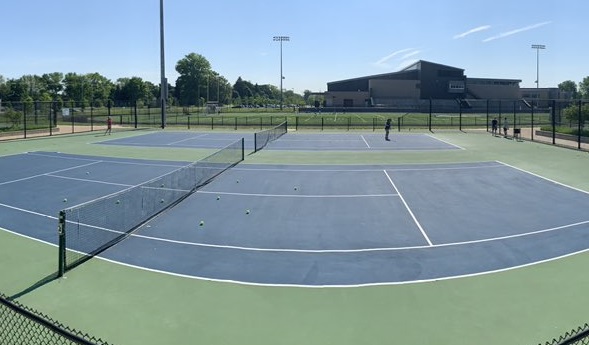
A simple service return that landed into the net last fall ended my son’s tennis career.
When you are a senior, there is an end date. Just like that it is over.
Seems like yesterday I was playing catch with him in the front yard. Seems like yesterday I was rebounding as he shot at our basketball hoop. Seems like yesterday I put a tennis racquet in his hands for the first time. The success and failures along with the laughter and frustration all came to an end.
Along the way people would warn me about how fast the time goes, but when you are living day to day, you don’t really believe them. Going into the final day of the season, I had those thoughts that this would be the last day I’d watch my son play a competitive tennis match, but it didn't really hit me until I watched that last ball go into the net.
However, I also realized that we were going to experience many final moments during his senior year and this was a natural part of the journey. What I didn't know on that day was that this was the very last time I would see him compete. The cancellation of spring sports season with the COVID-19 crisis took that opportunity away from him competing in track & field this spring.
We never know when things will be taken away from us.
Administrators, Athletes, Coaches, Officials, Trainers:
Do you have a message that will provide inspiration, motivation or comfort to Michigan’s high school sports community during this unprecedented time? We’d like to help share it. Submit your “viewpoint” – written or video – to [email protected] for consideration for publication on Second Half.
My daughter, also a senior, will also lose the opportunity to finish her tennis career at Hudsonville because of the COVID-19 shutdown. For the two of us, tennis was more than a sport – it was our connection. From the time she was 5 years old hitting foam balls in the gym to now, the tennis court became far more than a surface with a net and lines.
The tennis court was our place of solitude. We hit thousands and thousands of tennis balls over the years. But more importantly, the tennis court created a platform where lessons were shared, stories of success and failure were told, and a love for a sport was born. I dread the day the tennis court sits silent, because that means my daughter will move on to her next stage in life. That time could be now.
Sports is not the end-all, and it surely does not define a person. However, it is a mechanism to bring people together and to teach life lessons that are often taken for granted, until we realize it is over.
The purpose of this article is not to talk about the end as much as it is to emphasize the importance of those moments leading to the end. Don’t let those moments slip away. If your son or daughter asks you to go outside and play catch, please put down the computer or phone and do it. The email can wait. The phone call can wait. The game on TV can wait.
Admittedly, I have been occasionally guilty of this as well and now realize the importance of time and how unpredictable it can be. I have one more chance with my youngest daughter to make sure we don’t take those moments for granted. They are moments we will never get back, and again, we never know when those moments will be taken away.
As a high school athletic director, all I’ve wanted was more time. Sixty plus-hour work weeks while trying to navigate work and home schedules is often a challenge. Many of us live this life every day. We all would like more time.
However, over a 48-hour span during the month of March 2020, time was all I had. In those two days, after the Utah Jazz’ Rudy Gobert tested positive for COVID-19, both the NCAA and NBA shut down while schools and businesses began closing their doors indefinitely.
Now, time is all any of us have.
My hope is that we realize time is a gift and we must be willing to receive it when available. Take advantage of the time to regain a perspective of what is really important in our lives and act on that. This moment in time will end and for many of us, our lives will resume juggling personal, work, and sports schedules. Are we ready? Did we take this “time off” from the busyness of life and focus on how we can maximize every moment of every day?
For some of us, this gives us a chance to hit the restart button and maybe look at youth sports through a different lens. Maybe our interactions with our kids, coaches, and officials will be more positive. Maybe we worry less about the outcome and more about the process. Once we get back to the playing field, maybe we will look at participation in sports differently. Maybe we will understand that it is truly a gift, and every gift deserves a level of gratitude – gratitude toward the many people who allow this experience, and all its life lessons, to transpire.
Years from now, when we look back at the year of COVID-19, will we still value the essence of time and living in the moment? Will we still give gratitude to the gift of sports? Each one of us wants to look back at our kid’s experiences with athletics and have no regrets. No regrets with our actions. No regrets with our time. We have an opportunity as parents right now to pause, reflect, and make changes that could impact youth sports for generations to come.
We must seize this opportunity now because this part of life will be over before we know it. For some of us, maybe even more quickly than we expected.
Wolma has served as Hudsonville's athletic director since 2011 and previously coached boys varsity basketball and girls varsity golf among other teams. He also previously taught physical education and health. Photo courtesy of the Hudsonville High School tennis programs.