

Past MHSAA standouts to Compete with World's Elite at Winter Olympics
By
Jon Ross
MHSAA Director of Broadcast Properties
January 29, 2026
The XXV Winter Olympic Games start Friday, Feb. 6 with games taking place in Milan and Cortina d’Ampezzo, Italy. Ninety-three countries are sending more than a combined 3,500 athletes to compete for 195 medals, with a handful of former MHSAA athletes hoping to land on the podium.
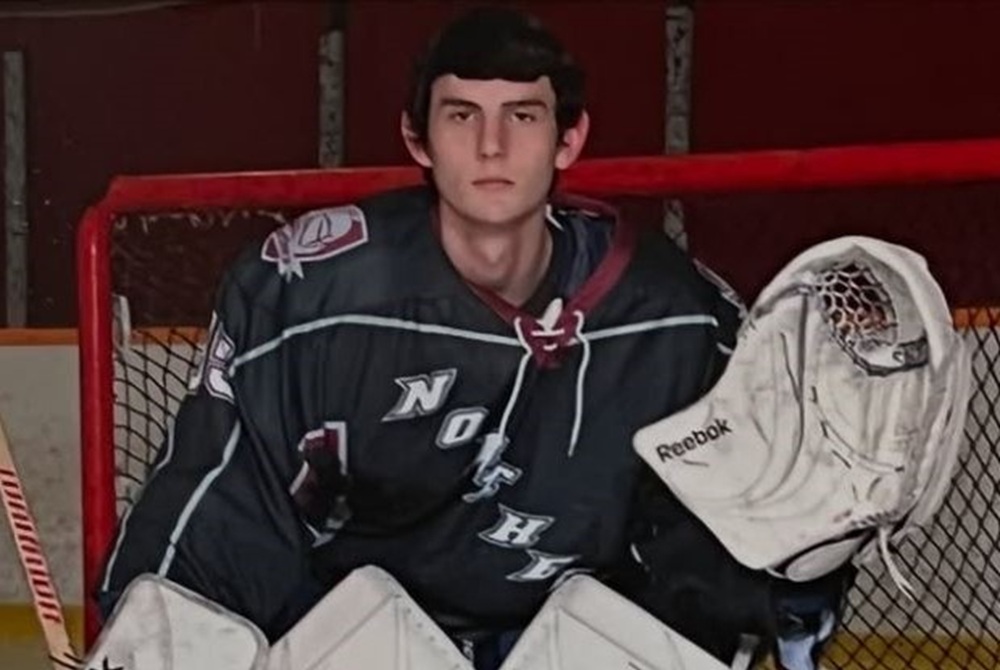
The Team USA men’s ice hockey team will be backstopped by Connor Hellebuyck, a three-time Vezina Award winner as the NHL’s top goalie after playing at Walled Lake Northern and graduating in 2011. Joining him on the ice will current Detroit Red Wing Dylan Larkin and Columbus Blue Jacket Zach Werenski. Larkin played soccer and golf at Waterford Mott before going to play hockey at the University of Michigan and in the NHL. Werenski played on the JV boys lacrosse team for one season at Grosse Pointe North.
 The women’s ice hockey team features 2014 North Farmington grad Megan Keller – who played softball and basketball while in high school, in addition to travel hockey.
Nick Baumgartner will be participating in his fourth Winter Olympiad. He qualified in snowboard cross in 2010, 2014 and won Olympic gold in 2022. The 2000 graduate of West Iron County High School played football, wrestled, and ran track.
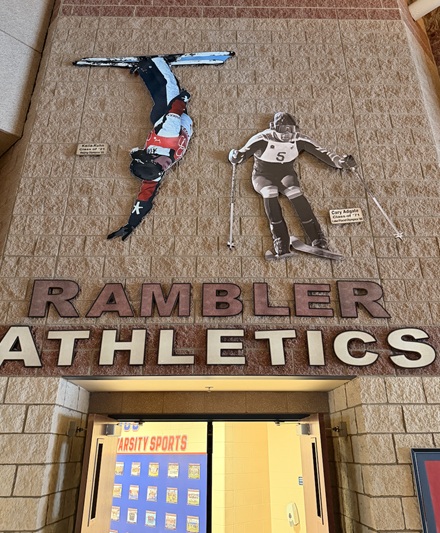
Boyne City graduate Kaila Kuhn (2021) is headed to her second Olympics. She finished eighth in freestyle ski aerials in Beijing in 2022 and is looking to improve on that this year. She ran track her senior year at Boyne City. Her father, Chris, coached the ski program at Boyne City from 2017-2025, and her older brother Quinton skied for the Ramblers.
Figure skater Emilea Zingas, a 2020 graduate of Grosse Pointe South, played JV girls lacrosse while participating on the varsity figure skating team.
And finally, while they didn’t participate in MHSAA-sponsored sports, figure skater Evan Bates (Ann Arbor Huron 2007) was on the figure skating team and snowboarder Jake Vedder (Pinckney 2016) was on the school-sponsored snowboarding team.
PHOTOS (Top) Connor Hellebuyck poses for a photo while playing at Walled Lake Northern. (Middle) This tribute at Boyne City High School celebrates Olympians Kaila Kuhn, class of 2021, and Cary Adgate, class of 1971. Adgate was a two-time Olympian in alpine skiing, competing in 1976 and 1980. (Photos courtesy of the respective schools.)

This Week In High School Sports: 3/5/21
By
Geoff Kimmerly
MHSAA.com senior editor
March 5, 2021
This week's edition explains how teams will be seeded for the opening rounds of the MHSAA's hockey and basketball tournaments, and features a high-scoring Elk Rapids basketball family.
The 5-minute program each week includes feature stories from around the state from the MHSAA’s Second Half or network affiliates, along with "Be The Referee," a 60-second look at the fine art of officiating.
Listen to this week's show by Clicking Here.
Past editions
Feb. 26: Skiing Finals review, newly-scheduled start of Spring sports - Listen
Feb. 19: 1,000-point basketball scorers, Skiing Finals preview - Listen
Feb. 12: Scholar-Athlete Awards, Winter contact sports return - Listen
Jan. 29: 11-Player Football Finals in review - Listen
Jan. 22: 8-Player Football, Girls Volleyball, Girls Swimming & Diving Finals in review - Listen
Jan. 15: Game-winning kicks, playing for mom - Listen
Jan. 8: Fall sports return, sacrificing for sportsmanship - Listen
Nov. 13: Cross Country champions, Soccer Finals in review, official selection - Listen
Nov. 6: University Liggett's William Cooksey, boys tennis four-time individual champions - Listen
Oct. 30: Upper Peninsula Cross Country Finals in review - Listen
Oct. 23: Lower Peninsula Girls Golf, Boys Tennis Finals in review - Listen
Oct. 16: Byron Center volleyball, girls golf aces - Listen
Oct. 9: Grand Rapids Union football, first 2020-21 champions - Listen
Oct. 2: East Lansing football, late Port Huron sportswriter Jim Whymer - Listen
Sept. 25: Sturgis football, soccer official Alexus Little - Listen
Sept. 18: COVID-19 review, this year's broadcast opportunities - Listen