

Youth Sports: 'Focus on the End User'
August 24, 2018
By Geoff Kimmerly
Second Half editor
As we at the MHSAA work toward promoting the benefits of a multi-sport experience at the high school level, we – with our Multi-Sport Task Force – realize these messages will be most valuable when they reach parents of children at the youth levels.
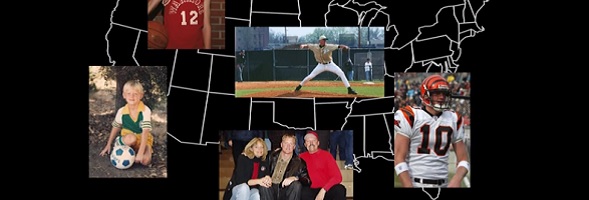
Below is an 18-minute TEDx talk by Travis Dorsch, a former kicker and punter at Purdue University and with multiple NFL teams who went on to receive his doctorate from Purdue and currently serves as an assistant professor at Utah State. He has conducted significant study on children’s youth sport participation and its impacts particularly on family relationships.
In this talk, he speaks on proper expectations for young athletes and how financial costs of youth sports have twisted those expectations.
Dorsch will speak at the 6th Annual Kristen Marie Gould Endowed Lecture on Sport for Children and Youth on Sept. 6 at Michigan State University. He will be lecturing on “From Sandlot to Stadium: What We Know, What We Don't, and Best Practices for Parent Involvement in Youth Sport.”
Flashback 100: The Other Mr. Forsythe in Michigan School Sports
December 13, 2024
(The following is a reposted 2017 blog entry by retired MHSAA Executive Director Jack Roberts)
The modern world is quick to dismiss pioneers who paved our way, but it would be wrong to diminish the accomplishments of those who gave form and function to school-sponsored sports in Michigan.
It was a time when travel was arduous and communications were slow. A time when the fundamentals of sports we take for granted today were being determined. A time when the basic rules of competition and eligibility we have today were being developed.
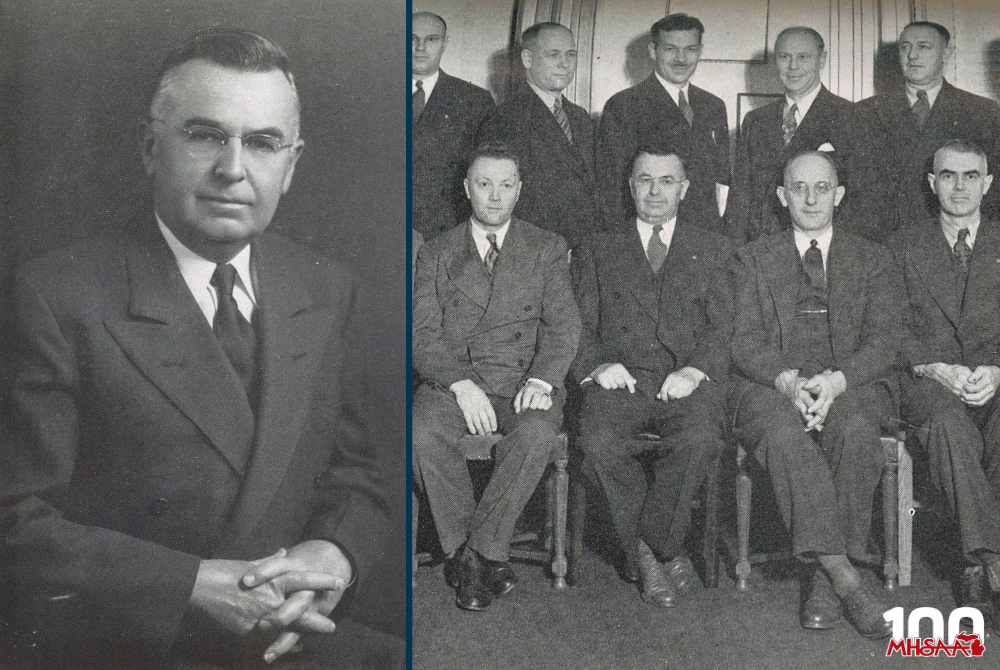
No single person has done more than L.L. Forsythe to shape school sports in Michigan, and the nation. This is Lewis L. Forsythe, not Charles E. Forsythe, the first and longest-serving executive director of the Michigan High School Athletic Association.
In 1918-19 and again in 1923-24, L.L. Forsythe served as president of the MHSAA’s predecessor organization, the Michigan Interscholastic Athletic Association, which operated from 1910 to 1924. He served on its board of control from 1921 to 1924.
When the MIAA gave way to the MHSAA in 1924, L.L. Forsythe was elected president of its Representative Council, and he served unpaid in that position for 18 consecutive years (1924 to 1942).
L.L. Forsythe served on the Executive Committee of the newly forming National Federation of State High School Associations from 1922 to 1940, and was the young national organization’s vice president for 15 of those 18 years.
During these years, the MHSAA commenced state tournaments in seven sports and the National Federation ended national high school tournaments in all sports. Playing rules moved from a local hit-and-miss process to a national system that emphasized standardization and safety. Much that we do routinely now was a matter of first impression then.
Previous "Flashback 100" Features
Dec. 6: Coleman's Legendary Heroics Carry Harrison Through Repeat - Read
Nov. 29: Harbaugh Brothers' Football Roots Planted in Part at Pioneer - Read
Nov. 22: 8-Player Football Finals Right at Home at Superior Dome - Read
Nov. 15: Leland Career Helps Set Stage for Glass' International Stardom - Read
Nov. 8: Future Baseball Pro Led Escanaba's Legendary Football Title Run - Read
Nov. 1: Michigan High School Baseball Trio Provide World Series Voices - Read
Oct. 25: Before Leading Free World, Ford Starred for Champion GR South - Read
Oct. 18: Mercy Links Legend Becomes World Golf Hall of Famer - Read
Oct. 11: Fisher Races to Finals Stardom on Way to U.S. Olympic First - Read
Oct. 4: Lalas Leaves High School Legacies on Ice & Pitch - Read
Sept. 27: Tamer's History-Making Run Starts in Dexter, Continues to Paris - Read
Sept. 20: Todd Martin’s Road to Greatness Starts at East Lansing - Read
Sept. 13: James Earl Jones, Dickson High Hoops to Hollywood Legend - Read
Sept. 6: Pioneers' Unstoppable Streak Stretches 9 Seasons - Read
Aug. 30: Detroit dePorres Rushes to 1995 Class CC Football Championship - Read
PHOTOS At left is L.L. Forsythe; at right, seated second from left, is L.L. Forsythe with members of the Representative Council in 1939. (MHSAA file photos.)