

Over MLB Draft's History, Michigan High Schools Graduate 25 1st-Round Picks
By
Ron Pesch
MHSAA historian
May 6, 2022
Long before today’s travel ball captivated the scene, recreation sandlot baseball programs – often sponsored by local businesses and guided by volunteer coaches – sparked the dreams of countless kids, instilling a love of the game and a hope they might, one day, grace a bubble-gum card.
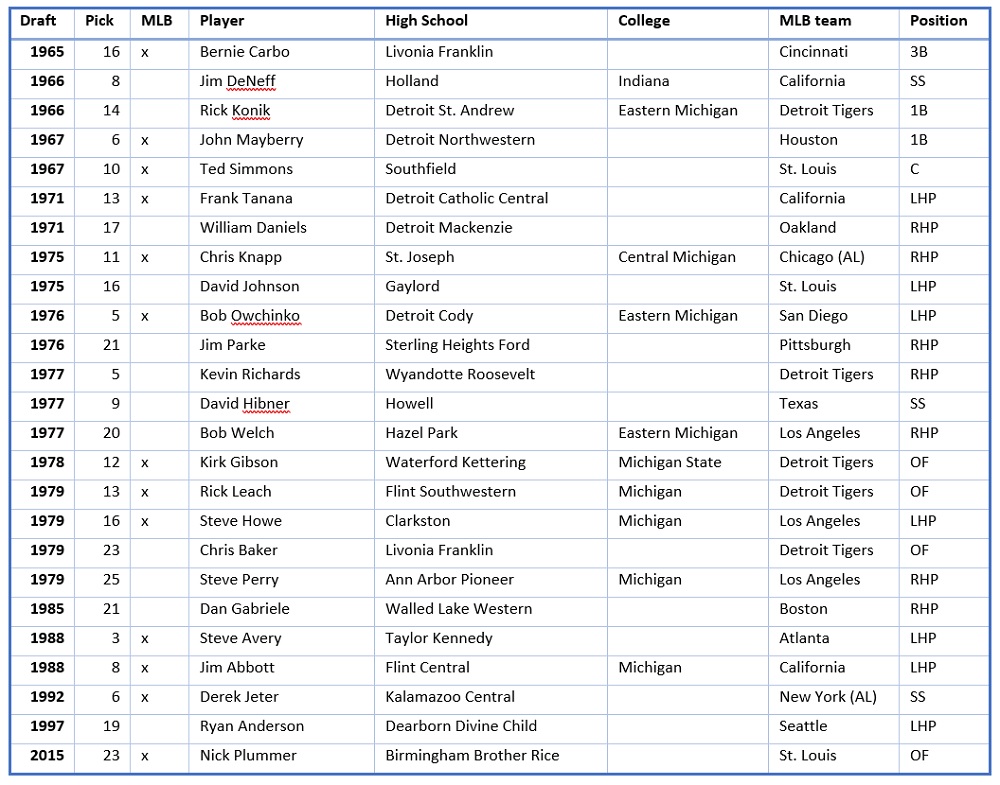
Hundreds of thousands of prep ballgames have been played since Major League Baseball instituted the amateur draft in 1965. Since that time, 25 Michigan high school ballplayers have been chosen in the first round of the league’s annual draft. Without a doubt, Derek Jeter, who played for Kalamazoo Central and spent 20 seasons with the New York Yankees, stands as the most accomplished. Bloomfield Hills Brother Rice’s Nick Plummer is the most recent to join the list. Selected by St. Louis in 2015, the outfielder spent seven seasons in the minors before making his debut this spring with the New York Mets. He is the 13th on the list to see time in the Majors.
The Draft
“Prior to the implementation of the First-Year Player Draft, amateurs were free to sign with any Major League team that offered them a contract,” notes the Baseball Almanac detailing the process’s history. “As a result, wealthier teams such as the New York Yankees and St. Louis Cardinals were able to stockpile young talent, while poorer clubs were left to sign less desirable prospects.
“Originally, three separate drafts were held each year. The June draft, which was by far the largest, involved new high school graduates, as well as college seniors who had just finished their seasons. … A second draft was held in January for high school and college players who graduated in the winter.”
The January draft lasted until 1986. For just the initial two seasons, a draft for players participating in amateur summer leagues also took place.
Navigating the Basepaths
Baseball was a favorite pastime in cities and small towns all across the state years before the turn of the 20th century.
Depending on the time and place where they grew up, the way kids were introduced to playing the game differed.
The Detroit Amateur Baseball Federation (DABF), started in 1915 and active into the 1970s, was a well-organized sandlot program. Split across age groups and classifications, games were played on diamonds spread around the city. Detroit Tigers legend Willie Horton was just one of the sandlot legends to emerge from the DABF, with stories of his performances carving space in Detroit newspapers.
For many others, baseball sponsored by local American Legion posts served as their introduction to organized ball. First proposed at a Legion convention in 1925 in South Dakota, and introduced a year later, Legion baseball had expanded across the nation by 1929.
Little League baseball, famously first organized in 1939 in Williamsport, Pa., targeted boys under 12. By 1950, it had spread to 37 states.
The Babe Ruth League – originally organized as the “Little Bigger League” in 1951 in Hamilton Township, near Trenton, N.J., was for boys ages 13-15.
NABF (Started 1914)
The DABF was a member of the National Baseball Federation, established in Louisville, Ky., in 1914. Later renamed the National Amateur Baseball Federation, the organization required membership by league instead of team, governed sandlot baseball in a dozen cities across the United States, and sponsored tournaments designed to name national champions. In 1922, the NABF barred member teams from paying players to play.
From 1914 through 1943, a single NABF national champion was named, and winning the tournament was a source of great civic pride during the heydays of the game. In 1944, the tournament was split into two, with a “Major Division” designated for players of any age, and a “Senior Division” for players 18 and younger. In 1962, a Junior Division was added for those 16 and younger.
From 1960 through 1973, the Detroit Metro area won nine of 14 Senior championships, while Michigan teams won nine of the 11 Junior titles between the inception of the division through the 1972 tournament. The NABF is still in operation today, and since 2014 Battle Creek has hosted the Major Division World Series at the city’s John W. Bailey Park.
AABC (Started 1935)
The American Amateur Baseball Congress began organizing amateur baseball when it was founded in Chicago in March 1935 with approximately 450 teams from 10 states, including Michigan. In March 1937, under the guidance of Cooper Othniel ‘C. O.’ Brown (the AABC’s first and only president until his passing in 1966) the AABC found a long-term home for its annual National Championship Tournament in Battle Creek.
The all-ages tournament quickly became a regular stop for big-league scouts looking to sign talent. In 1951, hosting the finals for an organization with well over 2,000 teams in 33 states and Cuba, Battle Creek was known as the “Amateur Baseball Capital of the World.” That year, the organization split play into two divisions – a Major Division for those over 18 and a Minor Division for ballplayers 18 and younger. Niles served as home for the Minor Tournament in the initial years. Following the 1954 season, the Minor Division was renamed the “Connie Mack” league, in honor of the “Grand Old Man of Baseball” who had celebrated his 92nd birthday in December. In 1963, Stan Musial lent his name to the Major Division. The Cereal City continued to play host to the “Stan Musial World Series” until 2005.
Corralling Amateur Baseball
In 1954, at the urging of MLB commissioner Ford Frick, the National Committee for Amateur Baseball was formed to corral and coordinate the country’s wide assortment of amateur baseball programs. The organization was comprised of Vince Williams of the Babe Ruth League, C. O. Brown of the AABC, Lou Brissie of the Junior American Legion program, Colgate University’s Eppy Barnes, secretary of the National Association of College Baseball Coaches; Henry Van Arsdale Porter, president of the National Federation of State High School Athletic Associations; Vern Hernlund, head of the National Park Executives; Clarence Brewer, president of the National Recreation Association; and Pete Moser, president of the American Recreation Society.
The group quickly worked to standardize cutoff birthday dates for eligibility within the various national junior leagues, and rules for participation in state or national competitions.
These organized baseball programs gave kids summertime activities and groomed them on the intricacies of the national pastime. Showcasing their skills on high school ballfields, in summer-league games, and in national tournaments, multiple players caught the eyes of scouts representing Major League ballclubs.
Bernie Carbo of Livonia Franklin was the state’s first first-round draft pick, plucked from the list of candidates at No. 16 by Cincinnati in 1965. He spent 12 years in the big leagues, playing in 1,010 games and logging time with six teams.
Not All Picks Reach the Majors
Two Michigan players were selected in the opening round of the 1966 draft. Jim DeNeff, a star in American Legion ball and an all-around athlete at Holland High School, played shortstop at Indiana University. Standing 6-foot-1, the 190-pound DeNeff led the Hoosiers in a host of categories and earned second-team All-America honors in 1966 before he was selected by California with the eighth pick of the draft. He spent six years in the minors, including two in Triple-A ball, before retiring.
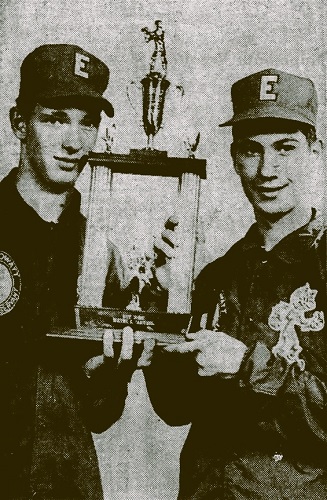 Richard ‘Rick’ Konik, a 6-foot-1 18-year-old, chosen six slots later, is perhaps, the most intriguing of Michigan’s first-round picks.
A pitcher and all-purpose player, Konik was playing for American Legion Thomas A. Edison Post No. 187 when he impressively became the first to earn the Michigan Legion’s Hazen ‘Ki-Ki’ Cuyler plaque in successive years – 1964 and 1965.
“Cuyler came out of Harrisville, 21 miles south of Alpena, to play 18 seasons in the National League. He was elected to Baseball’s Hall of Fame in 1968,” wrote Hal Schram of the Detroit Free Press, recalling the player and the origins of the award first presented in 1929.
“For the past 45 years, the walnut-based bronze plaque has been awarded each season to the American Legion player judged the most valuable to his team in the annual state championships.”
Future MLB players Mike Tresh (1930), Hal Newhouser (1937), and Milt Pappas (1956), all from Detroit, Neil Berry (1939) from Kalamazoo, Merv Rettenmund (1961) from Flint, and Dick Lange (1967) from Midland were all winners of the award.
The 1964 Edison Post team won the American Legion state tournament, then advanced to the semifinals of the Legion’s Junior World Series played in Little Rock, Ark., before being defeated by Charlotte, N.C., Post 9. The Edison boys repeated as Michigan’s Legion champs in 1965, and advanced to the Regional finals before elimination by Arlington Heights, Ill., in 11 innings. Konik was named MVP of that Regional tournament.
From his sophomore year, Konik’s star shone on the basketball court and baseball diamond at Detroit St. Andrew.
“(I)t’s a rare year when the Flyers aren’t led by a boy who could be even a bigger star at a larger high school,” said the Free Press in May of 1966. “Rick Konik is the top Flyer this year. An (All West, Second Division) All-Catholic basketball player, Konik is drawing even more attention as a pitcher. … He scored the winning run and pitched a no-hitter Thursday to give St. Andrew a 2-0 victory over Our Lady of Sorrows. It was his fifth straight shutout. Konik struck out 15 batters in the seven inning game.”
In June 1966, Konik was picked by the Detroit Tigers in the opening round of the Major League draft at No. 14.
“… Konik of St. Andrew High has been called the best local player wooed by the Tigers since they signed Bill Freehan off the University of Michigan campus,” noted the Free Press following the draft.
According to the Washington, D.C., Evening Star, “the Tigers went as high as $20,000” in their attempt to sign Konik following the draft in ‘66, but Konik rejected the offer.
In January 1967, Konik was a student at Schoolcraft College, when he was drafted for the second time, when the Kansas City Athletics selected the left-handed-hitting infielder in the first round of the Secondary draft. Once again, he couldn’t come to terms and went unsigned.
Konik was drafted yet again, this time by the Washington Senators in the fifth round of the Special Phase draft, in June 1967. Still, they could not come to terms.
In the summers of 1966 and 1967, Konik could be found playing amateur ball in the Free Press Baseball League with A&B Brokers, then was picked up by Detroit Harper Sports for the ‘67 National Baseball Congress (NBC) tournament. Playing first and hitting .500, he was one of 16 players selected to the NBC all-star squad named by the tournament committee in August.
He then enrolled at Eastern Michigan University, where he earned varsity baseball letters in 1968 and 1970. Under head coach Ron Oestrike, the Hurons posted a 41-11 record in 1970, emerging from the District 23 National Association of Intercollegiate Athletics playoffs to advance to the NAIA National Tournament in Phoenix, Ariz. In the championship game, EMU won five straight in double-elimination play, downing Northeast Louisiana State College, 1-0, to win the 14th Annual NAIA College World Series.
While the numbers may be greater thanks to today’s analytic-driven league, a 2012 report by Mike Rosenbaum for Bleacher Report stated, “Only 66 percent of first-round draft picks play in the major leagues.” According to the online database Baseball-Reference, Konik never played professionally.
Big Leaguers
The 1967 draft included a pair of three-sport stars picked in the first round. Detroit Northwestern’s big first baseman, John Mayberry, was taken at No. 6 by Houston, followed by Southfield catcher Ted Simmons by St. Louis at No. 10. An All-City basketball selection, the 6-foot-3, 214-pound Mayberry signed a tender in May to play at the University of Michigan, but few expected him to see the court in Ann Arbor.
“Every team in the major leagues came to see Mayberry,” said Fred Snowden, his coach at Northwestern, to the Free Press. Mayberry had posted a .487 average with three home runs and batted in 21 runs. As a pitcher, he gave up only one hit across 11 2/3 innings in relief. “Mayberry was simply too good a hitter to use as a pitcher, so I had him play first base to capitalize on his bat in every game,” added Snowden.
The Colts were still in the thick of the prep baseball season at the time of the draft. Northwestern ultimately downed Detroit Denby, 9-2, to win the City League championship in a game played at Tiger Stadium. It was their first city title since 1959. (In that ’59 league championship game, Willie Horton, then a sophomore, and teammate Matt Snorton, a junior, both smacked tape-measure home runs into the stands at the stadium, located at Michigan and Trumbull. Snorton would later play pro football for the Denver Broncos.)
A starter at first base, Mayberry was called in to relieve in the title game, allowing just a single hit in 5 1/3 innings, as well as ripping a single and a 415-foot triple “to the screen in deep right center.”
Simmons had played ball with Konik on the A&B Brokers team in the summer of 1966. A switch hitter, in 1967 he was hitting at a .490 clip across 18 games at Southfield. The Blue Jays had wrapped up their prep season with a 19-2 record when he was selected by St. Louis. Simmons spent 21 seasons in MLB – including 13 with the Cardinals – and was inducted into the National Baseball Hall of Fame in Cooperstown, N.Y. – along with Jeter – in 2020.
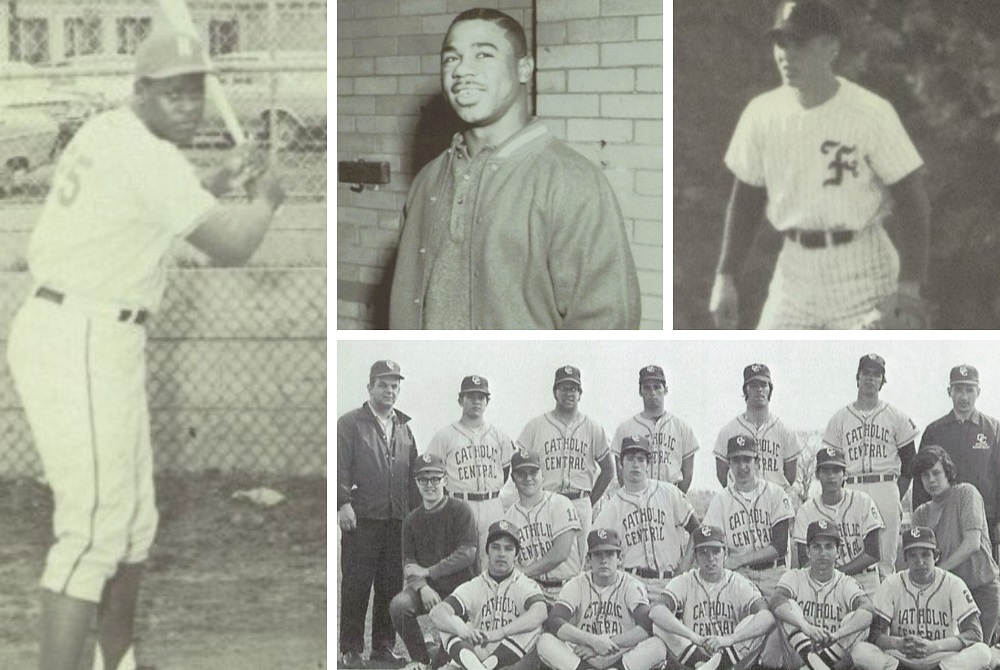
Like his father Frank Richard, who had starred at Detroit St. Andrew in the early 1950s, Frank Daryl Tanana excelled in basketball and baseball. The 6-foot-2 left-handed pitcher had posted a 23-1 mark entering his senior year at Detroit Catholic Central. That past summer he pitched the Larco’s Inn team to the National Amateur Baseball Federation Senior Division championship, played in Cincinnati.
As a high school senior, he had upped his prep mark to 32-1, boasting a sparkling 0.30 ERA, with an average of two strikeouts per inning.
“Tanana started on the mound for Catholic Central,” in a 4-0 loss to Holy Redeemer in the Catholic League First Division baseball championship, played at Tiger Stadium at the beginning of June, “but shifted to first base with a sore arm after pitching hitless ball and striking out eight in four innings.”
The issue was enough for the Tigers – holding the No. 11 pick– to pass over the hometown southpaw in the 1971 MLB draft a week later.
Instead, Tanana was chosen by California. He debuted in the majors in 1973 and spent eight years with the Angels, posting a 102-78 record with a 3.08 ERA during the span. In 1974 – his first full season in the league – he was the team’s No. 2 starter behind Nolan Ryan. He spent 21 years in the majors – including eight in Detroit from 1985 to 1992 – before hanging up the cleats following the 1993 season.
Others from the list of Michigan first-rounders who reached MLB include Chris Knapp from St. Joseph (selected at No. 11) in 1975, Detroit Cody’s Bob Owchinko (5) in 1976, and Waterford Kettering’s Kirk Gibson (12) in 1978.
Rick Leach (13) from Flint Southwestern and Steve Howe (16) from Clarkston advanced to the Big Leagues out of the 1979 draft. Four Michigan players were selected in the opening round that year– the most ever in a single draft.
Steve Avery from Taylor Kennedy at No. 3 – the highest selection among the 25 – and Jim Abbott from Flint Central at No. 8 were both picked in 1988.
Jeter was the sixth pick in 1992, while Plummer was the 23rd player selected in 2015.
The 2022 MLB draft kicks off July 17. MLB.com currently projects Orchard Lake St. Mary's pitcher Brock Porter as the 13th-best prospect eligible for selection.
 Ron Pesch has taken an active role in researching the history of MHSAA events since 1985 and began writing for MHSAA Finals programs in 1986, adding additional features and "flashbacks" in 1992. He inherited the title of MHSAA historian from the late Dick Kishpaugh following the 1993-94 school year, and resides in Muskegon. Contact him at [email protected] with ideas for historical articles.
PHOTOS (Top) Clockwise from left: Detroit Northwestern’s John Mayberry, Northwestern’s Willie Horton (a three-year player who, as noted in his senior high school yearbook, “During this entire time in all the league games, he never struck out at bat.”), Livonia Franklin’s Bernie Carbo, and the 1971 Detroit Catholic Central team with Frank Tanana standing second from right. (Middle) Bob Sobditch, left, and Rick Konik, American Legion Edison Post teammates. (Photos collected by Ron Pesch.)
St. Mary's Earns Another Saturday Return, Taking on History-Making Kenowa Hills
By
Steve Vedder
Special for MHSAA.com
June 11, 2026
EAST LANSING – Death, taxes and Orchard Lake St. Mary's baseball team finding itself in another MHSAA Finals championship game.
The last of those three certainties was affirmed again Thursday when the torrid Eaglets blanked Dearborn Divine Child 8-0 in a Division 2 Semifinal at Michigan State.
Orchard Lake St. Mary’s used two productive innings to soar into Saturday's 9 a.m. title game against Grand Rapids Kenowa Hills. The spot in the Finals will be the program's 10th since 2007, with three titles won from 2019-2022 and six since 1998.
Despite the long track record of success, Eaglets coach Nick DiPonio said the winning never gets old or taken for granted. The program has averaged 33 victories per season since claiming the 2019 Division 2 title.
"This was definitely not just another game," said DiPonio, whose No. 1-ranked team upped its winning streak to 26 games. "We're battle-tested. We play in a great league with great players, and we're used to competition. We've become good at blocking out all the extraneous noise."
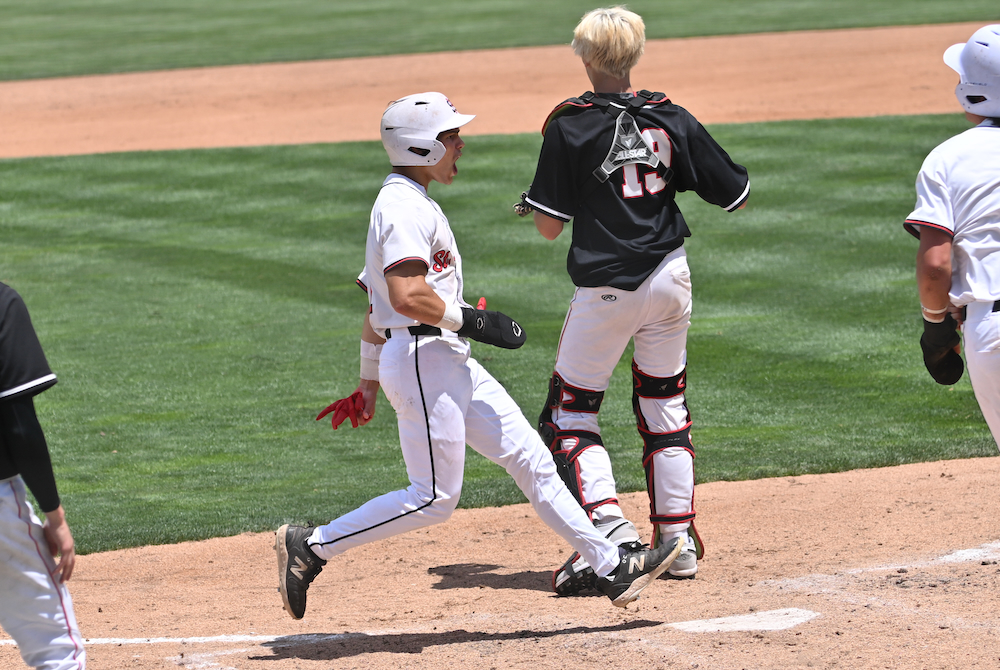
Orchard Lake St. Mary's sent 12 batters to the plate to score five runs in the third inning and added three more runs in the fifth. The third inning barrage included three triples, including one by Hudson Brzustewicz with the bases loaded. Luke Crighton drove in a run with another triple.
The trio of runs in the fifth included an RBI single by Zach Essig, one of three current Eaglets who had older brothers play on previous state champions. Essig said his current teammates are well-aware of the program's previous success.
"It's crazy," said Essig, who has two older brothers on former champs. "I'm the only one without a ring; we haven't won anything yet. Those guys were role models for us. Our older brothers pushed us. We've got a lot of good guys on this team, and we're capable of beating anyone when we play well."
Crighton, who scattered four hits and faced only three batters over the minimum, thought he did a quality job of wading through a Divine Child lineup which scored 30 runs over the Regionals and Quarterfinal.
"I threw strikes and felt strong, and overall I thought I did okay," he said. "I was able to trust the defense to make the plays.
DiPonio said Crighton is a big-game pitcher.
"I expected him to go out and do this, the last two years, really," DiPonio said. "He always gives us a good chance to win. He throws strikes with multiple pitches."
Brzustewicz said there is no doubt one of the team's foremost goals is to carry on the long history of success in June. That success is felt by virtually all the players, he said.
"There is a brotherhood; we're going out there for our brothers,” he added. “We like to have fun and win, and we're right there this year. We've won like 26 in a row, but I don't know if we're at the same level yet as some of those teams. A couple won 40-some games."
Dearborn Divine Child coach Jeremy Shay, who has seen plenty of talented Eaglets teams in his four years, says the current club is a good one because it covers all parts of the game.
"They're very good," he said. "They obviously can hit and have very good pitching and play well defensively. They're tough to beat.”
Grand Rapids Kenowa Hills 9, Vicksburg 6
While Kenowa Hills may be known for an outstanding pitching staff, it was a pair of clutch seventh-inning hits that propelled the Knights into their first MHSAA Baseball Final.
Trailing 6-5 entering their final at-bats and having blown a 5-0 lead earlier, the Knights got a two-run triple from senior outfielder Andrew Lake and run-scoring single by Jack Stoddard to up their winning streak to 20 games.
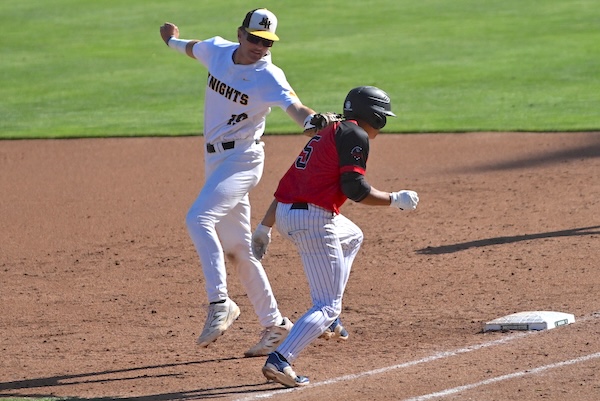 "I was looking fastball and I choked up on the bat, and (the pitcher) hung a curve and I turned on it," Lake said. "You dream for this moment."
The clutch hits aside, Kenowa Hills (36-2) entered the game with a remarkable pitching staff which included three pitchers who had combined for a 26-1 record and ERA of under two runs a game. Kenowa Hills pitchers have 13 shutouts this season and 28 games where they have held teams to three runs or fewer.
"That's been our team all year – we battle," Stoddard said. "We come together as a team and have stayed motivated."
Kenowa Hills led 5-0 in the third inning with Hudson Drake driving in one run on a sacrifice fly and Brennan Gustinis adding an RBI triple.
But Vicksburg (30-8) cut the margin to 5-2 in the bottom of the third and then took a 6-5 lead into the seventh. Bulldogs junior outfielder Maguire Bowles drove in three runs with a single, bases loaded walk and triple. Graham Kubiak also drove in a pair of runs.
Despite the eye-popping numbers posted by the pitchers, first-year Kenowa Hills coach Todd VandenHeuvel said his club can hit and score clutch runs. The team entered Thursday with a .380 team batting average and come-from-behind wins over Grand Rapids Forest Hills Central and East Grand Rapids that proved to players that despite being unranked to start the season, they could be a power.
"Can we be really good or great?" he asked players earlier this season. "I think we've moved the needle toward being great. We've played from behind late before. It was an unusual situation, but I think it allowed us to play an aggressive game. That doesn't surprise me; that's what great teams do.
"I think we have a perfect balance of both (hitting and pitching). We like getting a run every inning; we don't do a lot of three or four-run innings."
Vicksburg coach Brian Deal, who is retiring after 28 years and 487 wins, said a team from a small town like Vicksburg making a Semifinal is a major feat.
"It's great for all the small towns," he said. "We did this for all those small towns. We think we can go toe-to-toe with any team. We had our chances to put more runs on the board."
PHOTOS (Top) An Orchard Lake St. Mary’s runner crosses the plate during the Eaglets’ Division 2 Semifinal win Thursday at McLane Stadium. (Middle) Kenowa Hills’ Bobby Haisma (19) applies a tag on Vicksburg’s Maddox Rosalin a few steps in front of first base.