

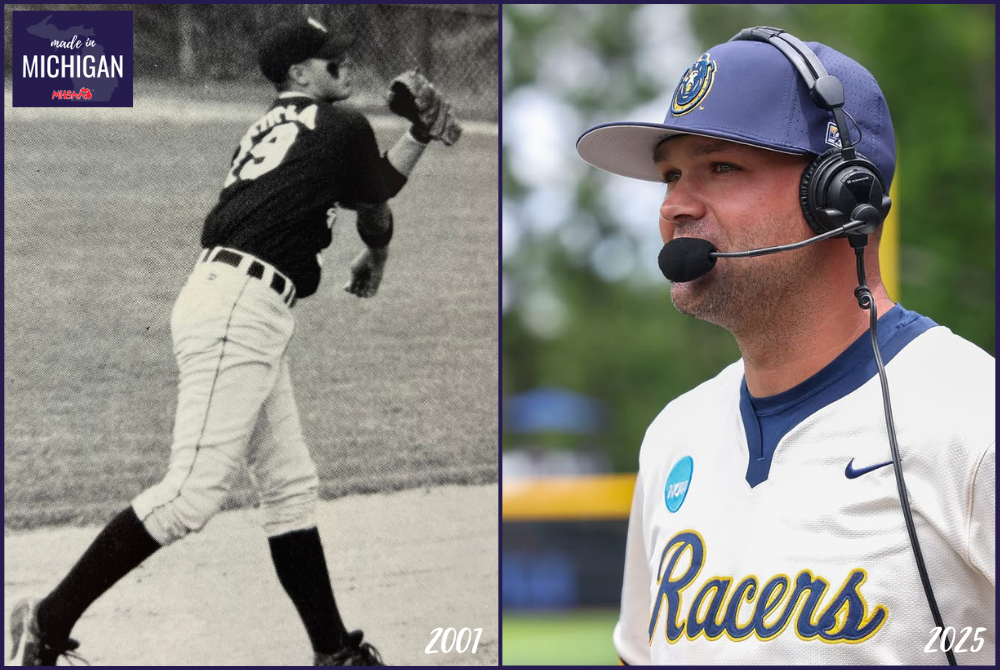
Union City to Omaha: Skirka Takes Murray State Baseball to 1st College World Series
By
Scott Hassinger
Special for MHSAA.com
July 28, 2025
UNION CITY – From his days fielding ground balls at Alumni Field in Union City to coaching the Murray State Racers at the 2025 College World Series in Omaha, Neb., Dan Skirka has never taken the game of baseball for granted.
 A 2003 Union City graduate, Skirka credits his experience of growing up with three older brothers as playing a major impact in his athletic development.
"I played all three sports – football, basketball and baseball – when I was younger while growing up. After my freshman year, I began to concentrate solely on basketball and baseball," he said.
Inspired by watching his older siblings Darren (graduated 1995), Justin (1999) and Brian (2001) compete for the Chargers, Dan couldn't wait to be just like them when he reached the high school level.
"I would attend my brothers' games and I was always trying to emulate them and their teammates,” Dan Skirka said. “The desire to compete for my school when I got the chance helped turn me into the person I am today. It was just really special being on that field, and I never take the game for granted."
While his older brothers played multiple positions, Dan began his career as a pitcher, but an arm injury his freshman year convinced him to switch to shortstop, where he started his last three years for the Chargers.
Skirka was brought up to varsity his freshman year in both baseball and basketball. He played baseball under Joe Tinervia, earning all-conference at shortstop his sophomore, junior and senior seasons. As a senior, Skirka batted .520 in earning all-region as well.
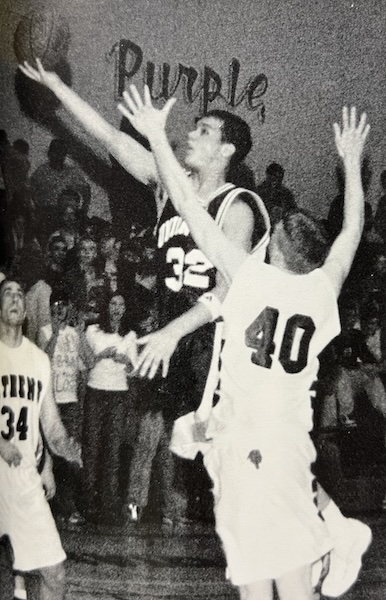
He also was selected all-conference in basketball his sophomore, junior and senior years. A small forward, Skirka remembers well the thrill of winning a District championship his junior year before losing in the Regional Final. Being able to share that experience with guys he grew up with was priceless.
"I learned a lot about leadership skills and how necessary they were in my growth and maturity as a player in high school and college. I learned a great deal from the example the older guys set," Skirka said.
After graduating from Union City, Skirka became a two-year starter at shortstop at Kellogg Community College for head coach Russ Bortell. The Bruins captured a Michigan Community College Baseball Association title during Skirka's sophomore season. The Bruins also reached the regional semifinals that spring after falling in the regional final his freshman year.
"We had a great program at Kellogg, and I learned a ton about baseball from the coaching staff there.” Skirka said. “Grand Rapids Junior College won the regional both years I was at Kellogg. They had a tremendous team and were tough to beat."
Skirka received a Division II baseball scholarship to Grand Valley State University, where he played under Steve Lyon and helped the Lakers win two Great Lakes Intercollegiate Athletic Conference titles. As a senior, Skirka was selected GVSU's Scholar-Athlete of the Year and named to the Division II all-region team, one step away from All-America honors, after hitting .400. He graduated from GVSU majoring in social studies with future plans to become a high school teacher and coach.
Skirka helped his teams at Kellogg and GVSU win a combined 173 games. He credits then-assistant coaches Eric Laskovy (Kellogg) and Jamie Detillion (GVSU) as being heavy influences in his decision to pursue a career in coaching college baseball.
 "Laskovy and Detillion were both great assistant coaches who later became head coaches at those schools, and they served as great mentors to me. They both felt that I'd make a good college coach,” Skirka said. “I had always had good relationships with my college coaches, and I served as a team captain at each school. I learned a lot of lessons about toughness and loving the game. Sometimes we played in front of no spectators, and there were a lot of long bus rides."
Laskovy, now a highly-successful head coach himself at Kellogg, describes Skirka as the same genuine and humble person that he was during his playing career.
"Dan was quiet, but real confident and he handled himself well on the field. His strong work ethic as a player made him a coach's dream. He had good leadership skills and he always led by example,” Laskovy said. “That shows up now in his personality as a head coach. He knows the game well and won't get outworked by anyone, and he's seen every situation there is to see in baseball. He knows his stuff, and he's earned the respect of every one of his players and they love him. I couldn't be any prouder of him and the success he's went on to enjoy."
Detillion, who served as GVSU's head coach for 12 seasons before joining Henry-Scheim as a dental sales rep, described Skirka as being another coach on the field during his playing career.
"Dan went from being a good contact hitter to being a power hitter his senior season at GVSU. He was another coach on the field and he outplayed others by how well he prepared," Detillion said. “He always does the right thing, and his mannerisms and the way he goes about his business reveal his high character.”
While student-teaching before graduating from GVSU, Skirka served as an assistant coach in 2008 at GRJC before becoming an assistant coach in 2009 for Ouachita Baptist University in Arkansas. He joined Murray State's coaching staff as an assistant from 2010-2015 before leaving to become the recruiting coordinator at Walters State Community College (Tenn.), which finished as national runner-up in 2018.
Skirka accepted the position of head baseball coach back at Murray State on July 2, 2018. He’s only a few weeks removed from leading the Racers to a historic season.
Murray State, which is 206-151 under Sirka, finished with a school-record 44 wins this spring, winning the Missouri Valley Conference regular-season and tournament championships. The Racers earned their first NCAA Tournament appearance since 2003 and fourth in program history. Murray State then upset host Ole Miss to claim the school's first NCAAA Regional crown, followed by a Super Regional victory over Duke that earned the Racers' their first trip to the College World Series. Murray State ended the season 44-17 after CWS losses to UCLA and Arkansas.
Skirka, who received Missouri Valley Conference Coach of the Year and the National Collegiate Baseball Writers Association Mike Martin National Coach of the Year awards, turned down several coaching offers at other schools to remain at Murray State. He recently received a four-year contract extension that came with a substantial pay raise to become reportedly the highest paid coach in the MVC.
 Skirka stated that his decision to stay on at Murray State was a simple one.
"Murray State is a real special place. I love the guys and people in this community, and it just feels like home,” Skirka said. “College baseball presents a lot of challenges. The game is difficult sometimes, and guys need to remember to be patient. It takes weeks, months and sometimes years to earn your time and develop a winning program."
Skirka pointed out clutch performances this season from his senior duo of outfielder and lead-off hitter Jonathan Hogart and third baseman and No. 3 hitter Carson Garner. Hogart hit a school-record 22 home runs, and Garner had 17.
"We have tough kids who grinded out and won 14 games by one run. We were never out of any game with a good mixture of veterans and underclassmen,” Skirka said. “It was a group of guys that loved one another and went out every day and had fun. This group worked hard and competed like crazy. They play the game the right way, and do it with a smile on their face. Our coaching staff is great as well. We meshed pretty well together."
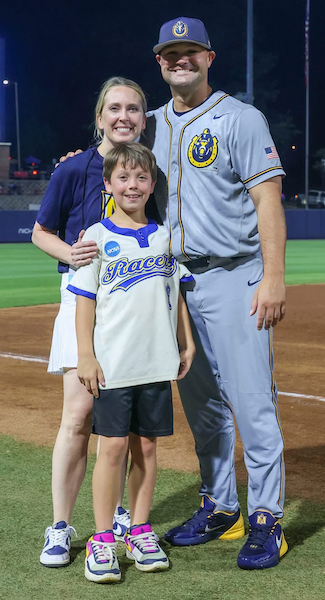
Skirka and his wife Kelsey (Hanson) – also a 2003 Union City grad and a standout in volleyball, basketball and softball – have a 9-year old son, Keagan.
2025 Made In Michigan
July 22: TC West's Wheelock Still 'Living My Dreams' as CMU Assistant Soccer Coach - Report
July 17: Stevenson's Travels Following Lake Orion Success Include Space Force, Penn, NYC - Report
July 15: 'Who Will Cheer for the Nimrods?' Peterson IV, Watersmeet Found Fans Worldwide - Report
July 10: Feeding 'Drive to Win,' Loy Norrix Grad Morgan Impresses with Strong USBC Showing - Report
July 9: After Blazing Multiple Volleyball Trails, Bastianelli Charting Next Career Path - Report
PHOTOS (Top) At left, Union City sophomore shortstop Dan Skirka makes a throw to first base after fielding a grounder in 2001. At right, Skirka dons headphones for a postgame interview this past season. (Middle) Skirka (32) lays the ball up for two points while playing for Union City against Athens. (Below) Skirka is pictured with wife Kelsey and son Keegan before a game this spring. (Union City photos courtesy of Union City High School. Murray State photos courtesy of ProfEatonPhoto/Murray State athletics.)
Senior-Powered Spring Lake Answering Anticipation, Pursuing High Expectations
By
Dean Holzwarth
Special for MHSAA.com
April 29, 2026
SPRING LAKE – The time is now for the Spring Lake baseball team.
 With the return of 11 veteran seniors, the Lakers entered this spring with lofty expectations and an eye on an extended postseason run.
Anticipation has come to fruition in the form of a state ranking and a nearly perfect start.
“Our motto is we are going to worry about next year next year, and we are going to do all we can this year,” Lakers fourth-year coach Bill Core said. “We knew we were going to have a big experienced group coming back, and that's just how the roster folded out. We have a lot of experience, a lot of returners and pretty high expectations.”
Spring Lake, which finished as Division 2 runner-up in 2024 and won a conference title last year for the first time since 2014, is off to an impressive 13-1 start (9-0 in the Ottawa-Kent Conference Black) and has climbed to No. 7 in the latest coaches poll.
Core said the vast number of returners, which includes five players who will play in college next year, has paid early dividends.
“I think that’s been a big difference,” he said. “We’ve played some younger teams that were breaking in sophomores or juniors or new kids, and our guys were ready to go right from the start. It’s been an advantage early on.”
Senior starting pitchers Oliver Smies and Maddux Kipling believe the strong bond among the senior class has been a major factor in the torrid start.
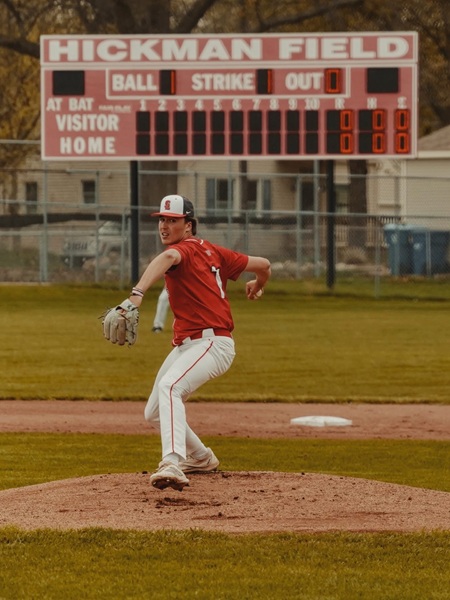 “I think something that’s really important about this team is our team chemistry and the amount of seniors we have on the team,” Smies said. “That alone allows us to have a ton of experience, and I think that's a big reason why we are off to such a hot start. We have been playing good team baseball and complementary baseball with good defense and good offense.”
Added Kipling: “We genuinely like being around each other, and every day we show up ready to get a little better. Our team has a real gritty and energetic identity, and I think that shows in how we compete and support each other.”
Kipling and Smies have been dominant on the mound this season. They haven’t allowed an earned run while combining for 80 strikeouts. Kipling earned a second-team all-state accolade as a junior and is headed to Michigan State next year. Smies will play at Calvin University.
“It starts with our pitching,” Core said. “Any time you are going to make a run, it starts with your pitching and we are pretty lucky, especially with our top two.”
Offensively, the Lakers possess a balanced lineup and boast a .330 batting average.
Senior Owen Smies, who will join his twin brother at Calvin, is hitting a team-best .432 with 13 RBIs. Seniors Alex Strauss (Adrian College) and Max Feltner (Muskegon Community College) are both batting .333 and have combined to score 25 runs.
As a team, Spring Lake has produced eight shutouts and nine wins by run differential.
“We got off to a good start, but we are going to play a lot better competition,” Core said. “This is a good week for us because we play Northview and state-ranked East Grand Rapids. We just picked them up, so we were excited to fill in the week with those two schools.”
Spring Lake is 62-6 over its last 68 games and trying to remain focused on each game as it attempts to erase the disappointment of last year’s early exit from the postseason.
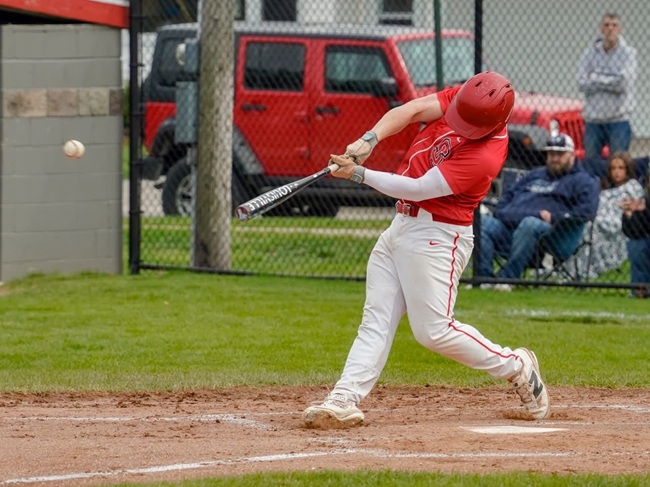 Despite winning 30 games, the Lakers suffered a 3-2 loss to Grand Rapids West Catholic in District play.
“I think there is some motivation there from that loss,” Oliver Smies said. “And I think that loss last year taught us that any team can beat any team, so you have to play your best baseball every single game no matter the opponent.”
Core said last year hasn’t been discussed, but believes it still sits in the back of his players’ minds.
“I think they think about that, but we've had quite a few mercies to start the season, and I said to them that when we get to the tournament it's going to be a one-run game and we are going to have to do the little things to make a difference because we are not going to win 14-0 all the time,” he explained. “We try to keep everyone in the moment.”
Kipling isn’t dwelling on the past – or looking too far ahead.
“As a group we’ve done a great job staying focused on the present and not getting caught up in the past or worrying too much about the future,” Kipling said. “My dad has always told me to focus on what you can control because putting energy into things you can’t control is a waste.
"That mindset has stuck with me, especially on the field. I try to live by ‘one pitch at a time,’ and because of that I haven’t really spent time thinking about last year’s loss. That’s behind us, and we’re just focused on what we can do right now.”
 Dean Holzwarth has covered primarily high school sports for Grand Rapids-based WOOD-TV for five years after serving at the Grand Rapids Press and MLive for 16 years along with shorter stints at the Ionia Sentinel and WZZM. Contact him at [email protected] with story ideas for Allegan, Kent and Ottawa counties.
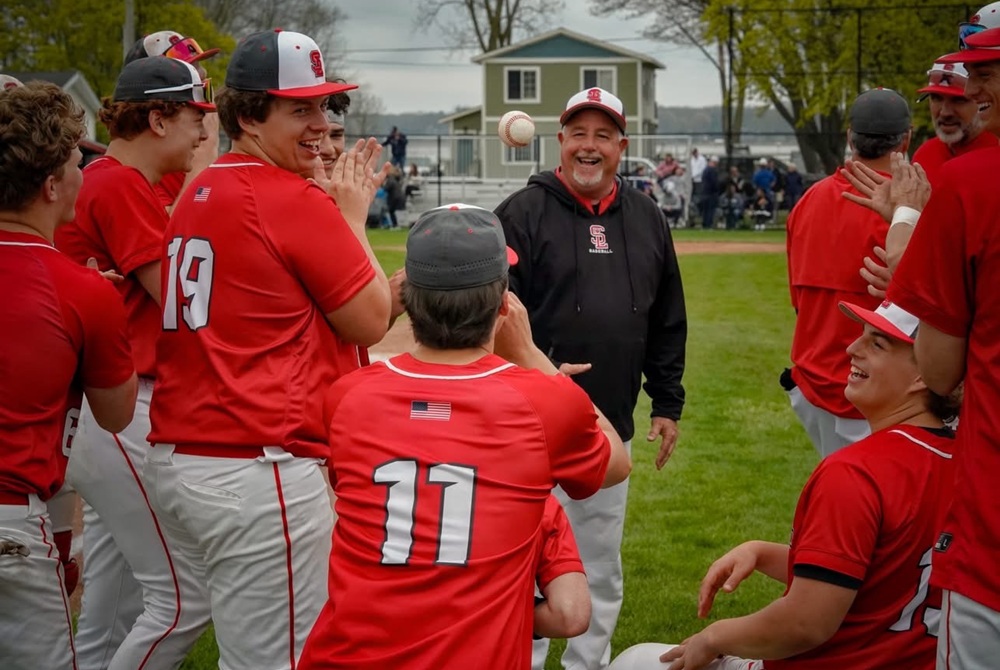
PHOTOS (Top) Spring Lake baseball coach Bill Core tosses Maddux Kipling his home run ball after a win over Fruitport. (Middle) Kipling pitching at Spring Lake's Hickman Field. (Below) Senior Oliver Smies connects with a pitch. (Photos by Trevor McCue/Grand Haven Tribune.)