

Felix Leaving Hillsdale Having Blazed Path to Statewide Success, Respect
By
Doug Donnelly
Special for MHSAA.com
September 15, 2021
HILLSDALE – Every time Jordan Bollin would prepare his Dundee Vikings boys basketball team to play Hillsdale, he would rename all of his plays. That’s because Brad Felix, the longtime Hillsdale coach, knew them all.
 “He had his teams so prepared,” Bollin said. “We’d call out a play and they would know exactly what we were doing. I had to rename all my plays, then quiz my kids over them before we played them. He’s such a great coach.”
Felix stepped down this week as the Hornets’ head coach, ending a coaching career that spans more than 30 years.
“I think he is the best coach I’ve coached against,” Bollin said. “When I got the job at (Temperance) Bedford, the first thing I did was call him up and basically interview for an hour, asking about practice plans and this and that.”
Citing a health issue as one of his reasons for retiring, Felix said it was still a difficult choice to make.
“It is a decision I don’t take lightly,” Felix said. “I feel like there has been a death in my family. The sadness I am feeling is pretty intense.”
Felix didn’t come to Hillsdale from the Upper Peninsula to turn around Hornets boys basketball. But, over the past couple of decades, Felix has helped transform Hillsdale boys hoops into a program known for adding hardware to its trophy case on a regular basis.
The Bessemer native was a four-sport athlete in high school, but that’s where his playing days ended. He graduated from Northern Michigan University in Marquette and landed a job teaching in Hillsdale, at the opposite end of the state, within a few miles of the state line.
 It was the Hillsdale athletic director who approached him about coaching.
“He came to me and said, ‘We need a freshmen girls coach and freshmen boys coach; are you interested?’” Felix said. “The rest is history.”
Felix coached both boys and girls at freshmen and junior varsity levels for several years before landing the varsity girls job with the Hornets. He guided that program from 1998 to 2002. His final season with the girls he also became the boys head coach. He’s coached the Hornets boys for the past 19 seasons.
His teams had success early. Capturing the District title in 2005, in his third season, was a first for the school since the mid-1960s.
He said reviving the boys basketball program was the carrot in front of him.
“No one would last this long if he or she was not experiencing some success,” Felix said. “That surely had a great deal to do with me hanging on this long. I was determined to change the mindset and the culture here, so that was a driving force. Our basketball history here was not very glorious, and I thought I could change that path.”
He certainly did that.
During his 19 seasons, Hillsdale won nine league championships, eight District titles and two Regional championships. The Hornets were consistently ranked among The Associated Press top 10 and if they weren’t on top of the league, they were competing for league championships.
His boys teams went 20-0 during the regular season three times and won 20 or more games seven times. In 15 seasons, his teams won at least 14 games. His record as the boys coach was 318-104. Counting his girls varsity tenure as well, he won 369 games. He was a three-time statewide Coach of the Year.
Opposing coaches have long had a ton of respect for Felix and the Hillsdale program.
“His impact on Hillsdale basketball is something many coaches, like me, only could hope for when we are done,” said Onsted boys basketball coach Brad Maska. “The battles we had, Hillsdale vs. Onsted, were some of the best. I will miss that. He made Hillsdale one of the toughest places to go play. He’s a great coach and person.”
Ida boys basketball’s Jared Janssen coached against Hillsdale at least twice every year in the Lenawee County Athletic Association.
“He had an answer for everything you would try to throw at him,” Janssen said. “He is the toughest coach to prepare for.”
Hillsdale had to overcome its share of obstacles. The Hornets played in four conferences during Felix’s tenure, meaning he often had to learn a new set of opponents. With relatively few schools Hillsdale’s size in that area of the state, the Hornets had to go on the road a lot.
“It is not easy to go to Ida on a Tuesday, get home at 11, hit school the next morning, and then go to Dundee on that same Thursday – only to be back in school again Friday morning,” he said. “Those are taxing weeks for sure.”
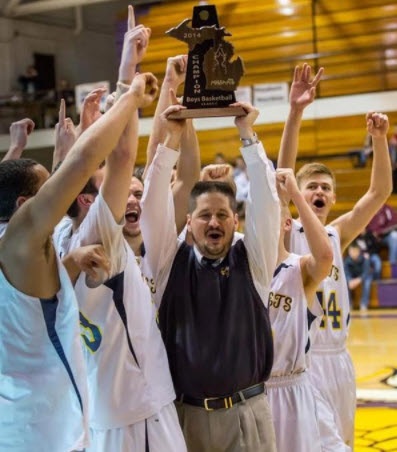
There were many great memories on the court, such as coaching seven players who scored 1,000 career points, some surprising District wins, buzzer-beaters and epic defensive battles. The 2013-14 team also appeared in a Class C Quarterfinal. His 24-2 Hornets lost to Muskegon Heights, 59-57.
“We played some really good teams to make it there and then fell two points shy in a game where we were huge underdogs,” Felix said.
The 2004-05 team that went 25-1 also played in a Quarterfinal, in Class B. The lone defeat came that night to eventual champion Grand Rapids South Christian.
“Walking on the court at Grand Valley to play that game was a sight I’ll never forget,” he said. “It was just a sea of maize pom-poms with a sea of opposing white ones on the other side. There were 4,000 fans there. That was a just fun.”
Felix said the love of basketball kept him going year after year.
 “The strategy and the relationship with the players have kept me in the game,” he said. “The winning helped, but I loved coaching the game and looked forward to each and every season. The most rewarding part of this job has been the relationships I've built with my players that have extended into their adult lives.”
Two of his former players reside in Colorado, where one worked for the Denver Broncos and the other served as an Olympic trainer.
“They flew me out there for a football game and a tour of the Olympic training center,” Felix said. “I was on the field for an NFL game.”
Felix and his wife, Heather, have been married for more than 25 years and have two children, Claire and Adam. He coached Adam. The end of his son’s career was marred by injury, but Brad Felix said having him be a part of the program was a great experience.
“I did get to coach him in at least one season,” Felix said. “His presence on my bench for 12 seasons was so heartwarming for me – he was in the gym and on our bus since he was 5. I swung him through the air on numerous occasions after big wins. He saw a lot.”
It was in June that Felix had a health scare that he says still isn’t over. He said health impacted his decision but wasn’t the ultimatum.
“This will be with me for the rest of my life, unfortunately,” he said. “It weighed into my decision based on all the appointments that I may or may not have in the future, missing practices or games and just the added stress is more than likely not advantageous for me right now.
“I’d be in (coaching) longer if the circumstances had allowed me to.”
 Doug Donnelly has served as a sports and news reporter and city editor over 25 years, writing for the Daily Chief-Union in Upper Sandusky, Ohio from 1992-1995, the Monroe Evening News from 1995-2012 and the Adrian Daily Telegram since 2013. He's also written a book on high school basketball in Monroe County and compiles record books for various schools in southeast Michigan. E-mail him at [email protected] with story ideas for Jackson, Washtenaw, Hillsdale, Lenawee and Monroe counties.
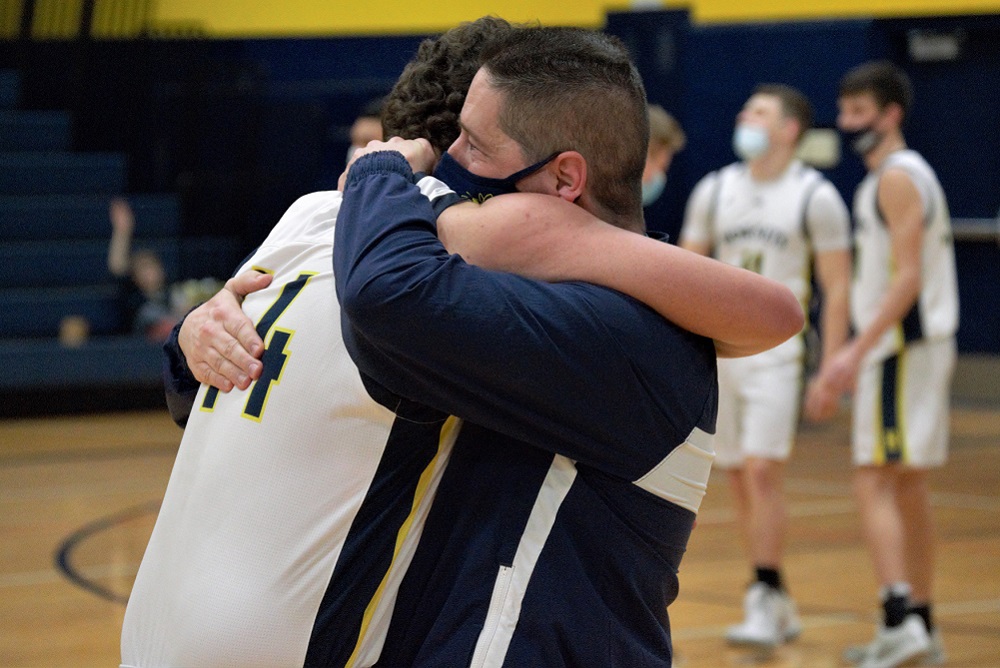
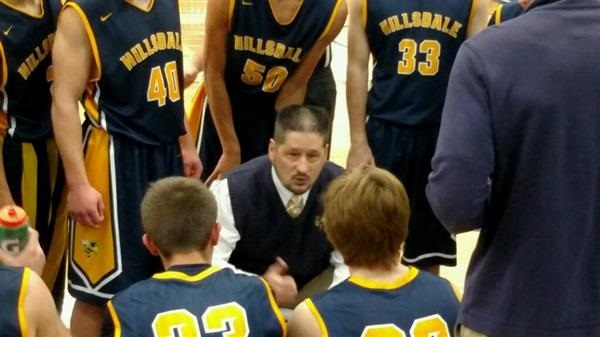
PHOTOS: (Top) Hillsdale boys basketball coach Brad Felix, right, hugs his son Adam after Adam’s final game last season. (Middle) Brad Felix and his 2013-14 team celebrate a big win during their tournament run. (Below) Felix huddles with his players during another game over his 19 seasons guiding the boys basketball program. (Top and middle photos courtesy of the Hillsdale Daily News; bottom photo courtesy of the Hillsdale athletic department.)
Breslin Bound: 2025-26 Boys Report Week 1
By
Geoff Kimmerly
MHSAA.com senior editor
December 8, 2025
Winter has certainly arrived in Michigan over the last few weeks – at least from a snowy standpoint – and right on the time to signal the start of boys basketball season and our first report on the annual march to Michigan State's Breslin Center.
 Big matchups already are happening, and every game against an MHSAA Tournament opponent counts toward seeding for District brackets, and once again we're diving into the results you need to know from the previous week, teams that are showing up big in each division and matchups coming up that you won't want to miss.
“Breslin Bound” is powered by MI Student Aid and based on results and schedules posted for each school at MHSAA.com.
Week in Review
The countdown of last week’s five most intriguing results:
1. Grand Rapids South Christian 75, Grand Rapids Christian 71 The Sailors (2-0) opened by adding to last season’s District Final win over Grand Rapids Christian (1-1), and after having lost to the Eagles 72-55 in their season opener a year ago.
2. Bloomfield Hills Brother Rice 71, Detroit U-D Jesuit 42 Brother Rice (2-0) enjoyed some significant payback after falling to Jesuit twice last season, during the regular season in what eventually decided the Catholic High School League Central title and then in their Regional Semifinal matchup.
3. Saginaw United 67, Detroit Catholic Central 57 The Phoenix (2-1) opened their new fieldhouse with a notable season-opening victory over the Shamrocks (2-1), who defeated United 69-55 in their opener a year ago.
4. Grand Blanc 76, Hamtramck 75 (OT) The Bobcats (2-0) opened the season with this notable win at the Horatio Williams Tip-Off Classic.
5. Warren Fitzgerald 41, East Kentwood 40 This was another exciting finish at the Horatio Williams event, again in a faceoff of teams with high aspirations this season.
Watch List
With an eye toward March, here are two teams in each division making sparks:
DIVISION 1
Grand Haven (3-0) The Buccaneers finished an opening week of road games without a loss, defeating Coopersville 65-42 and then Traverse City Central 83-71 and Traverse West 79-77 over the weekend. Grand Haven improved from 11-12 in 2023-24 to 18-6 last season and will have some opportunities to get rolling heading into the new calendar year with a Dec. 22 matchup against Freeland and its Lake Michigan Cup on Dec. 29-30.
North Farmington (2-0) The Raiders are coming off a 12-10 finish and third place in the Oakland Activities Association Red last season, and got off to a fast start under first-year coach Peter Mantyla with a 41-35 win over Canton and a 62-47 victory over Davison while hosting the Horatio Williams Tip-Off Classic. Reigning league champion Birmingham Groves is up next, on Friday, and the first matchup with Farmington – which ended the Raiders’ season last winter – is Dec. 19.
DIVISIION 2
Dundee (3-0) The Vikings appear on track to bounce way back after going 21-5 in 2023-24 but then only 5-18 last winter. They opened last week with a 12-point win over Saline Washtenaw Christian, a 47-46 victory over Milan and a 51-45 triumph over Britton Deerfield – and after losing to Washtenaw Christian by six points during the early going a year ago.
Freeland (3-0) The Falcons are coming off a 22-4 finish and run to the Division 2 Quarterfinals last winter, so a fast start isn’t a surprise. But it was still impressive; Freeland opened with a 22-point win over Bridgeport, then defeated Menominee by 22 and Petoskey by 15 at the latter’s Sean Pollion Invitational. Showcase games against Auburn Hills Avondale and Grand Haven later this month will be opportunities to impress.
DIVISION 3
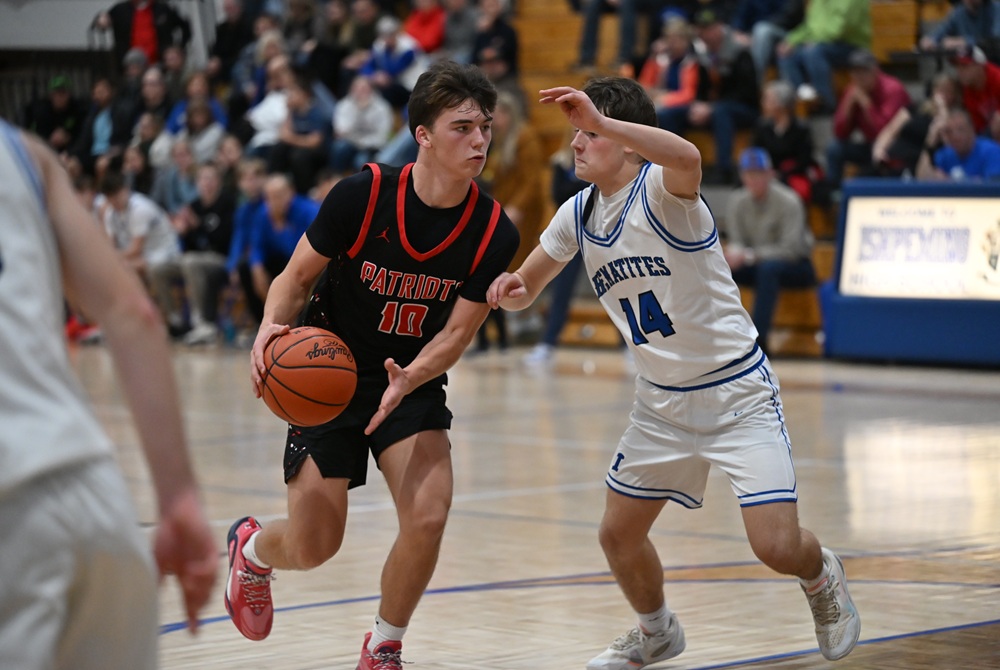
Ishpeming Westwood (3-0) The Patriots reached the Semifinals last season for the first time since 2003 with Ethan Marta leading the way, and he’s doing so again to begin his senior year as Westwood opened with sizable wins over West Iron County and Hancock. They finished a perfect first week with an 83-64 victory over rival Ishpeming.
North Muskegon (3-0) The Norsemen are off to the right start as well after last season’s 23-2 finish and Regional Final run. They won all three of their games last week by at least 20 points, defeating Division 1 Walled Lake Western 64-44 in the championship game of the Will Lynch Invitational at Benzie Central. And they celebrated senior Adam Dugener reaching 1,000 points in the season-opening win over Holton.
DIVISION 4
Clarkston Everest Collegiate (2-0) A Regional finalist and 24-2 overall last season, Everest jumped 10 wins from 2023-24 and is off to a fast start again. The Mountaineers opened with a 61-42 win over Livonia Clarenceville and followed with a 59-42 victory over Flint Beecher. Clarenceville is a Division 2 team, and the great majority of Everest’s regular-season opponents play in Division 2 or 3 with a date as well against Division 1 South Lyon East on Feb. 19.
Eben Junction Superior Central (3-0) Two of last season’s first four losses came to Hannahville Nah Tah Wahsh as Superior Central went on to finish the season 9-14 – after going 16-8 in 2023-24. But the Cougars got on the right track immediately this winter with a 57-42 win over Nah Tah Wahsh to open last week before defeating Cedarville 42-41 and Mackinaw City 48-41 on successive days to win the Battle of the Bridge hosted by the latter.
Can’t-Miss Contests
Be on the lookout for results of these games coming up:
Monday – Ishpeming Westwood (3-0) at Kingsford (2-0) – These two both made it to Breslin Center last season, Westwood reaching the Division 3 Semifinals and Kingsford the same in Division 2.
Tuesday – Flint Powers Catholic (2-0) at Bay City John Glenn (1-1) – These two Division 2 hopefuls both won 20 games last season.
Friday – Grand Rapids Catholic Central (0-0) at Rockford (1-0) – The Division 1 Rams may have won their matchup last season 70-43, but the Cougars went on to finish their season in the Division 2 Semifinals.
Saturday – Warren Lincoln (1-0) vs. Arts & Technology Academy of Pontiac (0-0) at Detroit Mercy – These two also both reached Breslin Center last season, Lincoln winning the Division 2 title and ATAP finishing Division 3 runner-up, and they will face off at the U-D Mercy Showcase.
Saturday – East Lansing (1-0) vs. Detroit Martin Luther King (0-1) at Lansing Eastern – The reigning Division 1 champion Trojans should get a strong challenge at the Moneyball Tip-Off Classic from King, which made the Quarterfinals last winter.
MHSAA.com's weekly “Breslin Bound” reports are powered by MI Student Aid, a division within the Department of Lifelong Education, Advancement, and Potential (MiLEAP). MI Student Aid encourages students to pursue postsecondary education by providing access to student financial resources and information. MI Student Aid administers the state’s scholarship and grant programs that help make college Accessible, Affordable and Attainable for you. Click to connect with MI Student Aid and find more information on Facebook and X @mistudentaid.
PHOTO While being defended by Ishpeming's Dax Kakkuri on Friday, Ishpeming Westwood's Ethan Marta makes a move to the basket. (Photo by Cara Kamps.)