


Promising Ypsilanti Aiming for Historic Finish
By
Chip Mundy
Special for Second Half
January 7, 2016
By Chip Mundy
Special for Second Half
YPSILANTI – It was 30 minutes after Ypsilanti Community finished its victory over Flint Hamady on Tuesday, and 7-year-old Jaylon Allen was running around the court like any other ordinary 7-year-old.
 As Ypsilanti basketball coach Steve Brooks watched him on the court, he spoke glowingly of the promise the youngster had in basketball.
“Mark this down, he can run my offense right now, and he’s 7,” Brooks said.
Eleven years ago, Brooks was in the same position, watching a young player with a ton of hope. That player was Corey Allen, older brother of Jaylon and star of Ypsilanti’s unbeaten team that has advanced to the Class A Quarterfinals two of the past three years.
“Corey has been around like that,” Brooks said, comparing the brothers. “At that time, his dad was our middle school coach, so he would go to the middle school practices.
“Corey has been our leading scorer since he hit campus. He started as a freshman, and we had guys like Jaylen Johnson and Janeau Joubert, and he led us in scoring. His first three games were 17, 27 and 25 as a 14-year-old.”
Mutual respect and admiration
The bond between Brooks and Allen has been a special one. Although Brooks is fond of all of his players, he admits that it is not unlike the relationship shared by Michigan State coach Tom Izzo and his star player Mateen Cleaves during Cleaves’ successful career that included an NCAA championship nearly two decades ago.
“He really is my Mateen Cleaves,” Brooks said, “but don’t get me wrong. We go at it. I’m a disciplinarian, and as they get older, they want to do the social things. We had a heart-to-heart last Sunday. He’s a Mr. Basketball candidate, and I needed him to step it up.
“He had kind of deferred to the other guys because he already has a scholarship, and he wants some of the other guys to get seen. I was like, ‘Corey, those other guys depend on you,’ and he’s back to the old Corey.”
Allen showed it Tuesday night against Flint Hamady. After Ypsilanti trailed by one at halftime, Allen broke a tie game in the third quarter with a long 3-pointer, then stole the ball and drove coast-to-coast for a layup and a quick five-point lead. The Grizzlies (5-0) never trailed after that.
“He’s been getting big baskets since I’ve known him,” Brooks said. “He had 45- and 50-point games in middle school, and he has led us in steals, so he’s just not a shooter.”
Allen, a 6-foot-3 guard, has committed to play at the University of Detroit Mercy, and although he admits that he is looking forward to playing in college, he is in no hurry for the high school portion of his career to end.
“Detroit Mercy was like a family when I went on my visit,” Allen said. “They took me in like I was a part of the team. The coach kept it real, and I really liked that, and I liked the players. I played against some of them in AAU circuit, so I know them well.
“But ever since I was in the eighth grade, I’ve wanted to win the state championship for Coach Brooks. All through high school, we’ve been making runs and coming up short. Now this is my senior year, and I’m pushing to make that happen.”
Allen speaks of Brooks much like Brooks speaks of him.
“Coach is a tough guy,” he said. “He wants the best out of all of us, and he pushes us the hardest. That’s why we love him. I love him to death. He’s a father figure to me.”
And vice versa.
“A lot of times he gets the brunt of a lot of stuff because he’s like a son to me,” Brooks said. “The expectations are really high, and the standards are really high for him. He’s a humble kid, and I’m really going to miss him after he leaves.”
Task at hand
Ypsilanti has never won an MHSAA championship in basketball. The team did make it to the Class A Finals in both 1968 and 1969 but lost both times. There was another great run during the late 1970s when the Phoenix won three consecutive Class A Regional titles before losing in the Quarterfinals.
After the 2012-13 school year, Ypsilanti and Willow Run merged to form Ypsilanti Community High School, and the Phoenix became the Grizzlies. That was Allen’s first year in high school and the start of the most recent run of success.
Allen is not only a leader on the court; he is a leader off the court as well. It was something he picked up on as a freshman.
“At first, I wasn’t the type to seek out to be a leader,” he said. “We had a lot of leaders when I was in ninth grade. I was very quiet and took the teaching from them and worked on everything all through my high school career.”
While Allen isn’t a one-man team, he is the one everyone looks up to.
“The kids love him,” Brooks said. “We go as he goes, and I try to explain that to him. Whether he wants it or not, the other guys all look up to him all the way down to the seventh grade. All the kids know who he is, and they respect him.”
Junior guard De’Money Gentry said Allen’s leadership skills are felt both on and off the court.
“He pushes us and makes us do our best all the time,” Gentry said. “If we’re messing up, he just tells us to keep our heads up and keep doing what we need to do.”
Allen is surrounded by a talented team that made it to the Class A Quarterfinals a year ago, losing to eventual champion Detroit Western International. The Grizzlies lost just two players off that team and have even more on the way as injuries have been a problem at the start of the season.
Marquis Smith, star quarterback who is being recruited by such schools as Iowa State, Syracuse and Cincinnati for football, did not play all last season because of a dislocated shoulder but is expected back soon.
“He really is like the spirit of the team,” Brooks said of Smith. “He brings a positive attitude and confidence, and when I’m down, he’s the kind of guy to come into the office and cheer me up.”
Smith attended Willow Run prior to the merger and is excited to be part of such a successful program.
“I like to be part of a positive program,” he said. “I can’t explain how it feels to be winning. It’s the way we click together like a brotherhood. We’re on the same page with each other, and we know what’s happening and what we are capable of doing on the court.”
Junior guard Jamezell Davis has given the team a scoring spark early in the season and should take some of the heat off Allen, and there is plenty of depth waiting to get healthy and eligible.
Starting forward Jalen Maxwell is trying to come back after a concussion, and center Josh Perkins is battling a back injury. Guard Marlin Talley, son of former Mr. Basketball Award winner and University of Michigan player Michael Talley, missed the game Tuesday with an illness.
And then there is guard RayJon Williams-Jackson, a starter from last year who is on crutches after suffering a knee ligament injury in football.
“He does all the tough stuff, so we miss him,” Brooks said. “He does all the dirty work.”
Brooks also anticipates a big addition in a few weeks when 6-foot-5 forward Michael Bruce becomes eligible. Bruce originally attended Willow Run but chose to move on to Belleville after the closure instead of coming to Ypsilanti Community. He will be eligible in two weeks.
“He’s going to make us a different team,” Brooks said. “We will be a real good team. We’ll be a more confident team because he’s real skilled.”
Best kind of wins
Brooks wants to win as much as anybody, but he sees the big picture. The players understand that, too.
“He teaches us how to be better young men off the court,” Allen said.
Brooks calls it “educational athletics.”
“They are great kids; we don’t have any issues,” he said. “They are always well-mannered, they don’t get technical fouls, they don’t talk back to officials or things like that, and I’m really proud of them in that regard.
“It is educational athletics on this level, and that is what some people kind of lose sight of. Of course you want to win, but you want to teach them lessons along the way.”
Brooks, who took over at Ypsilanti in 2003, is relishing the run the Grizzlies are having, and he says the future looks bright – even before the arrival of the 7-year-old prodigy whom Brooks says can run his offense right now.
But he’s not looking that far in advance.
“By then,” Brooks said, “I’ll probably be eating popcorn and be at the point where I can just come out and watch the games.”
 Chip Mundy served as sports editor at the Brooklyn Exponent and Albion Recorder from 1980-86, and then as a reporter and later copy editor at the Jackson Citizen-Patriot from 1986-2011. He also co-authored Michigan Sports Trivia. E-mail him at [email protected] with story ideas for Jackson, Washtenaw, Hillsdale, Lenawee and Monroe counties.
PHOTOS: (Top) Ypsilanti Community’s Corey Allen (5) goes to the basket during Tuesday’s win over Flint Hamady. (Middle) Grizzlies coach Steve Brooks huddles with his team during a break. (Below) Jamezell Davis (3) pushes the ball upcourt during a fastbreak Tuesday. (Photos by Betsy Howell.)
Breslin Bound: 2025-26 Boys Report Week 1
By
Geoff Kimmerly
MHSAA.com senior editor
December 8, 2025
Winter has certainly arrived in Michigan over the last few weeks – at least from a snowy standpoint – and right on the time to signal the start of boys basketball season and our first report on the annual march to Michigan State's Breslin Center.
 Big matchups already are happening, and every game against an MHSAA Tournament opponent counts toward seeding for District brackets, and once again we're diving into the results you need to know from the previous week, teams that are showing up big in each division and matchups coming up that you won't want to miss.
“Breslin Bound” is powered by MI Student Aid and based on results and schedules posted for each school at MHSAA.com.
Week in Review
The countdown of last week’s five most intriguing results:
1. Grand Rapids South Christian 75, Grand Rapids Christian 71 The Sailors (2-0) opened by adding to last season’s District Final win over Grand Rapids Christian (1-1), and after having lost to the Eagles 72-55 in their season opener a year ago.
2. Bloomfield Hills Brother Rice 71, Detroit U-D Jesuit 42 Brother Rice (2-0) enjoyed some significant payback after falling to Jesuit twice last season, during the regular season in what eventually decided the Catholic High School League Central title and then in their Regional Semifinal matchup.
3. Saginaw United 67, Detroit Catholic Central 57 The Phoenix (2-1) opened their new fieldhouse with a notable season-opening victory over the Shamrocks (2-1), who defeated United 69-55 in their opener a year ago.
4. Grand Blanc 76, Hamtramck 75 (OT) The Bobcats (2-0) opened the season with this notable win at the Horatio Williams Tip-Off Classic.
5. Warren Fitzgerald 41, East Kentwood 40 This was another exciting finish at the Horatio Williams event, again in a faceoff of teams with high aspirations this season.
Watch List
With an eye toward March, here are two teams in each division making sparks:
DIVISION 1
Grand Haven (3-0) The Buccaneers finished an opening week of road games without a loss, defeating Coopersville 65-42 and then Traverse City Central 83-71 and Traverse West 79-77 over the weekend. Grand Haven improved from 11-12 in 2023-24 to 18-6 last season and will have some opportunities to get rolling heading into the new calendar year with a Dec. 22 matchup against Freeland and its Lake Michigan Cup on Dec. 29-30.
North Farmington (2-0) The Raiders are coming off a 12-10 finish and third place in the Oakland Activities Association Red last season, and got off to a fast start under first-year coach Peter Mantyla with a 41-35 win over Canton and a 62-47 victory over Davison while hosting the Horatio Williams Tip-Off Classic. Reigning league champion Birmingham Groves is up next, on Friday, and the first matchup with Farmington – which ended the Raiders’ season last winter – is Dec. 19.
DIVISIION 2
Dundee (3-0) The Vikings appear on track to bounce way back after going 21-5 in 2023-24 but then only 5-18 last winter. They opened last week with a 12-point win over Saline Washtenaw Christian, a 47-46 victory over Milan and a 51-45 triumph over Britton Deerfield – and after losing to Washtenaw Christian by six points during the early going a year ago.
Freeland (3-0) The Falcons are coming off a 22-4 finish and run to the Division 2 Quarterfinals last winter, so a fast start isn’t a surprise. But it was still impressive; Freeland opened with a 22-point win over Bridgeport, then defeated Menominee by 22 and Petoskey by 15 at the latter’s Sean Pollion Invitational. Showcase games against Auburn Hills Avondale and Grand Haven later this month will be opportunities to impress.
DIVISION 3
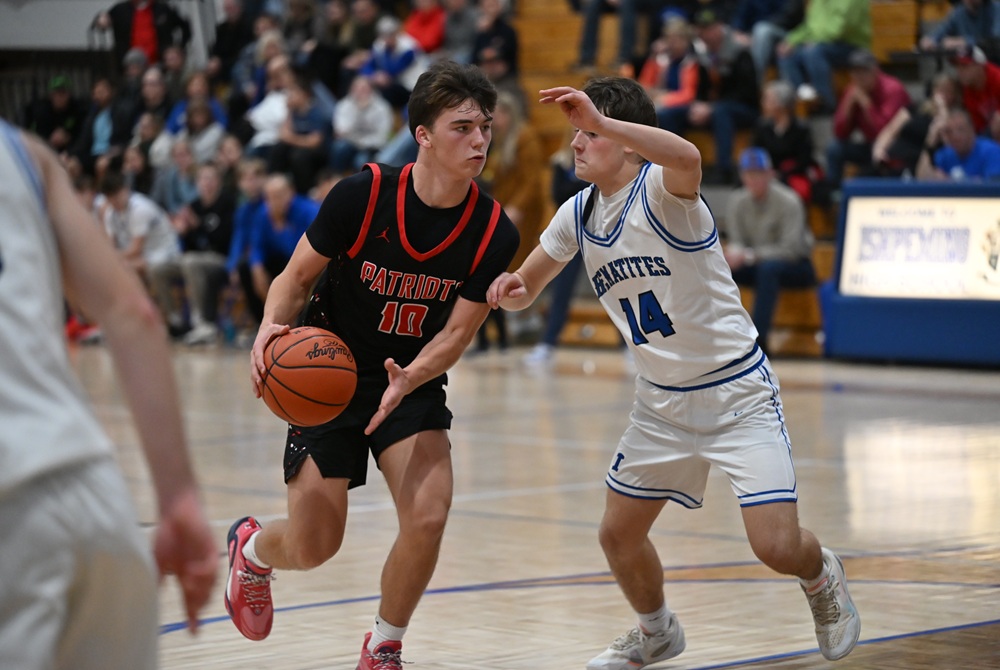
Ishpeming Westwood (3-0) The Patriots reached the Semifinals last season for the first time since 2003 with Ethan Marta leading the way, and he’s doing so again to begin his senior year as Westwood opened with sizable wins over West Iron County and Hancock. They finished a perfect first week with an 83-64 victory over rival Ishpeming.
North Muskegon (3-0) The Norsemen are off to the right start as well after last season’s 23-2 finish and Regional Final run. They won all three of their games last week by at least 20 points, defeating Division 1 Walled Lake Western 64-44 in the championship game of the Will Lynch Invitational at Benzie Central. And they celebrated senior Adam Dugener reaching 1,000 points in the season-opening win over Holton.
DIVISION 4
Clarkston Everest Collegiate (2-0) A Regional finalist and 24-2 overall last season, Everest jumped 10 wins from 2023-24 and is off to a fast start again. The Mountaineers opened with a 61-42 win over Livonia Clarenceville and followed with a 59-42 victory over Flint Beecher. Clarenceville is a Division 2 team, and the great majority of Everest’s regular-season opponents play in Division 2 or 3 with a date as well against Division 1 South Lyon East on Feb. 19.
Eben Junction Superior Central (3-0) Two of last season’s first four losses came to Hannahville Nah Tah Wahsh as Superior Central went on to finish the season 9-14 – after going 16-8 in 2023-24. But the Cougars got on the right track immediately this winter with a 57-42 win over Nah Tah Wahsh to open last week before defeating Cedarville 42-41 and Mackinaw City 48-41 on successive days to win the Battle of the Bridge hosted by the latter.
Can’t-Miss Contests
Be on the lookout for results of these games coming up:
Monday – Ishpeming Westwood (3-0) at Kingsford (2-0) – These two both made it to Breslin Center last season, Westwood reaching the Division 3 Semifinals and Kingsford the same in Division 2.
Tuesday – Flint Powers Catholic (2-0) at Bay City John Glenn (1-1) – These two Division 2 hopefuls both won 20 games last season.
Friday – Grand Rapids Catholic Central (0-0) at Rockford (1-0) – The Division 1 Rams may have won their matchup last season 70-43, but the Cougars went on to finish their season in the Division 2 Semifinals.
Saturday – Warren Lincoln (1-0) vs. Arts & Technology Academy of Pontiac (0-0) at Detroit Mercy – These two also both reached Breslin Center last season, Lincoln winning the Division 2 title and ATAP finishing Division 3 runner-up, and they will face off at the U-D Mercy Showcase.
Saturday – East Lansing (1-0) vs. Detroit Martin Luther King (0-1) at Lansing Eastern – The reigning Division 1 champion Trojans should get a strong challenge at the Moneyball Tip-Off Classic from King, which made the Quarterfinals last winter.
MHSAA.com's weekly “Breslin Bound” reports are powered by MI Student Aid, a division within the Department of Lifelong Education, Advancement, and Potential (MiLEAP). MI Student Aid encourages students to pursue postsecondary education by providing access to student financial resources and information. MI Student Aid administers the state’s scholarship and grant programs that help make college Accessible, Affordable and Attainable for you. Click to connect with MI Student Aid and find more information on Facebook and X @mistudentaid.
PHOTO While being defended by Ishpeming's Dax Kakkuri on Friday, Ishpeming Westwood's Ethan Marta makes a move to the basket. (Photo by Cara Kamps.)