

'Retro' Award Rewards 1st Hoops Legends
January 4, 2017
By Ron Pesch
Special for Second Half
Before the start of the MHSAA’s 2009 Boys Basketball finals, Basketball Coaches Association of Michigan director Tom Hursey stopped by my seat at Michigan State University’s Breslin Center to say hello.
Our chat would alter a decade of my Michigan winters.
Somewhere between hello and goodbye, our chat included conversation on one of my favorite BCAM ventures. In 1981, the Michigan High School Basketball Coaches Association, as BCAM was once known, named its first “Mr. Basketball.” I was two years out of high school when Lansing Eastern’s Sam Vincent edged Eric Turner of Flint Central for that first award. Designed to honor the state’s top senior, the award was named in honor of Detroit Free Press writer Hal Schram. “The Swami,” as he was nicknamed, Schram began covering high school sports for the newspaper in 1945.
The 2009 selection was 6-foot-9 Derrick Nix of Detroit Pershing. I mentioned my affinity for the Mr. Basketball program to Tom, but stated that I always thought it a crime that the award didn’t start years earlier, at least when Michigan hoop fans became infatuated with a kid nicknamed “Magic.”
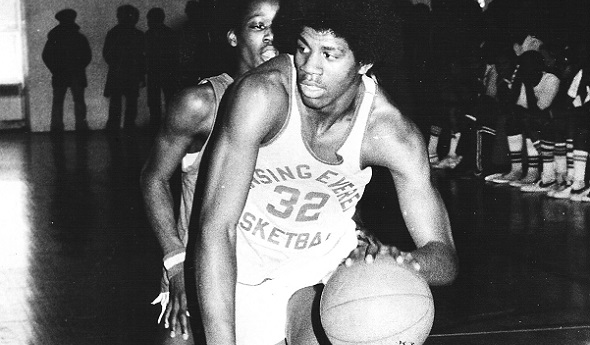
Earvin Johnson prepped at Lansing Everett and was the talk of the state in basketball circles before becoming a household name during his time at Michigan State and with the Los Angeles Lakers. Earlier this year, ESPN named Johnson the greatest point guard to ever play the game. Tom noted that “Magic” was really the inspiration for the “Mr. Basketball” award.
Then I posed a question to Tom.
What about creating a “new” award, designed to honor those greats from the past?
As my hobby of researching the history of high school sports in Michigan and beyond had grown over the years, I’d found the Great Lakes state had always produced shining stars on the basketball court. The crime was that the “Mr. Basketball” award hadn’t been launched many years before.
Harry Kipke, was perhaps the state’s first true basketball star. He won 12 varsity letters at Lansing Central and guided the basketball team to the semifinal round of the state tournament in 1920 as a senior, before heading to the University of Michigan where he earned letters in football, basketball and baseball. After stops at the University of Missouri and Michigan State, Kipke would serve as Michigan’s football coach, guiding the Wolverines to two national gridiron championships.
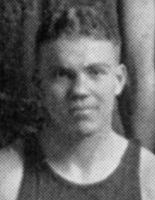 As a junior, the basketball antics of Grand Rapids Union’s Royal “Red” Cherry captured the state’s attention when he led Union to the state basketball championship. Considered the best all-around player of the tournament, Cherry led the team to a second consecutive title as a senior. He, too, attended Michigan, earning laurels on the basketball court and the baseball diamond.
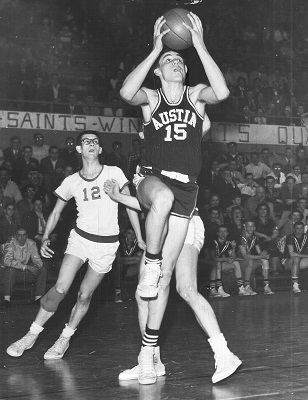
Many other legends of the hardcourt populated Michigan’s past: Saginaw’s Ernie Thompson; the Burton brothers, M.C. and Ed, of Muskegon Heights; Detroit Pershing’s Ralph Simpson and Spencer Haywood; Dave DeBusschere of Detroit Austin Catholic; Willie Betts and Blanche Martin of River Rouge; Ron Kramer of East Detroit; Benton Harbor’s Chet Walker and L.C. Bowen.
After a few weeks of research, discussion and thought, Tom agreed, and over the next several months the framework for the “Retro Mr. Basketball” project was developed
The idea was to try and mimic the current model. Only seniors, and their high school basketball careers, should be considered. While any “senior” player would be eligible, a ballot of the state’s elite would comprise the candidates for the award. Like their modern-day equivalents, where the events of life that would follow high school graduation had yet to occur, post-high school life would be disregarded as much as possible for “Retro” candidates.
Finally, the program would follow a 10-year arc, kicking off in the spring of 2010. This December marks my eighth year of research tied to the mission. Two more will follow.
Since the Schram “Mr. Basketball” award began in 1981, the “Retro” award would honor basketball players from the years 1920 through 1980. That first year, a ballot comprised of players from the years that ended in zero - 1920, 1930, 1940, 1950, 1960, 1970 and 1980 – was created. A senior for each year would be named the winner of the “Retro” award. That meant with the selection of “Mr. Basketball” and the six “Retro” winners for the years 1929, 1939, 1949, 1959, 1969 and 1979, scheduled for the spring of 2019, BCAM would be able to point to a combined list of Mr. Basketballs totaling 100 of the state’s finest.
To identify each year’s award winner, a committee of veteran BCAM members was formed to study a ballot of candidates and select a winner.
Technology, combined with scanning old-fashioned reels of microfilm, has helped with research of potential candidates. In those very early years, personal statistics were rarely kept. Rather, an assessment of a player’s skills, tied to the position he played, often served as a means to identify an area’s top athletes. Tournament play was often the only time an athlete’s abilities were on display to a larger audience. Scouring newspaper articles for all-tournament teams and yearbooks for additional details and years of study helped uncover the state’s top senior players. Understanding the game and its evolution was important. The center jump after each basket emphasized the importance of a tall, skilled center in those games played before the winter of 1938-39.
Beginning in 1935, all-state teams began to appear in state newspapers. Eventually, the Detroit Free Press, the Detroit Times, the Detroit News, The Associated Press and even United Press International became involved in identifying the state’s top basketball players and naming all-state squads. Much work is involved in parsing the 15,811 names (not including honorable mentions) found in those lists. When duplicates are removed, the names of 8,430 prep players remain spread over the 61 years that mark the “Retro” field of possible candidates.
Research to identify seniors, players named by multiple media outlets, and mini biographies are compiled for the top players. The field of candidates is then narrowed to 10 or fewer. Over state championship weekend, the ballots are brought to the BCAM committee for discussion, and finalists are named for each year. Finally, one player is named for each eligible season.
Like the modern day award, the selection may create some controversy. Some amazing ballplayers have landed on the finalist list, but were denied the Hal Schram Mr. Basketball award: Traverse City’s Dan Majerle, Roy Marble of Flint Beecher, Detroit Southwestern’s Jalen Rose, Detroit Northern’s Derrick Coleman and Draymond Green of Saginaw are among a few.
 The same applies to the “Retro” list. Fennville’s Richie Jordan, Robert “Bubbles” Hawkins from Detroit Pershing, Dennis Bankey of Detroit St. Thomas, Bill Chmielewski of Detroit Redeemer, Highland Park’s Terry Duerod and Detroit Kettering’s Lindsay Hairston all have been honored on the finalist lists, but fell short of the top prize.
In many cases, Michigan was loaded with prep talent – it’s tough to name Roy Marble Mr. Basketball when Flint Northwestern’s Glen Rice was on the same ballot, or Rose the state’s best when Country Day’s Chris Webber was another candidate. While the “Fennville Flash” amazed the state with his eye-popping statistics in 1965, Bowen led Benton Harbor to back-to-back Class A titles. Named an all-state basketball player as a junior, Hairston grew an inch and improved his game as a senior, but Pontiac Central’s “Campy” Russell dominated headlines that season, and was the “Retro” Mr. Basketball selection for 1971.
In some cases, it’s a challenge to look at the final balloting results without judging selections based on future basketball success. That certainly is the case with 2008. That season, Michigan’s Mr. Basketball award went to 6-foot guard Brad Redford, who posted incredible back-to-back high school seasons at Frankenmuth. Runner-up to the award that year was Saginaw’s Green. Considering Green’s success in the NBA, that’s hard for many to believe.
While the debates may never be settled, the beauty of Schram and “Retro” Mr. Basketball balloting can be found in the argument. With those disputes, people recall, research and learn about Michigan’s incredible prep basketball past.
The remaining three years of the “Retro” project will include many more legends of Michigan High School basketball, including, among others, DeBusschere, Walker, Haywood and Simpson.
This season, that “Magic” kid will be one of the names among the mix. Forty years after high school graduation, will he earn the honor that eluded him in high school, only because the honor didn’t yet exist?
 Ron Pesch has taken an active role in researching the history of MHSAA events since 1985 and began writing for MHSAA Finals programs in 1986, adding additional features and "flashbacks" in 1992. He inherited the title of MHSAA historian from the late Dick Kishpaugh following the 1993-94 school year, and resides in Muskegon. Contact him at [email protected] with ideas for historical articles.
PHOTOS: (Top) Lansing Everett’s Earvin Johnson drives around a defender during his celebrated high school career. (Middle) Grand Rapids Union’s Royal “Red” Cherry. (Below) Detroit Austin Catholic’s Dave DeBusschere drives to the hoop as an opponent gets in position to rebound. (Photos from MHSAA and Ron Pesch historical files.)
20-0 Just Start for Senior-Driven Ravenna
March 4, 2020
By Tom Kendra
Special for Second Half
With 20 seconds remaining in Tuesday night’s victory, the Ravenna student section started chanting:
 “Undefeated! Undefeated!”
That was about as wild and crazy as the Bulldogs got after a truly historic achievement – moving to 20-0 and wrapping up the first-ever perfect boys basketball regular season in school history with a 71-51 victory over host Fruitport Calvary Christian.
Afterward in the locker room, one of the players wrote the following message on the whiteboard:
0-20.
“That’s been our philosophy all year,” explained first-year Ravenna coach Courtney Kemp, whose team is ranked No. 5 in the final Associated Press state rankings. “I remember seeing 0-5 and 0-6 up there. We want to play with the humility, the hunger and the sense of urgency of a team that is desperate to get a win.”
The Bulldogs know they have accomplished something truly special on the hardcourt, an achievement that will be talked about in the small farming community in eastern Muskegon County for years to come.
They also know that they can’t afford to celebrate it right now, as they will be hosting a grueling Division 3 District, starting with a third showdown on Monday against West Michigan Conference rival North Muskegon (14-5). If they survive that, stern tests loom against a pair of tournament-savvy teams in Kent City and Muskegon Western Michigan Christian.
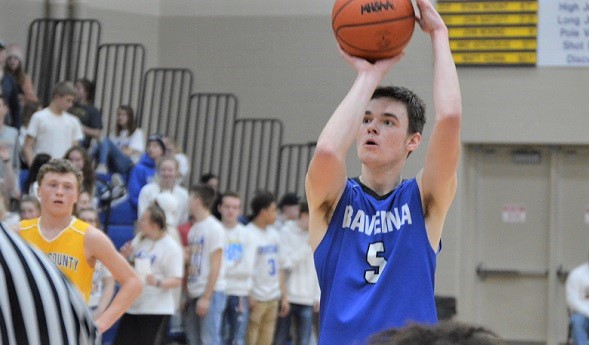
“It’s a season to remember, for sure,” said 6-foot-5 senior center Jacob May, who scored a team-high 21 points with five rebounds in Tuesday’s regular-season finale. “It’s been a blast. Our goal was to put a banner up in the gym and we got that conference title, but we can’t be satisfied with that.”
May is one of five senior starters who rose above some early setbacks to win the school’s first boys basketball conference championship in 40 years and first outright WMC title in 47 years. It was the school’s third boys basketball championship in 51 years in the WMC.
The perfect season becomes more impressive when you consider that the team lost its coach in June, when Justin Johnson left after five years to take the same job at Division 1 Muskegon Mona Shores. Johnson, whose teams won a combined 16 games over his first three years, guided the ‘Dogs to a breakthrough 15-7 finish last year and their first postseason win in more than a decade.
In August, star guard Josh Cox suffered a serious knee injury in the season-opening football game against Hopkins. Then in November, 6-5 senior Grant Parker learned he needed surgery and decided not to play basketball to recover in preparation for his college football career at Saginaw Valley State.
The ‘Dogs have never used any of those losses as an excuse, instead wearing down one opponent after another with their deep, senior-laden roster.
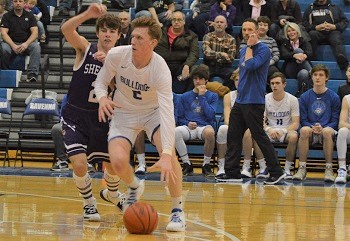 The strength of the team is a versatile front line of three seniors – May (14 points, nine rebounds, two blocked shots per game), 6-4 Calvin Schullo (14 points, five rebounds) and 6-4 Hunter Funk (nine points, 8.5 rebounds, four assists).
Kemp, who served as Ravenna’s junior varsity coach under Johnson, also brings good length off the bench in seniors Jack Emery (6-3) and Dom Mabrito (6-2) and junior Joel Emery (6-1).
The backcourt is in the hands of senior football standouts Connor Kilbourne and Trevor Sterken, with sharpshooter Dom Jones coming off the bench.
“They are all so competitive,” said Kemp, who like Johnson before him, played high school basketball at Unionville-Sebewaing. “Our depth is one of the biggest reasons for our success, which makes a huge difference in games and in practice. These guys go at each other hard every day, and it makes them better.”
That depth was on display Tuesday against Fruitport Calvary, which came out on fire from long range but ultimately couldn’t keep up for four quarters. May and Schullo were the only two Bulldogs in double figures, but 10 of the team’s 12 players scored.
Ravenna’s quest for perfection was tested during four consecutive road games in mid-February. The Bulldogs edged Wyoming Potter’s House on Feb. 11, then survived their closest call with a 54-52 win at North Muskegon two days later. Next came Ravenna’s most impressive win, a 70-36 overwhelming of neighboring rival Muskegon Oakridge on Feb. 18, followed by a win at Scottville Mason County Central to improve to 17-0.
Schullo said one of the biggest motivators was a pair of heartbreaking losses on the football field – during the regular season against Oakridge and a season-ending loss to Montague in the Division 6 District championship game.
“They took it from us in football, so we were determined to get it back in basketball,” said Schullo, who scored 13 points Tuesday.
The challenge now for Ravenna is to exhale, momentarily, and enjoy a historic hardcourt achievement at a school known statewide for football – boasting MHSAA Finals championships in 1994, 1996, 1997 and 2003 – while simultaneously preparing for a tough District where everyone will be out to hand the Bulldogs their first loss.
“It sounds funny to say, but we still don’t feel like we’ve accomplished anything yet,” said Kemp, who is assisted by Andy May and Tim Jones. “That has to be our mentality because teams are going to be gunning for us next week. We can celebrate 20-0 later.”
 Tom Kendra worked 23 years at The Muskegon Chronicle, including five as assistant sports editor and the final six as sports editor through 2011. E-mail him at [email protected] with story ideas for Muskegon, Oceana, Mason, Lake, Oceola, Mecosta and Newaygo counties.
PHOTOS: (Top) Ravenna’s Jacob May attempts a free throw during a win this season. (Middle) Calvin Schullo operates the offense under the watchful eye of Bulldogs coach Courtney Kemp. (Photos courtesy of the Ravenna High School yearbook staff.)