

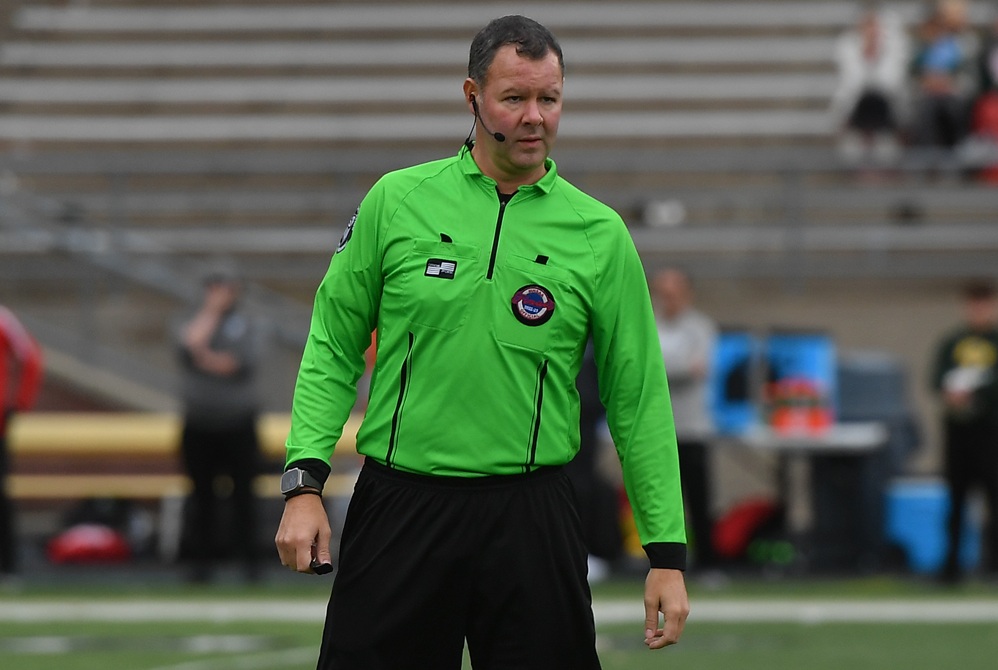
Be the Referee: Soccer Advantage
By
Paige Winne
MHSAA Director of Brand Management
October 13, 2026
Be The Referee is a series of short messages designed to help educate people on the rules of different sports, to help them better understand the art of officiating, and to recruit officials.
Below is this week's segment – Soccer Advantage - Listen
We’re on the soccer field today, where Team A has possession. A player from Team A is carelessly tackled by a Team B player in the middle of the field. The referee applies advantage because the fouled player quickly gets up and retains possession. However, a Team B defender intercepts the ball and kicks it out of bounds. What’s the call?
- Is it a throw-in for Team A since Team B kicked it out?
- Is it a free kick for Team A at the point of the foul?
- Or is it a free kick for Team A and a caution to Team B for kicking the ball away?
If you said a free kick for Team A at the point of the foul, you are correct. Advantage allows officials to keep play moving when the fouled team benefits from continuing. Here, that advantage never materialized, so the referee goes back to the original foul.
Previous 2026-27 editions
Oct. 6: Defensive Holding - Listen
Sept. 29: Minimum Number of Volleyball Players - Listen
Sept 22: Soccer Changes - Listen
Sept: 15: Dead Ball Penalty - Listen
Sept. 8: Libero Ejected - Listen
Sept. 1: Soccer Foul After Shot on Goal - Listen
Aug. 25: Fumble Out of Bounds - Listen
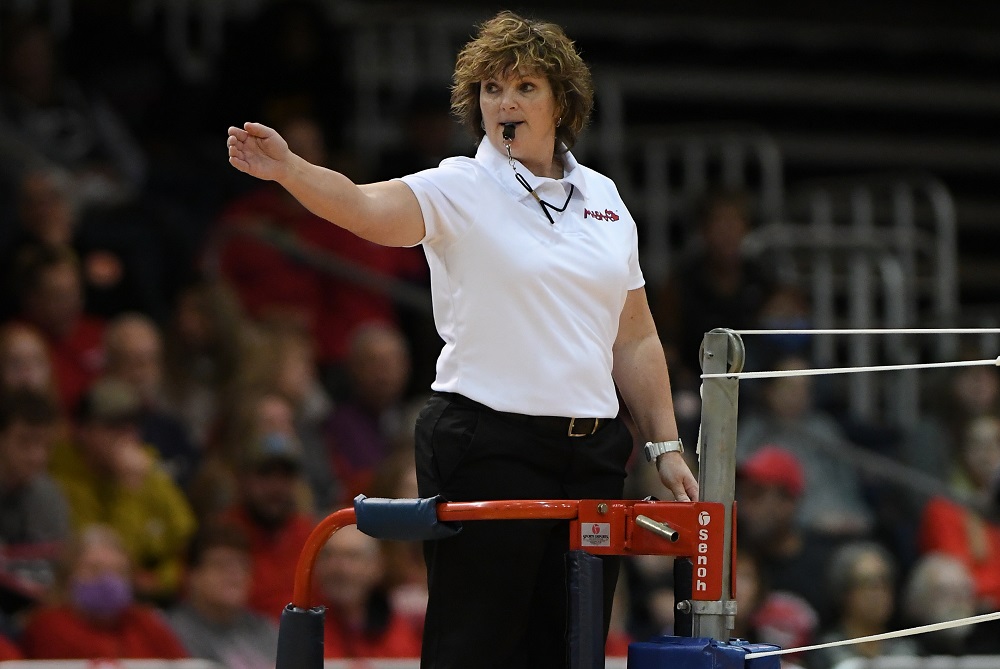
Be the Referee: Switching Sides
By
Sam Davis
MHSAA Director of Officials
September 6, 2022
Be The Referee is a series of short messages designed to help educate people on the rules of different sports, to help them better understand the art of officiating, and to recruit officials.
Below is this week's segment – Switching Sides - Listen
In volleyball, a rules modification that came about during COVID has been instated as a permanent change - with overwhelming support from coaches and officials.
Previously, teams would switch sides after each set, sometimes creating a traffic jam as players and coaches move benches from side to side. Unless there is a clear competitive advantage, there is no switching now. Coaches like having a dedicated home bench and the improved pace of the match.
Things that would necessitate teams switching would be less serving room on one end of the court, a window on one side with the sun shining in, or an overhead obstruction on one end.
It’s up to the official to determine if an advantage exists and if teams will switch at the end of each set – or stay on the same side for the entirety of the match.
Previous Editions:
Aug. 30: Play Clock - Listen
Aug. 23: Intentional Grounding Change - Listen