


Be the Referee: Tennis Nets
By
Paige Winne
MHSAA Marketing & Social Media Coordinator
September 24, 2024
Be The Referee is a series of short messages designed to help educate people on the rules of different sports, to help them better understand the art of officiating, and to recruit officials.
Below is this week's segment – Tennis Nets - Listen
Let’s talk tennis… specifically, the rules around the net.
First – tennis nets are 42 inches high at the posts and 36 inches high in the center. And nets measure 42 feet wide.
Players and their equipment CANNOT touch the net during a point. However, a player’s follow-through can cross over the net if the ball was hit to the correct side of the court. But no part of the follow-through can touch the net.
Also, the ball must completely cross the net before it can be hit. If your opponent hits a high lob and you are standing at the net ready to smash a return – you must wait until the ball is completely over the net before hitting it.
Making contact with the net during play or hitting the ball before it’s over the net results in a loss of point.
Previous 2024-25 Editions
Sept. 18: Libero - Listen
Sept. 10: Cross Country Uniforms - Listen
Sept. 3: Soccer Handling - Listen
Aug. 24: Football Holding - Listen
(Photo by Douglas Bargerstock.)
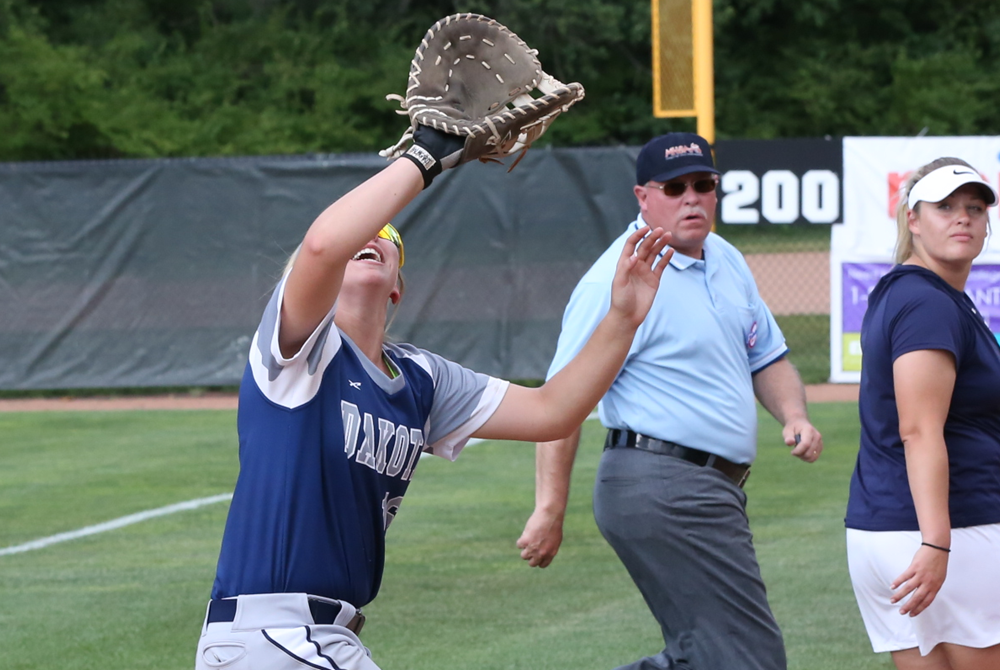
Be the Referee: Softball Base Runner Interference
By
Paige Winne
MHSAA Marketing & Social Media Coordinator
April 23, 2024
Be The Referee is a series of short messages designed to help educate people on the rules of different sports, to help them better understand the art of officiating, and to recruit officials.
Below is this week's segment – Softball Interference - Listen
We’re on the softball diamond today, and we’ve got runners on the corners with one out. The batter hits a pop-up in foul territory near the first base line. The runner on first interferes with the first baseplayer attempting to make the catch. What’s the call?
- If the pop-up is caught, both the batter and runner on first are out?
- The batter is out and the runner on first stays at first?
- The ball is ruled dead immediately, the runner on first is out and it’s a foul ball to the batter?
- Or, if the pop-up is caught, the batter is out and interference is ignored?
If you said it’s an immediate dead ball – you are correct. The runner on first is ruled out for interference and the batter is charged with a foul ball.
Previous Editions
April 16: Soccer Red Card - Listen
April 9: Batted Baseball Hits Runner - Listen
March 12: Basketball Replay - Listen
March 5: Hockey Officials - Listen
Feb. 27: Less Than 5 - Listen
Feb. 20: Air Ball - Listen
Feb. 13: Hockey Penalties - Listen
Jan. 30: Wrestling Tiebreakers - Listen
Jan. 23: Wrestling Technology - Listen
Jan. 9: 3 Seconds - Listen
Dec. 19: Unsuspecting Hockey Hits - Listen
Dec. 12: No More One-And-Ones - Listen
Nov. 21: Football Finals Replay - Listen
Nov. 14: Volleyball Unplayable Areas - Listen
Nov. 7: Pass/Kick Off Crossbar - Listen
Oct. 31: Cross Country Interference - Listen
Oct. 24: Soccer Overtime - Listen
Oct. 17: Tennis Spin - Listen
Oct. 10: Blocked Kick - Listen
Oct. 3: Volleyball Double & Lift - Listen
Sept. 26: Registration Process - Listen
Sept. 20: Animal Interference - Listen
Sept. 13: Feet Rule on Soccer Throw-In - Listen
Sept. 6: Volleyball Jewelry - Listen
Aug. 30: Football Rules Similarities - Listen
Aug. 23: Football Rules Differences - Listen