

Drive for Detroit: Week 3 in Review
September 15, 2014
By Geoff Kimmerly
Second Half editor
Yes, it's only mid-September. We've got a long way to go in this MHSAA football season.
But there were a number of games played during Week 3 that should impact significantly how league races unfold through the end of the October.
A few you won't read about below but are worth including: Mason County Central ended a seven-game losing streak to Shelby with a 12-6 win and could make some noise in the West Michigan D. Newaygo beat annual favorite Reed City, 14-6, for the first time as a member of the Central State Activities Association and could now be the favorite in the new Gold division.
And those are just scratches on the surface; read on for more that should provide lasting impact this fall.
West Michigan
Lowell 30, East Grand Rapids 25
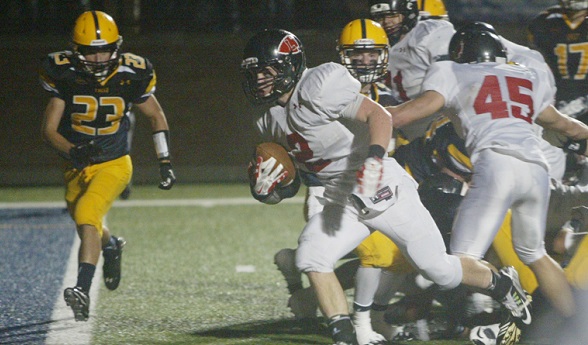
Make no mistake – East Grand Rapids (2-1) is back after two non-playoff seasons, and despite falling in this heartbreaker Friday. The Red Arrows (3-0) went ahead for good during the final minutes on Max Dean’s fourth touchdown of the night. Life doesn’t get easier for either team – East Grand Rapids faces Muskegon next and both play in the highly-competitive O-K White. But it’s tough to imagine a better way to kick off the league schedule. Click to read more from the Grand Rapids Press.
Also noted:
Rockford 10, Muskegon Mona Shores 7 – In two years, Mona Shores (2-1) has gone from sub-.500 to first-time playoff qualifier and now competitor with an elite program in Rockford (3-0).
Grand Rapids South Christian 33, Hudsonville Unity Christian 30 (OT) – The Sailors (1-2) have had a tough start against tough competition, but finally broke through against the improved Crusaders (2-1).
Grand Rapids Forest Hills Central 31, Caledonia 19 – After also opening with two tough losses, Forest Hills Central (1-2) got in the win column against a Caledonia (2-1) team that had been one of the state’s most impressive early.
Greenville 36, Comstock Park 16 – Greenville (2-1) is off to its best start since 2011, impressive all the more after beating Comstock Park (1-2), winners of 22 of its last 24 regular-season games.
Southwest and Border
Watervliet 18, Mendon 13
Even after winning 10 games two of the last three seasons, Watervliet probably was a passing thought for most in this game given Mendon’s 35-game regular-season winning streak. In fact, the Hornets hadn’t lost a regular-season game to an in-state opponent since 2006 – that 2010 loss was to Edgerton, Ohio. Mendon (2-1) was undermanned a bit – eight seniors did not play – but that shouldn’t take away from a huge victory for the Panthers (2-1). Click to read more from the St. Joseph Herald-Palladium.
Also noted:
Stevensville Lakeshore 20, Portage Central 17 – Lakeshore (3-0) handed Portage Central (1-1) its first regular-season loss since Week 8 of 2012.
St. Joseph 17, Portage Northern 7 – Knocking off solid Portage Northern (2-1) makes the Bears (3-0) early favorites with Lakeshore in the always-tough Southwestern Michigan Athletic Conference West.
Vicksburg 16, Edwardsburg 14 – The Bulldogs (3-0), coming off two straight sub-.500 seasons, beat Edwardsburg (2-1) after losing by a combined score of 81-27 over the last two meetings.
Coldwater 35, Battle Creek Pennfield 6 – The Cardinals (3-0) made the playoffs last season, for the first time ever, with an at-large bid at 5-4. But they are halfway to automatic qualification after dealing perennial playoff team Pennfield (0-3) another disappointment.
Bay and Thumb
Montrose 27, Lake Fenton 12
The Rams (3-0) ran their Genesee Area Conference Red winning streak to 22 and set back again Lake Fenton (1-2), league runner-up to Montrose the last two seasons. Lake Fenton stood within two points of the lead in the third quarter before the Rams pulled away. The last league team to beat Montrose was Flint Beecher, this season’s Week 8 opponent. Click to read more from the Flint Journal.
Also noted:
Flint Carman-Ainsworth 31, Davison 8 – The Cavaliers (2-1) came back from their Week 2 one-point heart-breaking loss to Mount Pleasant by beating former league rival Davison (1-2) for the fifth straight time.
Flint Southwestern 58, Saginaw 8 – The Knights (2-1) equaled their win total of the last three seasons and can equal their most since 2008 with another victory; Saginaw fell to 0-3.
Marlette 51, Reese 34 – Marlette’s Connor Thomas, a member of the MHSAA Student Advisory Council, ran for 217 yards and four touchdowns and also caught a touchdown pass as the Raiders moved to 2-1 and Reese fell to 1-2.
St. Clair 32, Sterling Heights 31 – Sterling Heights (0-3) won only once in 2013, but nearly pulled off its best victory in at least a few years as the Saints (2-1) had to come back in the fourth quarter riding the strength of four rushing touchdowns from Larry Ochadleus.
Lower Up North
Traverse City Central 20, Traverse City West 13
Central (3-0) got some revenge after last season’s three-point overtime loss that played a part in the Trojans missing the playoffs. West (1-2) may still own a 12-6 advantage in their series, but Central definitely has the upper hand in this season’s Big North Conference race although it’s only one game old for both. Click to read more from the Traverse City Record-Eagle.
Also noted:
Cadillac 27, Petoskey 7 – Cadillac (3-0) kicked off the Big North Conference season by handing a first loss to Petoskey (2-1) and keeping up a defensive effort allowing only nine points per game.
Maple City Glen Lake 15, Grayling 8 – The Lakers (2-0) have tough opponents lined up for at least the next five weeks but should contend, while Grayling (1-2) now is forced to bounce back to extend its five-season playoff streak.
Lincoln Alcona 22, Rogers City 6 – Alcona (3-0) quietly has won 15 straight regular-season games, with this one impressive as Rogers City (2-1) appears in the midst of turning things around after four straight sub.-500 finishes.
Cheboygan 13, Escanaba 12 – The Chiefs (1-2) were off to a rough start after two straight playoff seasons, but took a first step toward extending the streak while dropping Escanaba to 1-2.
Upper Peninsula
Gladstone 24, Negaunee 19
Although Gladstone started with two wins this fall after going 0-9 two of the last three seasons, it was fair to assume the Braves’ success would come to a quick end with Negaunee followed by the Great Northern U.P. Conference schedule. It’s time to rethink that assumption. Not only is Gladstone 3-0 for the first time since 2009, but got there by beating a Miners team that also started 2-0 and won 10 games each of the last two seasons. Click to read more from the Escanaba Daily Press.
Also noted:
Hurley, Wis. 18, Crystal Falls Forest Park 14 – Hurley (4-0) is one of the top-ranked small schools in Wisconsin, and beating Forest Park (2-1) no doubt will help that cause in addition to giving Hurley a huge advantage in the Great Western Conference race.
Ishpeming Westwood 48, Rudyard 0 – This wouldn’t usually register except that Westwood (3-0) won two games total in 2013 and three in 2012; Rudyard (0-3) is hoping for a quick turnaround.
Lake Linden-Hubbell 33, L’Anse 20 – The Lakes (2-1) avenged last season’s 52-34 playoff-opener loss to the Hornets (1-2).
Menominee 37, Pontiac Notre Dame Prep 23 – We love when our best from the Upper Peninsula get together with tough teams from downstate, and this was a great way for the Maroons (3-0) to prepare for their Great Northern U.P. Conference schedule while giving Notre Dame Prep (1-2) another competitive nonleague game.
Mid-Michigan
Lansing Sexton 32, Grand Ledge 21
Although the league opener, this could end up one of the most important games in the Capital Area Activities Conference Blue this season if not the championship decider. Sexton (3-0) has yet to play a home game this season but has continued to build an impressive resume adding the Comets to Detroit East English and Monroe among those defeated so far. Grand Ledge (1-2) made a run at the lead during the second half but couldn’t climb back after Sexton went up three scores during the second quarter. Click to read more from the Lansing State Journal.
Also noted:
Okemos 23, Lansing Everett 13 – The Chieftains (2-1) are looking like contenders in the CAAC Blue as well although a difficult early slate gets tougher with Grand Ledge and Sexton next; Everett (1-2) will attempt to bounce back against Holt.
Jackson Lumen Christi 34, Battle Creek Harper Creek 14 – These two have looked like favorites in the first-year Interstate 8 Athletic Conference, although Lumen Christi (3-0) remains undefeated and Harper Creek (1-2) must bounce back from a tough start.
St. Johns 28, Haslett 13 – The Redwings (3-0) are one of the surprises in the CAAC Red and best teams from the Lansing area, while Haslett (1-2) is working to stay in contention in the competitive league.
Ithaca 33, Saginaw Michigan Lutheran Seminary 14 – This was a little more of a scare than Ithaca (3-0) has had in a while, as the Yellowjackets trailed MLS (2-1) by a point at halftime.
Greater Detroit
Brownstown Woodhaven 42, Allen Park 35 (OT)
Woodhaven (3-0) came out ahead in another close Downriver League battle, this time in overtime after beating Southgate Anderson by two in Week 2. The Warriors need only one more win to equal last season’s finish and already have avenged three of those 2013 losses. Always-solid Allen Park is still there despite falling to 2-1. Click to read more from the Detroit Free Press.
Also noted:
Macomb Dakota 35, Warren Mott 7 – Dakota (2-1) is laying a strong early claim on the Macomb Area Red title, with Mott (2-1) previously expected to be a contender but now facing an uphill battle.
Sterling Heights Stevenson 21, Clinton Township Chippewa Valley 7 – This changes up the MAC Red race as well with Chippewa Valley (1-2) formerly a contender and Stevenson (2-1) now an intriguing possibility despite a Week 2 loss to Utica Eisenhower.
Oak Park 27, Farmington Hills Harrison 0 – The right to challenge Southfield in the Oakland Activities Association White belongs firmly to Oak Park (2-1), which hasn’t given up a point since Week 1 and dropped Harrison to 2-1 as well.
Clinton 54, Ottawa Lake Whiteford 30 – Whiteford (2-1) might’ve been the biggest obstacle as Clinton (3-0) goes for a third straight 9-0 regular season.
8-Player
Portland St. Patrick 27, Waldron 6
The Shamrocks (3-0) have the highest playoff point average in 8-player thanks in part to handing Waldron (2-1) its first loss. The victory also made Portland St. Patrick 21-4 since moving to 8-player football in 2012 – and continued an impressive defensive effort this fall as the team is giving up only eight points per game. Click to read more from the Hillsdale Daily News.
Also noted:
Rapid River 36, Ontonagon 22 – Although Ontonagon (0-2) is new to 8-player football, it gave Rapid River (3-0) its closest regular-season game since Week 9 of 2012.
Deckerville 66, Carsonville-Port Sanilac 13 – The Eagles (3-0) added to their recent dominance of rival CPS (0-3) with their second-most points in three seasons of 8-player ball.
PHOTO: Lowell charges toward the end zone during its 30-25 come-from-behind win over East Grand Rapids on Friday. (Click to see more from HighSchoolSportsScene.com).
1st & Goal: 2022 Week 4 Review
By
Geoff Kimmerly
MHSAA.com senior editor
September 19, 2022
All winning streaks eventually end. And in mentioning them, it is more in recognition of what was accomplished than what is now over.
 A couple of those endings took center stage during Week 4.
In 11-player, reigning Division 2 champion Warren De La Salle Collegiate saw its 16-game winning streak end with a one-point loss to rival Bloomfield Hills Brother Rice. The Pilots hadn’t been defeated since the 2020 Division 2 Final.
In 8-player, Adrian Lenawee Christian lost its first game since switching from 11-player at the start of 2020, and a week after tying Powers North Central’s 8-player record of 27 straight victories from 2015-17. Colon ended the streak, while the same weekend North Central’s current team also tied their record with a 27th-consecutive win.
See below for many more headliners as we move toward the midpoint of the regular season this week.
Bay & Thumb
HEADLINER North Branch 34, Almont 14 There are four strong contenders for the Blue Water Area Conference title, but it’s starting to feel like the decider will be the Week 8 matchup between North Branch (4-0) and Croswell-Lexington. Almont (3-1) can still impact this race – the Raiders see Armada this week and Croswell-Lexington next – but the Broncos have to feel pretty good about getting this one out of the way. Click for more from The Sports Report.
Watch list Bay City Western 70, Midland Dow 41 It was only five years ago that Western scored 45 points for the season, but in this victory the Warriors (3-1) went over 60 for the third time over the last two seasons – and after playing Dow (2-2) to a one-point loss and two-point playoff win last fall.
On the move Ubly 42, Harbor Beach 0 Two games into the league schedule, the Greater Thumb Conference East appears strongly in Ubly’s grasp, as the Bearcats (4-0) upped their average margin of victory overall this season to 46-7 while handing the Pirates (3-1) their lone loss. Davison 56, Saginaw Heritage 20 The Hawks (3-1) had earned much of the attention in the Saginaw Valley League over the first three weeks, but the Cardinals (3-1) solidified a spot as a top contender in the SVL South with Lapeer. Swartz Creek 26, Fenton 23 The Dragons (4-0) have done some impressive building the last three seasons and likely enjoyed this win a little more after splitting last year’s Flint Metro League Stripes title with the Tigers (2-2) because of a 41-27 defeat.
Greater Detroit
HEADLINER Bloomfield Hills Brother Rice 43, Warren De La Salle Collegiate 42 This might be the stunner of the 11-player season so far, as De La Salle (3-1) had won 16 straight games and 21 of its last 22. But looking back, it must be noted that Brother Rice (2-2) had given the Pilots some of their toughest games over the last five seasons, falling last year only 21-15 and winning the 2019 and 2020 matchups. The Detroit Catholic League Central is so loaded, it’s tough to forecast what happens from here. But this will certainly be a difference-maker in some way. Click for more from the Oakland Press.
Here's the highlights of the Brother Rice at De La Salle football game that aired on Football Fridays Overtime powered by STATE CHAMPS! on @BallySportsDET
#MIFTBL | @ThinkFordFirst@BroRiceWarriors @RiceADCoachCal @RiceWarriorsFB pic.twitter.com/KAOmTOPS6c— STATE CHAMPS! Michigan (@statechampsmich) September 17, 2022
Watch list Detroit Martin Luther King 28, Detroit Cass Tech 23 Any other week this would be the premier game in the Detroit area and beyond, as this time King (2-1) held off a late comeback by Cass Tech (1-3) after the Crusaders took a 28-10 lead.
On the move West Bloomfield 35, Clarkston 27 These Oakland Activities Association Red rivals can’t help but combine for must-see football, with this the third-straight meeting and fifth game over their last six together decided by eight or fewer points. West Bloomfield is up to 4-0, and Clarkston is 2-2 with two one-score defeats. Walled Lake Western 51, South Lyon East 23 The Warriors (4-0) are halfway through the Lakes Valley Conference schedule alone in first and a win better than multiple other contenders – including South Lyon East (3-1) in a competitive race. Gibraltar Carlson 27, Trenton 6 The Marauders (4-0) have downed two of the other three top contenders in the Downriver League in successive weeks, the time handing Trenton (3-1) its lone defeat.
Mid-Michigan
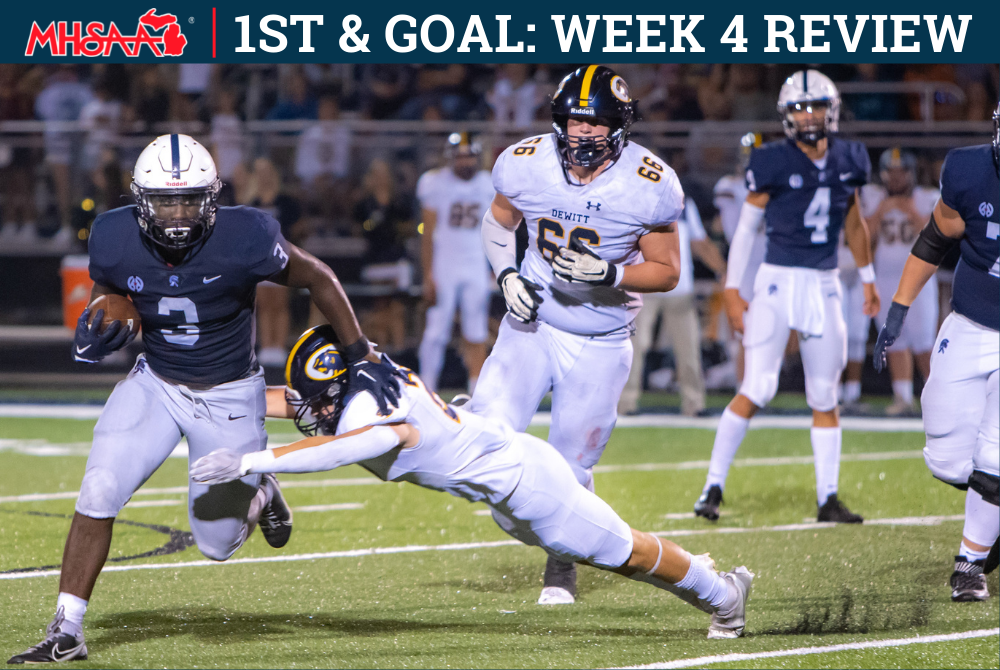
HEADLINER East Lansing 36, DeWitt 30 The Trojans (4-0) scored the only points of the four quarter – in fact, of the entire second half – to earn valuable position in the Capital Area Activities Conference Blue and potentially put DeWitt’s 15-season league title streak in jeopardy. Jace Clarizio made the big plays on both sides of the ball late as East Lansing avenged last season’s 49-14 loss to the Panthers (2-2). Click for more from the Lansing State Journal.
Watch list Mason 37, Williamston 29 While most eyes have been on East Lansing and DeWitt, Mason (4-0) might be the best CAAC team few are talking about. Williamston (3-1) joined Holt from two weeks ago among league title contenders to suffer their first loss this season to the Bulldogs.
On the move Belding 46, Grandville Calvin Christian 26 Both entered undefeated, and Belding (4-0) has yet to play a single-digit game this fall. Grand Ledge 37, Lansing Waverly 20 The Comets (3-1) came back from a Week 3 loss to rival Holt to hand Waverly (3-1) its lone defeat. Mount Pleasant 27, Traverse City Central 21 The SVL is even stronger this season with the additions of TC Central and TC West, and the Oilers (4-0) held off the Trojans (1-3) in their league debut after breaking a halftime tie with all 13 points of the third quarter.
Northern Lower Peninsula
HEADLINER Traverse City St. Francis 49, Kingsley 12 The Gladiators (4-0) ran their winning streak over Kingsley to two straight and in doing so may have gained the eventual edge to repeat as Northern Michigan Football League Legends champion. St. Francis scored more than 42 points for the fourth time in four games this fall, but maybe more impressive is a defense that held the Stags (2-2) to their fewest points since 2018. Click for more from the Traverse City Record-Eagle.
Watch list Charlevoix 48, Elk Rapids 0 The Rayders (4-0) have put together great starts all of the last four seasons, but nothing like this. They’re up to three straight shutouts, winning by a combined score of 165-0, and handed Elk Rapids (3-1) its only defeat.
On the move Gaylord 27, Petoskey 12 After a slight stumble two weeks ago against Marquette, Gaylord (3-1) got a third win to guarantee its best season since 2018. McBain 55, Houghton Lake 19 After opening with defeats to Kingsley and Beal City, McBain (2-2) has evened its record with more tough Highland Conference competition on the way. Cadillac 46, Alpena 14 The Vikings’ two defeats came against much larger opponents from the Saginaw Valley League, but they are likely the strongest contenders now in the Traverse City-less Big North Conference.
Southeast & Border
HEADLINER Carleton Airport 41, Grosse Ile 34 Both of these teams are in the midst of bounce-back campaigns, and Carleton Airport (4-0) has now equaled its win totals of both of the last two seasons. Handing Grosse Ile (3-1) its first defeat also leaves the Jets and Week 7 opponent Riverview as the last undefeated teams in the Huron League. Click for more from the Monroe News.
Here's the highlights of Carleton Airport beating Grosse Ile 41-34 on Friday.
Powered by @AltaEquipment @cooper_nye @AirportSchools @mills_jack7 pic.twitter.com/5IfqxwnKSB— STATE CHAMPS! Michigan (@statechampsmich) September 18, 2022
Watch list Union City 18, Reading 16 The Chargers (3-1) ran their winning streak over Reading (3-1) to two straight and have put themselves on firm footing tied with this week’s opponent Homer atop the Big 8 Conference.
On the move Addison 42, Michigan Center 40 The Panthers (3-1) have defeated Michigan Center (1-3) the last two seasons by a combined three points. Jackson Lumen Christi 19, Parma Western 14 The Titans’ three losses have been so strong that adding in this win over Western (2-2) sends Lumen up to No. 24 in Division 7. Tecumseh 48, Adrian 26 They have two more to win first, but this one puts Tecumseh (4-0) much closer to playing Chelsea for the Southeastern Conference White title in Week 7.
Southwest Corridor
HEADLINER Edwardsburg 10, Vicksburg 7 The scores have been a little closer than usual during the early going in the Wolverine Conference. But Edwardsburg is still the team to chase. The Eddies (3-1) remain undefeated in league play thanks to Carter Houseworth’s 42-yard field goal with two seconds to play that sent Vicksburg to 2-2. Click for more from the Niles Daily Star.
Watch list St. Joseph 35, Battle Creek Lakeview 14 The Bears (3-1) have set themselves up for a Southwestern Michigan Athletic Conference showdown this week against reigning champ Portage Central, which defeated St. Joseph 36-30 a year ago.
On the move Paw Paw 56, Sturgis 42 The Redwolves (3-1) have upped their offensive production each of the last three weeks, this time to outlast a Sturgis team that has scored a combined 97 points over its last two games. Constantine 56, Schoolcraft 22 This rivalry restored went Constantine’s way in a big way as the Falcons (3-1) defeated Schoolcraft (3-1) for the first time since the 2015 playoffs. Battle Creek Central 42, Stevensville Lakeshore 35 After falling just short against Byron Center in the season opener, Central has won three straight to guarantee equaling its best overall record since 2018.
Upper Peninsula
HEADLINER Gladstone 40, St. Ignace 0 Make Gladstone the Upper Peninsula team that should be getting the most attention statewide. The Braves (4-0) are up to No. 5 in Division 6 playoff points after handing St. Ignace (3-1) its lone defeat, and they have yet to play a single-digit game despite facing four opponents which are all 2-2 or better. Click for more from RRN Sports.
Watch list Houghton 34, Bark River-Harris 16 We’ve had an eye on Houghton all season, and it remains justified as the Gremlins (3-1) bounced back from last week’s loss to Iron Mountain to hand the Broncos (3-1) their lone defeat.
On the move Menominee 48, Escanaba 28 The Maroons (2-2) got back to .500 and back to scoring 40 points after being held to just six both of the last two weeks. Ishpeming Westwood 14, Ishpeming 12 (OT) The Patriots (1-3) have had a tough start with two losses by three points or fewer, but getting one of those results back against the rival Hematites (2-2) could provide a jumpstart. Kingsford 28, Marquette 14 The Flivvers (2-2) broke a two-game losing streak as they wait for a possible Gladstone slip-up in the Great Northern Conference.
West Michigan
HEADLINER Byron Center 48, Lowell 35 Put in context, Byron Center’s 2-2 start might be the best 2-2 start in Michigan. The Bulldogs handed Lowell (3-1) its lone loss, and their Week 1 win over Battle Creek Central remains the Bearcats’ only defeat. Byron Center’s losses came to still-unbeaten Grandville and Grand Rapids Forest Hills Central. This time, the Bulldogs got up 28-7 by halftime and never looked back. Click for more from Michigan Sports Radio.
Watch list Grand Rapids Northview 22, Grand Rapids Christian 14 After falling to East Grand Rapids in the Ottawa-Kent Conference White opener, Northview (2-2) bounced way back to avenge last season’s 48-17 loss to Grand Rapids Christian (2-2).
On the move Muskegon Oakridge 30, Ludington 18 This combined with Whitehall’s big win over Montague has made the Eagles and Vikings remaining favorites in the West Michigan Conference Lakes. Kent City 67, White Cloud 26 The Eagles (4-0) are one more win from matching their season totals of the last two. Ada Forest Hills Eastern 35, Wayland 16 The Hawks are 4-0 for the first time since 2015 and a win from equaling last year’s success, while Wayland (2-2) already has guaranteed its best finish since 2018.
8-Player
HEADLINER Colon 40, Adrian Lenawee Christian 24 Not only had Lenawee Christian never lost an 8-player game, but the Cougars had played only one single-digit game during that 27-win streak – in Week 2 this season against Toledo Christian. Colon has been nearly as impressive since switching to 8-player in 2018 and moved to 45-6 over those five seasons with this victory. Click for more from the Sturgis Journal.
Watch list Rudyard 34, Pickford 6 This was the second-straight win for Rudyard (2-2) over Pickford, and whereas last year’s denied Pickford (3-1) a championship share in the Great Lakes Eight Conference East, this one could also shake up the league race.
On the move Norway 30, Crystal Falls Forest Park 28 Adding this to the Lake Linden-Hubbell win two weeks ago, Norway has surged into contention in the GLEC West and sits as the most likely challenger to North Central. Powers North Central 67, Ontonagon 0 Speaking of, this was the performance that gave the Jets that 27th-straight victory – their second shutout this fall (one win was a forfeit) as they’ve given up only three points over the first month. Breckenridge 44, Portland St. Patrick 20 As anticipated, the Huskies (3-1) are adjusting well to 8-player in their first season, with this win over the annually-contending Shamrocks (3-1) the most impressive so far.
Second Half’s weekly “1st & Goal” previews and reviews are powered by MI Student Aid, a part of the Office of Postsecondary Financial Planning located within the Michigan Department of Treasury. MI Student Aid encourages students to pursue postsecondary education by providing access to student financial resources and information. MI Student Aid administers the state’s 529 college savings programs (MET/MESP), as well as scholarship and grant programs that help make college Accessible, Affordable and Attainable for you. Connect with MI Student Aid at www.michigan.gov/mistudentaid and find more information on Facebook and Twitter @mistudentaid.
PHOTO: East Lansing's Kanye Jackson (3) works to break away from a DeWitt defender during the Trojans' Week 4 victory. (Click for more from High School Sports Scene.)