


Football Practice Proposals
June 11, 2013
During 2013, a Football Task Force has been working on revisions to practice policies that might simultaneously improve acclimatization of players and reduce head trauma. Over three meetings, the following four-part recommendation has been developed:
-
During the first week of practice of the season, only helmets are allowed the first two days, only shoulder pads may be added on the third and fourth days, and full pads may not be worn until the fifth day of team practice.
-
Before the first regular-season game, schools may not schedule more than one “collision” practice in a day.
• A “collision” practice is one in which there is live, game-speed, player-vs.-player contact in pads (not walk-throughs).
• During any additional practice sessions that day, players may wear helmets and other pads (neither is mandatory). Blocking and tackling technique may be taught and practiced. However, contact is limited to players vs. pads, shields, sleds or dummies.
-
After the first regular-season game, teams may conduct no more than two collision practice days in any week, Monday through Sunday. During other days of practice, players may wear helmets and other protective pads (neither is mandatory). Blocking and tackling technique may be taught and practiced. However, contact is limited to players vs. pads, shields, sleds or dummies.
-
No single practice may exceed three hours, and the total practice time for days with multiple practice sessions may not exceed five hours.
• Warm-up, stretching, speed and agility drills and cool down are all considered part of practice. Neither strength/weight training activities nor classroom sessions are considered practice for the purposes of the three- or five-hour limits.
MHSAA staff will be taking this recommendation on the road from now through October to obtain constituent understanding and feedback. It is the intent of the Task Force to finalize its consensus regarding these matters by late November so they may be reviewed by the Michigan High School Football Coaches Association, the MHSAA Football Committee and at the MHSAA League Leadership meeting prior to Representative Council action in March 2014.
1st & Goal: 2021 Playoff Week 2 Review
By
Geoff Kimmerly
MHSAA.com senior editor
November 8, 2021
As the first leaves begin to turn colors at the start of fall, hardware starts stacking up high at the MHSAA office in East Lansing.
 But now that we're into November, trophies are flying out of here like birds heading south for winter.
In addition to two more sports ending over the weekend and tournaments advancing in one more of the two sports still being played, we saw 72 football trophies find homes over the weekend as 11-player District and 8-player Regional champions were crowned.
Below is a glance at just more than half of those deciding matchups as we move another step closer to awarding the biggest trophies of all.
11-Player Division 1
HEADLINER Sterling Heights Stevenson 38, Clinton Township Chippewa Valley 35 This region’s two District Finals were rematches from the Macomb Area Conference Red regular season, and Stevenson (9-2) managed to hold off a mighty challenge again after also defeating Chippewa Valley 36-32 in Week 6. Jordan Kwiatkowski became the program’s all-time leading tackler, and Kyler Castle drilled the game-winning field goal on the final play. Chippewa Valley finished 7-4, its defeats by a combined 12 points. Click for more from the Macomb Daily.
Jordan Ramsey picked up 3 touchdowns in Stevenson's 38-35 win over Chippewa Valley in the District Finals. @SHSTitansfball @TitansStevenson #StateChamps x @MHSAA pic.twitter.com/gLF0J2VS06
— STATE CHAMPS! Michigan (@statechampsmich) November 6, 2021
District Digest Macomb Dakota 35, Romeo 20 On the other side of the bracket from Stevenson, Dakota (8-3) avenged a 14-10 Week 3 loss over the MAC Red co-champion Bulldogs (9-2), claiming its first District title since 2015. Rockford 38, Grandville 7 The Rams (11-0) won decisively this time after needing double overtime to defeat Grandville (7-4) in Week 4. West Bloomfield 35, Detroit Catholic Central 21 The Lakers (10-1) have reached 30 points in six straight games and scored the most – by 18 – that DCC (8-3) had given up since Week 1.
11-Player Division 2
HEADLINER Caledonia 49, Muskegon Mona Shores 12 After five straight sub-.500 seasons, Caledonia has reached double-digit wins for the first time since 2008 with their first District title since 2012. And in the process, the Fighting Scots (10-1) avenged last season’s eight-point District Final loss to Mona Shores (8-3), ending the two-time reigning Division 2 champion’s 18-game winning streak and dealing the Sailors their first playoff exit short of Ford Field since 2017. Click for more from FOX 17.
District Digest South Lyon 34, East Lansing 13 The Lions (11-0) are District champs for the first time since 2004 after holding East Lansing (7-4) to less than half its scoring average of 30 points per game. Livonia Franklin 27, Livonia Churchill 20 Franklin (6-5) may have been one of the teams questioned entering this playoffs at 4-5, but no longer after avenging a 42-14 Week 6 loss to Churchill (8-3) to win a second District title in four seasons. Roseville 41, Port Huron Northern 2 The Panthers (7-4) have outscored their two playoff opponents by a combined 68-2, with top-ranked Warren De La Salle Collegiate up next.
11-Player Division 3
HEADLINER Cedar Springs 21, Muskegon 14 The Red Hawks’ first District title since 2018 coincided with Muskegon’s earliest playoff exit since 2011, as the Big Reds (9-2) had eliminated Cedar Springs (9-2) the last three seasons (including in a Regional Final in 2018). The Red Hawks scored first this time, then first again to break a halftime tie and then one more time early in the fourth quarter to go ahead 14. Ryan West scored both second-half touchdowns. Click for more from the Grand Rapids Press.
District Digest DeWitt 50, Mount Pleasant 26 The Panthers (10-1) ran their District title streak to six while dealing Mount Pleasant (10-1) its only defeat. Detroit Martin Luther King 33, River Rouge 12 The Crusaders (10-1) stopped another high-powered offense, as reigning Division 3 runner-up River Rouge (7-3) entered averaging 42 points per game. District Semifinal opponent Warren Fitzgerald was averaging 50 and also scored only 12 against King two weeks ago. Parma Western 41, Battle Creek Harper Creek 28 The Panthers (8-3) pulled off a major reversal against the Interstate 8 Athletic Conference co-champion Beavers (7-4), avenging a 50-22 Week 3 loss.
Detroit King (@DetKingFootball) Junior QB Dante Moore connects with Senior WR Chansey Willis Jr. (@chansey_jr) for two touchdowns in the 33-12 win over River Rouge.#StateChamps X @LTUAthletics pic.twitter.com/8OC86mEpTd
— STATE CHAMPS! Michigan (@statechampsmich) November 6, 2021
11-Player Division 4
HEADLINER Freeland 37, Lake Fenton 6 The Falcons (10-1) finishes a sweep of Flint Metro League Stars champions over the last two weeks, adding this victory to its District Semifinal win over Goodrich. The District title was Freeland’s third straight and continued a strong defensive showing, as the Falcons have given up only six points per game on average since their lone loss Week 5. Lake Fenton finished its winningest season since 2006 at 9-2. Click for more from the Midland Daily News.
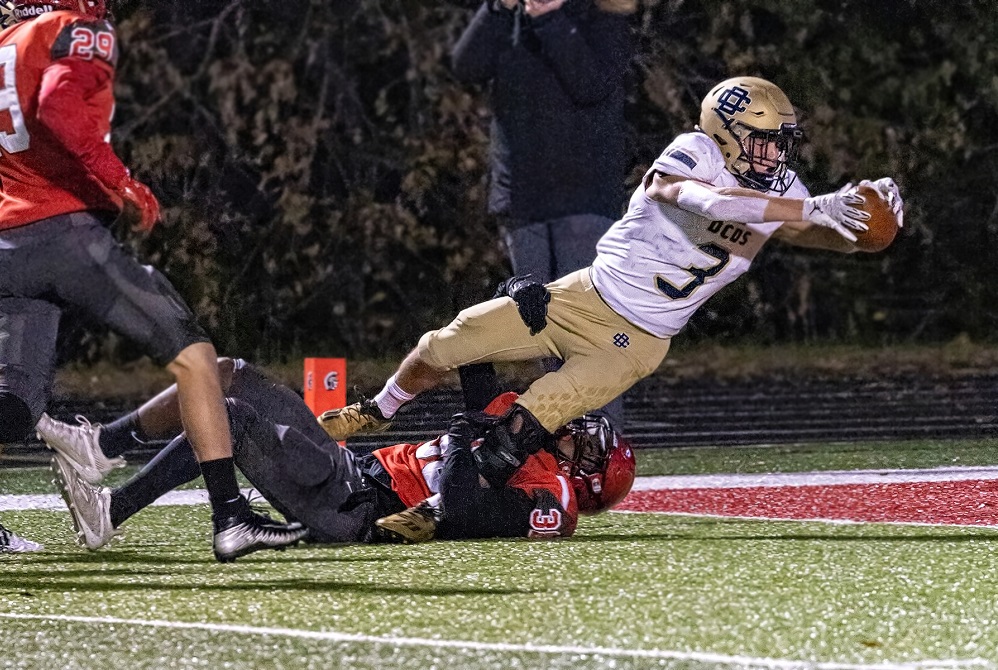
District Digest Chelsea 49, Milan 12 The Bulldogs (11-0) clinched their fourth-straight District championship by locking down a Milan offense that had scored 35 points per game. Grand Rapids South Christian 38, Hastings 14 The Sailors (8-3) repeated as District champions, ending I8AC co-champion Hastings’ winningest season since 1990 at 9-2. Detroit Country Day 49, Livonia Clarenceville 8 The reigning champion Yellowjackets (7-3) are on playoff stride again, tying their most points in a game this season to up their scoring margin over the last two weeks to a combined 84-14.
11-Player Division 5
HEADLINER Grand Rapids Catholic Central 44, Grand Rapids West Catholic 6 The John Passinault to Nolan Ziegler passing connection did some major damage early with three first-half touchdowns as GRCC (11-0) ran its District championship streak to six seasons. West Catholic finished 9-2, both defeats coming to teams that remain unbeaten. Click for more from the Grand Rapids Press.
District Digest Kalamazoo United 21, Berrien Springs 14 The Shamrocks (10-0) hadn’t given up more than 19 points in a game heading into the weekend, and United (8-3) also held Berrien Springs to 26 points below their season scoring average. Kingsley 32, Clare 6 The Stags (10-1) made it six opponents held to single-digit scoring this season as they won their third District title in four years. Corunna 20, Armada 8 The Cavaliers (7-4) clinched their first District title since 2016 by ending Armada’s first winning season since 2012 and best season since 2004 at 7-4.
11-Player Division 6
HEADLINER Lansing Catholic 28, Millington 8 The Cougars (10-1) scored 21 unanswered points over the final three quarters to hand Millington (10-1) its lone loss and clinch a third-straight District championship. The Cardinals entered the game scoring 38 points per, but Lansing Catholic has won its two playoff games by a combined 65-14. Click for more from the Lansing State Journal.
District Digest Michigan Center 28, Constantine 18 The Cardinals (10-1) eliminated their second undefeated league champion in two weeks, adding Constantine (10-1) to Jonesville on the way to repeating as District champs. Montague 35, Reed City 22 The reigning Division 7 champion Wildcats (8-3) may have closed the regular season with two losses, but will have a big say in this playoff bracket after also knocking off a league champion in the Coyotes (9-2). Calumet 24, Negaunee 19 The Copper Kings (9-2) avenged their 35-21 Week 2 loss that eventually led to a shared Western Peninsula Athletic Conference Copper championship between these two and Ishpeming Westwood, and after also falling to Negaunee by a point in last year’s District Final.
11-Player Division 7
HEADLINER Pewamo-Westphalia 53, New Lothrop 21 The Pirates won their 10th District title over the last 11 years in one of their most impressive fashions, putting out their best offensive performance since mid-September while holding the reigning Division 7 champion to nearly half of its average of 39 points scored per game. P-W (11-0) improved to 3-1 in their last four meetings with the Hornets (7-4). Click for more from the Lansing State Journal.
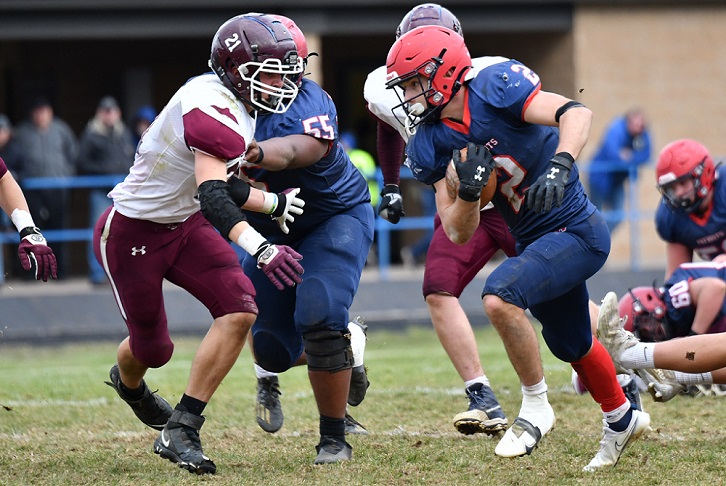
District Digest Ishpeming Westwood 30, Charlevoix 28 The Patriots (10-1) claimed their first District championship, after putting together a double-digit lead and needing every point to hold off the Rayders (8-2) as they too were pursuing a first District title. Detroit Loyola 18, Detroit Central 14 The Bulldogs (6-4) defeated a second league champion in as many weeks, this time also handing Central (10-1) its only loss. Jackson Lumen Christi 21, Monroe St. Mary Catholic Central 12 In this repeat of last season’s District Final, Lumen Christi (10-1) was victorious again to advance to Regionals for the eighth-straight season.
11-Player Division 8
HEADLINER Hudson 28, Addison 8 Everyone knew this District featuring these two, Centreville and Reading would be one of the most competitive in any division with all four teams ranked among the top 14. Hudson (11-0) emerged as the champion, outscoring its two opponents by a combined 50-8. A defense giving up only seven points per game was nearly unbeatable again facing an Addison offense scoring 42 points per game entering the day. The Panthers finished 9-2. Click for more from the Adrian Daily Telegram.
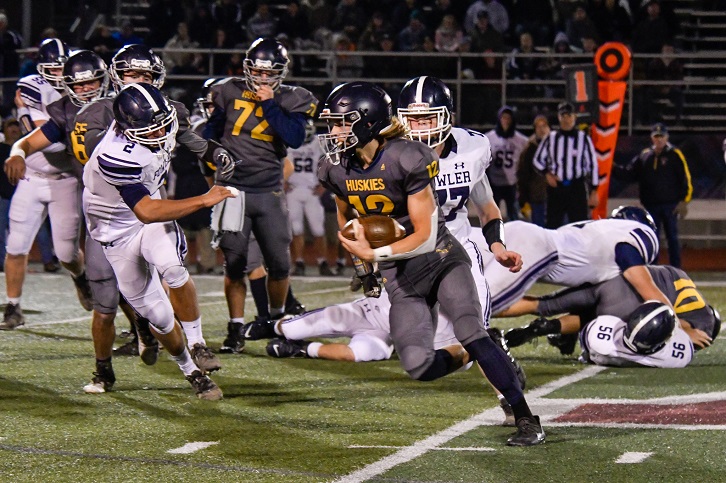
District Digest Breckenridge 41, Fowler 32 The Huskies (9-2) scored 20 unanswered points over the final 10 minutes to get past the Eagles (7-4). Carson City-Crystal 35, Muskegon Heights Academy 26 This was much closer than the Eagles’ 41-14 Week 8 win over the Tigers (6-5), but Carson City-Crystal (10-1) held on to repeat as a District champion. Ottawa Lake Whiteford 54, Sand Creek 14 This playoffs that has seen its share of rematches go the other way, but Tri-County Conference champ Whiteford (10-1) finished a season sweep of league runner-up Sand Creek (7-4).
8-Player Division 1
HEADLINER Suttons Bay 53, Indian River Inland Lakes 18 Among a season of dominating performances, this one is shining brightest for Suttons Bay as both entered this Regional Final undefeated. The Norseman (11-0) tied the score 12-12 midway through the second quarter and by the end of the first half were up double digits. Inland Lakes (10-1) was averaging 58 points per game entering the day. Click for more from the Traverse City Record-Eagle.
Regional Roundup Rudyard 28, Newberry 0 The top four from the Great Lakes Eight Conference East were part of the same Regional, and Rudyard avenged a Week 5 loss to Newberry (8-3) to emerge as champion after both had been among three league runners-up. Martin 41, Mendon 22 The top two finishers in the Southwest Michigan 8-Man Football League Tier 1 met again, with Martin (11-0) adding to its 28-20 Week 7 victory over the Hornets (8-3). Adrian Lenawee Christian 41, Britton Deerfield 0 The Cougars (11-0) have opened the playoffs with two shutouts, their third and fourth over their last five games. Deerfield finished 9-2, its only losses to Lenawee Christian twice over the last three weeks.
8-Player Division 2
HEADLINER Colon 29, Morrice 22 The Magi (10-1) are rumbling through undefeated opponents this playoffs, this time handing Morrice (10-1) its lone loss after doing the same to Portland St. Patrick in the Regional Semifinal. The Orioles led most of the game and 22-8 with a quarter to play before Colon surged to lock up its third Regional title in four seasons. Click for more from JoeInsider.com.
Regional Roundup Powers North Central 65, Crystal Falls Forest Park 8 Reigning Division 2 champion North Central (11-0) downed the rival Trojans (8-3) for the second time in three weeks to return to the Semifinals. Marion 54, Hillman 0 The Eagles (10-1) also will be returning to the Semifinals for a rematch with the Jets after defeating Hillman (7-4) for the second-straight playoffs. Au Gres-Sims 48, Kinde North Huron 42 The Wolverines (11-0) will return to the Semifinals for the second time in four seasons after holding off North Huron (10-1) right to the end of a matchup of undefeated league champions.
Second Half’s weekly “1st & Goal” previews and reviews are powered by MI Student Aid, a part of the Office of Postsecondary Financial Planning located within the Michigan Department of Treasury. MI Student Aid encourages students to pursue postsecondary education by providing access to student financial resources and information. MI Student Aid administers the state’s 529 college savings programs (MET/MESP), as well as scholarship and grant programs that help make college Accessible, Affordable and Attainable for you. Connect with MI Student Aid at www.michigan.gov/mistudentaid and find more information on Facebook and Twitter @mistudentaid.
PHOTOS [1] Detroit Country Day’s Parker Yearego (3) reaches for the end zone during his team’s win over Livonia Clarenceville. [2] Ishpeming Westwood's Zach Carlson (2) gains several yards before being tackled by Charlevoix's Landon Swanson (21). [3] Breckenridge’s Luke Saunders (12) breaks into the open against Fowler.(Photos by Doug Bargerstock [1], Cara Kamps [2] and High School Sports Scene [3].)