

Hudson Paying 50-Year Tribute to Winning Streak Record-Setters, Supporters
By
Doug Donnelly
Special for MHSAA.com
October 14, 2025
It’s a little over two hours’ drive from Mount Pleasant to Hudson. But the November 1975 bus ride seemed to take forever.
The Hudson football team had just lost in the Class C state championship game to Ishpeming, ending a national record 72-game winning streak, and was on the way home.

“It was a really long ride,” said Ray Curran, an assistant coach for the Tigers. “A quiet ride.”
After the game, Hudson head coach Tom Saylor let his players know they had played hard and he was proud of them, but there were plenty of tears.
“We tried to tell them it wasn’t the end of the world,” Curran said.
For nearly everyone except maybe a few coaches, it was the first, and probably last, time they rode the bus home after a loss.
Hudson’s streak still stands today as the record for consecutive wins by a varsity football team in Michigan. From Week 2 of the 1968 season until the Class C Final in 1975, the Tigers never tasted defeat.
 As disappointing as it was to lose, what happened on that bus ride home had a huge impact on the program for years to come.
“When we got close to town, we started to see fire trucks and cars lining the streets,” Curran said. “We lost, but the fans still showed up for us. We had tremendous community support from parents and families and community members. I think that made a lot of the players feel like everything was going to be okay.”
Everything was okay. In fact, Hudson went 9-0 the next season, although the Tigers failed to qualify for the MHSAA Playoffs (which had a field of only four teams in each classification, 16 teams total, at the time).
To mark the end of that incredible 72-game win streak, Hudson is inviting back everyone who had a part in those undefeated teams during the 1960s and 1970s – players, coaches, cheerleaders, band and members of the flag corps are all expected to take part in the ceremony before Friday’s final home game of the regular season at Thompson Field in Hudson.
Bill Mullaly, who played for Hudson during that streak and has become a historian for the Tigers, said this celebration will be the last one.
“This is it,” Mullaly said. “It’s been 50 years, and this is the last one we are planning.”
Curran went to see Saylor a few weeks before he died, at the family’s request. Saylor had been in declining health and had dementia. Curran said when they got together, they talked football.
“We were talking about some of the games, some of the players,” he said. “He definitely remembered. It was a good visit.”
Hudson’s football team this season is undefeated, ranked No. 1 in Division 8 and gearing up for what the Tigers hope is another historic playoff run. Head coach Dan Rogers said the record streak remains an important piece of the community’s history, and the celebration Friday and recent passing of Saylor have brought it all back to the forefront.
“It’s definitely a big part of the community,” Rogers said. “I grew up here, and I’ve heard stories about it. You don’t live it, but you are part of it. I think it has helped mold our community, and it has been a way to identify the community. The streak is definitely alive and well.”
To commemorate this season, current Hudson players will be wearing a throwback uniform Friday – black and white jerseys with orange pants and the same design of socks the players in the 1970s wore. The helmet sticker will be the same one used during the streak.
“It’s all been very positive, all season,” Rogers said. “Some of the kids have grandpas that played in the streak, which is great. They weren’t around, but I think it’s my job to pass all of that along to a new generation. We have embraced it.”
Rogers said he’s gone back and talked to former players and coaches, and Hudson plans to pattern much of its pregame routine on the Tigers’ during Saylor’s regime.
 “We have people coming back who haven’t been to a Hudson football game since they played here,” Rogers said. “They had a lot of cool traditions back then. We want them to be proud.”
One of the current assistant coaches is Chris Luma, who played on that 1975 team. Luma was Hudson’s head coach before Rogers took over six years ago. He and Saylor were close. Luma will speak at Saylor’s memorial service later this month.
“It just seemed like with Tom you were learning life lessons along with how to win football games,” he said. “He installed discipline in all of us. What he had us go through was the things you needed to know to go through life.”
Mullaly also played for Saylor.
“He didn’t put Hudson on the map, but he took it to another level,” he said. “He was a great coach and a great man. His legacy is with Hudson football.”
Rogers said after Saylor died, more RSVPs started coming in for Friday’s event.
“It’s brought it to another level,” he said. “There are people flying in from all over the country to be a part of it. This is the final one. After this, it’s only the stories.”
 Doug Donnelly has served as a news and sports reporter at the Adrian Daily Telegram and the Monroe News for 30 years, including 10 years as city editor in Monroe. He's written a book on high school basketball in Monroe County and compiles record books for various schools in southeast Michigan. He is now publisher and editor of The Blissfield Advance, a weekly newspaper. E-mail him at [email protected] with story ideas for Jackson, Washtenaw, Hillsdale, Lenawee and Monroe counties.
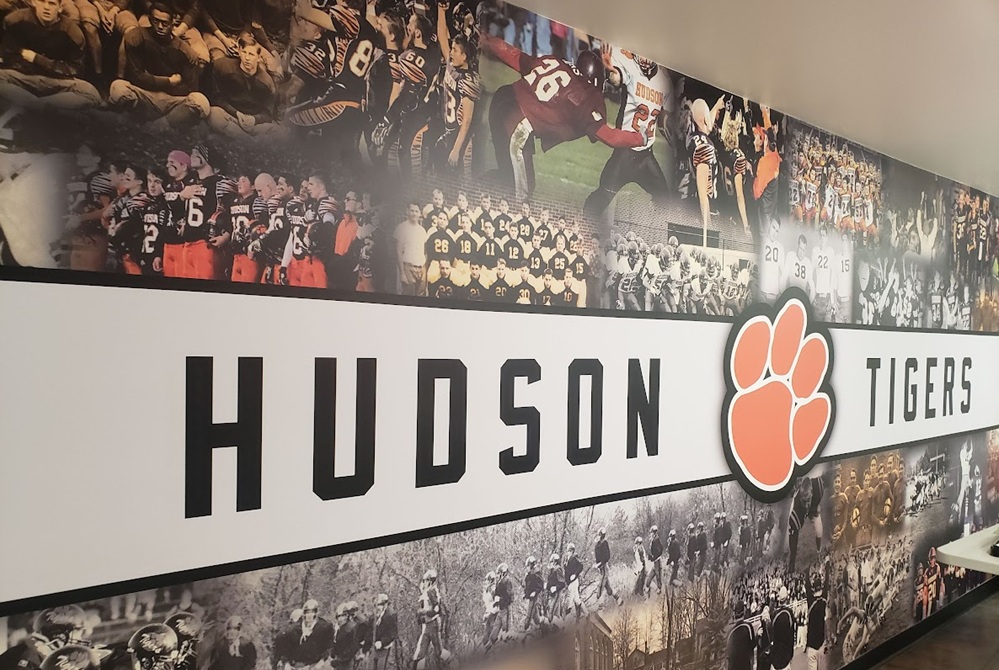
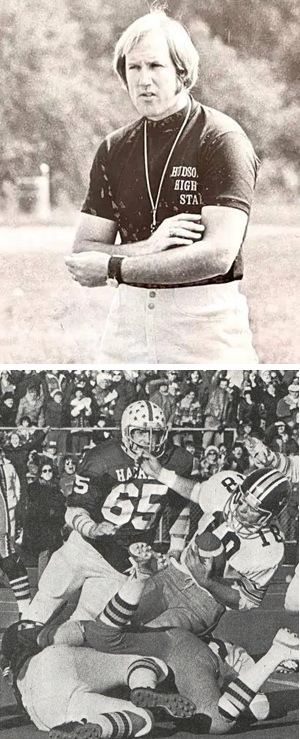
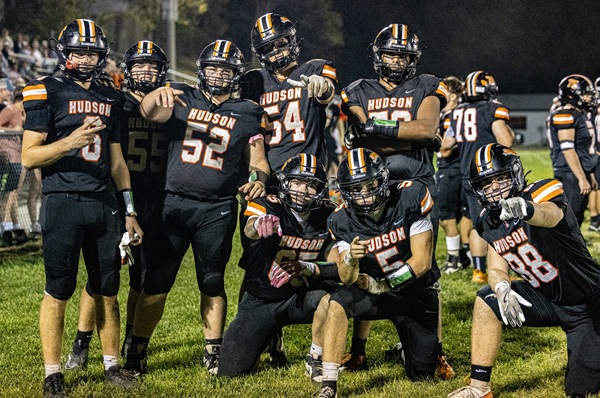
PHOTOS (Top) A wall in the Hudson press box tells of the football program’s rich history. (Middle) Tom Saylor, top, was the longtime coach of the Tigers dynasty, while Tim Decker (18) was among standouts during the streak. (Below) Hudson players come together for a quick photo on a game night this fall. (Wall photo by Doug Donnelly. Saylor photo courtesy of Todd Saylor; Decker photo courtesy of Jackson Citizen Patriot/Hudson Historical Museum. Current team photo by Rachel Stiverson.).
Many-Sport Standout Gash Closing High School Career with Repeat Title Pursuit
By
Keith Dunlap
Special for MHSAA.com
September 3, 2026
Gideon Gash said this fall is marking the end of an era for him athletically.
 Throughout his life, it didn’t seem to matter what the sport was, because Gash was playing it.
Whether it was soccer, basketball, lacrosse, football, or track & field, Gash sampled them all, and it didn’t stop when his high school career began.
Last year as a junior at Detroit Catholic Central, Gash continued to play several sports after being named all-state for football in the fall.
During the winter, he played on Catholic Central’s basketball team. In the spring, he decided to go out for track and thrived, finishing second in the 100-meter dash and winning the long jump at the Catholic High School League meet, and then taking third in the long jump at the Lower Peninsula Division 1 Finals.
Following that championship meet, Gash returned to the lacrosse team and suited up for the Shamrocks during the final week of the season, which culminated in a DCC Division 1 title. Gash had played lacrosse the previous spring as a sophomore, but decided to focus more on track as a junior.
“I worked out different muscles and different skills and just having that versatility helped me a lot throughout life,” Gash said. “Being able to do different things and learn faster and having to keep up with everyone in terms of basketball, lacrosse, in terms of just raw skills. That helped me a lot in terms of just being able to add to my bag and be the best I can.”
But now, Gash said his multi-sport playing days are all but over.
One of the premier college football recruits in the nation, the 6-foot-4, 210-pound Gash has committed to play at Texas Tech for now, although he recently said his recruitment is “not closed down,” according to an article on Rivals.com.
 Regardless of where he ends up, Gash said he plans on enrolling early and starting college in January, adding he made sure to accumulate enough class credits to be able to do so.
That means it’s football from here on out, and odds are he’s going to have a monster senior year for reigning Division 1 champion Catholic Central.
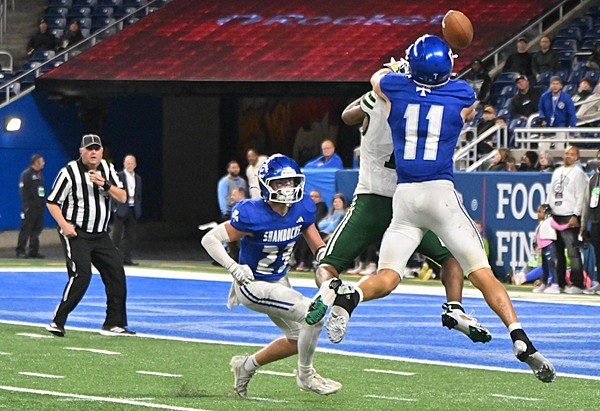
Last year, Gash was all-state in Division 1-2 as a lockdown defensive back, collecting 74 tackles and nine pass breakups. He also was a big-play threat as a wideout, catching three long touchdown passes for Catholic Central in a championship game win over Detroit Cass Tech at Ford Field.
There are times this season where Gash may never leave the field, given he will see lots of time as a dangerous punt returner. In a season-opening win over Clinton Township Chippewa Valley, Gash returned a punt 48 yards for a touchdown.
Playing so many sports throughout his life has shaped him into an all-around force on the football field and helped turn him into a dominating physical specimen.
Gash gained 10 pounds of muscle since last fall and going into his senior year is more chiseled and faster than he has ever been.
“He just loves competing,” Catholic Central football head coach Justin Cessante said. “When we compete and he works the way he does when nobody is watching, and he’s got his agility, his strength and his size, he’s a 10 times better player and athlete than he was last year. I think that attributes to doing all those different things.”
This is the first year Gash is not playing alongside his older brother, Samson, the 2025 Finals champion in the 100-meter dash and all-state wide receiver last fall who is a freshman at Michigan State.
Gideon Gash will certainly be counted on for veteran leadership since Catholic Central entered this season with only two returning starters, although there are several talented underclassmen already with Division I college scholarship offers who are expected to soon make names for themselves on the high school level.
While the next wave of great players is already coming for Catholic Central, it certainly will be hard to replace Gash and how he was able to excel at more than just football.
“I’m going to miss it,” Gash said. “I’ve been playing three sports my whole life, so I’m going to miss it a lot.”
 Keith Dunlap has served in Detroit-area sports media for more than two decades, including as a sportswriter at the Oakland Press from 2001-16 primarily covering high school sports but also college and professional teams. His bylines also have appeared in USA Today, the Washington Post, the Detroit Free Press, the Houston Chronicle and the Boston Globe. He served as the administrator for the Oakland Activities Association’s website from 2017-2020. Contact him at [email protected] with story ideas for Oakland, Macomb and Wayne counties.
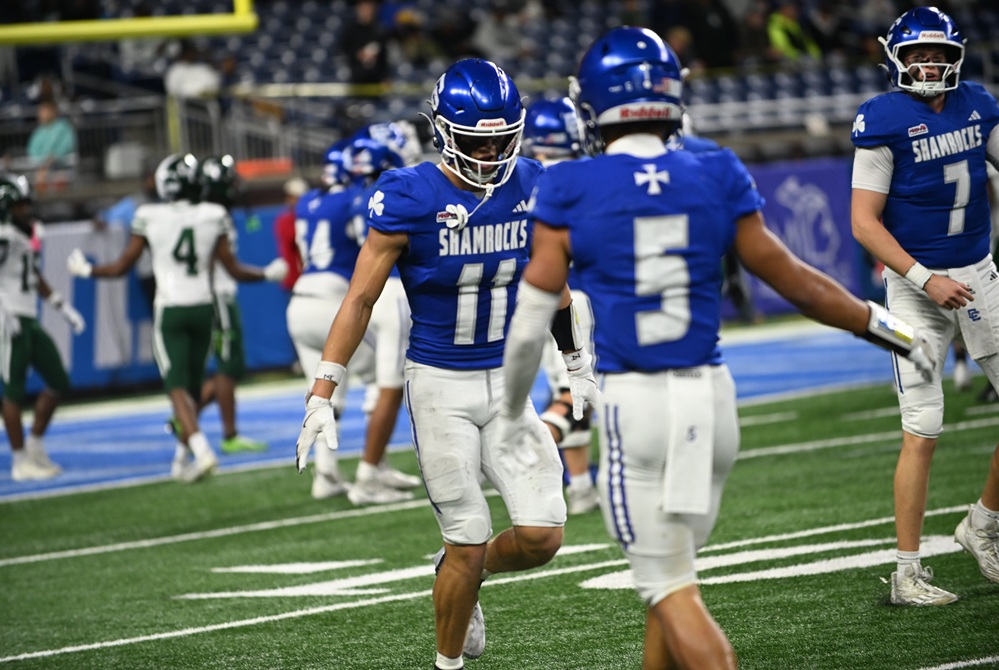
PHOTOS (Top) Detroit Catholic Central’s Gideon Gash (11) is congratulated by brother Samson Gash after scoring during last season’s Division 1 Final. (Middle) Gash breaks up a pass during the win over Detroit Cass Tech.