


Summer Safety
August 28, 2012
As we have been considering changes for in-season football practice rules that are more in step with recent recommendations of the National Athletic Trainers Association, the American Academy of Pediatrics and the National Federation of State High School Associations, as well as the actions of several of our counterpart state organizations across the U.S., we have also been looking at the rules that apply out of season to assure they do not work against the preparation of students for a safe experience.
Except during the school’s designated summer dead period of at least seven consecutive days, football coaches may interact with any number of players in voluntary weight training and conditioning sessions as frequently as they desire. Introduce footballs and helmets, and the coach can still work with any number of students on the sideline and up to seven players at a time for any number of days. Add competition, and the coach can still work with up to seven players at a time for a maximum of seven days. In addition, football coaches may participate for a maximum of ten days at bona fide football camps where any number of their players are participating.
Plenty of time for coaches to teach, and even more time for players to train. During this time, the rules permit students to wear helmets, which protect against accidental collisions during drills; but the rules prohibit other pads that would allow activities to escalate to the point where contact is expected, leading to increased blows to the head at a time when the objective from the pros to Pop Warner is to reduce blows to the head.
When the brief preseason down time begins Aug. 1, the coach continues to be able to work with any number of players in conditioning and weight training. The down time prohibits those activities that could be a disguise for practice prior to the earliest allowed practice date – open gyms, camps, clinics and competition. The down time puts the emphasis where it’s most needed for a healthy student experience when practice actually begins: that’s weight training and conditioning.
Some critics may focus on what they can’t do in the summer; but clearly, there’s much they can do, and it’s all designed to help players improve and excel in a safe environment.
1st & Goal: Week 7 Preview
October 8, 2020
By Geoff Kimmerly
Second Half editor
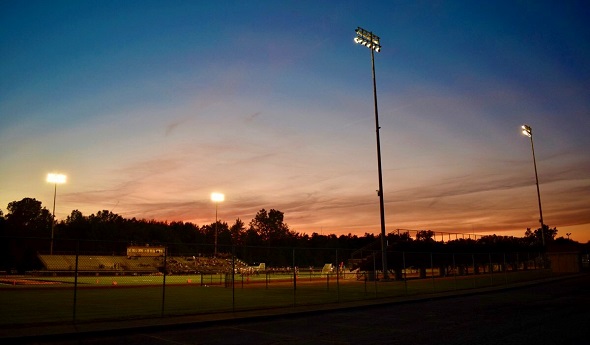
The sun sets a little earlier as we move toward mid-October – this year allowing Friday Night Lights to shine as an even more present reminder that teams are enjoying an opportunity to play during an otherwise topsy-turvy fall.
This weekend begins the second half of the shortened regular season, and 2020’s storylines are beginning to take shape – with a number of league title contenders hoping to write in key details over the next two days.
Below is a look at games of particular note in every corner of Michigan – not including a handful played Thursday night, including key southwestern matchups between Centreville and Mendon and Kalamazoo United and Watervliet. Find scores for those and the schedule as we know it, and then results this weekend as they’re reported – via the MHSAA Score Center.
This week’s broadcast schedule includes 55 varsity football games on MHSAA.tv; click the link for listings.
Bay & Thumb
Port Huron Northern (2-0) at Port Huron (3-0)
The last three meetings between these neighbors were decided by six, three and seven points, and this could be a similar classic with the Macomb Area Conference Blue title on the line. The Huskies are riding a three-game regular-season winning streak in the series, but have played just two games this season and won both by seven or fewer points. They’ll have to contend with a Port Huron defense that has given up only a combined 35 points over three wins and won a playoff rematch with Northern in 2019.
Keep an eye on these FRIDAY Saginaw Swan Valley (2-1) at Freeland (2-1), Clare (3-0) at Gladwin (2-1), Cass City (3-0) at Unionville-Sebewaing (2-1), Richmond (1-2) at North Branch (3-0).
Greater Detroit
Clarkston (3-0) at Lake Orion (2-0)
The Wolves are coming into this matchup off a come-from-behind overtime win over West Bloomfield, avenging a 2019 loss. Clarkston can avenge another tonight after falling to the Dragons 55-21 a year ago. Because of various cancelations, the Oakland Activities Association Red schedule has become unbalanced – but a Clarkston win would put it at 4-0 in the league, while a Lake Orion win would seem to give the Dragons a one-game edge on the other challengers with West Bloomfield still coming up Week 9.
Keep an eye on these FRIDAY Orchard Lake St. Mary's (1-2) at Detroit Catholic Central (3-0), Grosse Pointe South (2-1) at Clinton Township Chippewa Valley (2-1), Milan (2-1) at New Boston Huron (3-0). SATURDAY DeWitt (3-0) at Warren De La Salle Collegiate (1-2).
Mid-Michigan
Hopkins (3-0) at Belding (3-0)
The Ottawa-Kent Conference circles into Ionia County with Belding, and the Black Knights have an opportunity to bring a league title east with a win tonight clinching at least a share of the Silver championship. Hopkins has won the teams’ last two meetings, including last season’s 32-6. Defense could make this one much closer as the Vikings have given up 10 points over three games and Belding has allowed only 29.
Keep an eye on these FRIDAY Fowlerville (2-1) at Mason (3-0), Lake Odessa Lakewood (2-1) at Olivet (3-0), Northville (2-1) at Hartland (2-1). SATURDAY Breckenridge (2-1) at Carson City-Crystal (1-0).
Northern Lower Peninsula
Muskegon Catholic Central (3-0) at Manistee (3-0)
Tonight’s winner clinches a share of the Lakes 8 Athletic Conference championship. The Crusaders are seeking their first since 2017 and enter this title decider having outscored their first three opponents by a combined 110-18. MCC also defeated Manistee 49-0 a year ago, but the Chippewas have been on a roll in 2020 – they’ve already equaled their 2019 win total and got a nice nonleague boost downing Harbor Springs 47-20 a week ago.
Keep an eye on these FRIDAY Frankfort (1-2) at Harbor Springs (2-1), Traverse City West (2-1) at Gaylord (1-2), Cadillac (2-1) at Petoskey (1-2), Evart (1-2) at Lake City (1-2).
Southeast & Border
Marshall (1-2) at Parma Western (3-0)
This should be a much better matchup than records would indicate. Western is off to an excellent start, with most notably its opening-night win over Hastings looking better and better with every Saxons victory. But Marshall isn’t a down-and-out 1-2 team – the Redhawks lost to reigning Interstate 8 Athletic Conference champion Jackson Lumen Christi by just a point, then to 2019 runner-up Coldwater by eight before getting on the board with last week’s big win over Jackson Northwest. The Panthers have won the last two meetings, but last year in a close one 14-13.
Keep an eye on these FRIDAY Hillsdale (2-1) at Brooklyn Columbia Central (2-1), Britton Deerfield (1-2) at Erie Mason (3-0), Riverview Gabriel Richard (3-0) at Manchester (2-1), Springport (1-0) at Reading (2-1).
Southwest Corridor
Paw Paw (3-0) at Vicksburg (2-1)
The Red Wolves have opened by outscoring their first three opponents by a combined 136-7. But these next three weeks will provide a greater measuring stick after the team finished 10-2 last season and 8-3 the year before. First up is Vicksburg, which hasn’t given up a point since falling to reigning Wolverine Conference champion Edwardsburg in the season opener. Then comes Detroit Country Day before Paw Paw finishes the regular season against the Eddies in what could decide the league title – although Vicksburg can still have a say by coming up big tonight.
Keep an eye on these FRIDAY St. Joseph (3-0) at Stevensville Lakeshore (2-1), Comstock (2-1) at Buchanan (3-0), Delton Kellogg (1-2) at Saugatuck (2-1), Coldwater (3-0) at Battle Creek Harper Creek (1-2).
Upper Peninsula
Gladstone (2-0) at Kingsford (2-1)
The Braves have been one of the most intriguing stories of this abbreviated season, for reasons covered a few times on this site over the last two weeks. And Gladstone would seem like the league favorite as it begins Great Northern Conference play tonight – but up first is Kingsford, which owns a 21-game winning streak in the series. Kingsford fell to Marquette 10-0 last week, but could shake things up among the Upper Peninsula’s best by running that streak to 22 tonight.
Keep an eye on these FRIDAY Marquette (2-1) at Menominee (2-1), Benzie Central (2-1) at Sault Ste. Marie (2-1), Ishpeming Westwood (2-1) at L'Anse (1-2), Negaunee (2-1) at Bessemer Gogebic (0-2).
West Michigan
Byron Center (3-0) at Lowell (3-0)
This is the kind of game the Red Arrows surely have been looking forward to for a few seasons as they’ve built back up into league contenders. The O-K White title could eventually come down to this matchup, as new league member Byron Center – last year’s Green champ – is riding a 13-game regular-season winning streak and coming off a major success last week against Grand Rapids Forest Hills Central. Lowell has proven itself with a win over East Grand Rapids – and another tonight would be a major step toward a possible first league title since 2016.
Keep an eye on these FRIDAY Grand Rapids South Christian (3-0) at Cedar Springs (2-1), Newaygo (2-1) at Reed City (3-0), Muskegon (2-1) at Zeeland East (2-1), Jenison (2-1) at East Kentwood (1-2).
8-Player
Mayville (3-0) at Deckerville (3-0)
The Eagles have won 18 straight regular-season games and five straight league championships, but this matchup starts a challenging 2020 run. Mayville tonight, Genesee next week and Morrice in Week 9 all are still undefeated (Genesee plays Morrice this weekend). Mayville has been overshadowed a bit but quietly is coming off three straight playoff seasons and is averaging 62 points per game this fall as it looks to take the next step
Keep an eye on these FRIDAY Morrice (3-0) at Genesee (3-0), Pellston (3-0) at Gaylord St. Mary (3-0), Munising (3-0) at Stephenson (3-0), New Buffalo (3-0) at Bridgman (2-1).
PHOTO by Robert Batzloff.