

Talking Practice: Texas, Illinois Revise Policies
December 20, 2013
By Rob Kaminski
MHSAA benchmarks editor
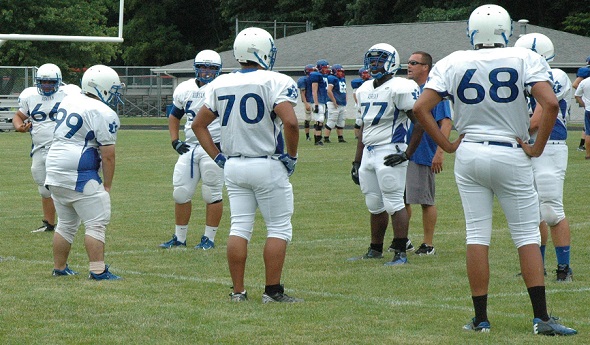
Coaches and players in Texas and Illinois adapted to new football practice limitations this fall, with the Texas policy focusing on contact, and the Illinois regulation emphasizing length of preseason practices.
Following are the main changes those states put in place heading into the 2013-14 season:
The University Interscholastic League, which governs school sports in Texas, put into writing that, “During the regular season and postseason, no football player is allowed to participate in more than ninety (90) minutes of full contact practice per week,” effective with the first day of practice this fall.
The complete policy follows:
For the purposes of the of rule, "full contact" is defined as football drills or live game simulations where "live action" occurs. Live action, as defined by USA Football, is contact at game speed where players execute full tackles at a competitive pace taking players to the ground. A team may continue to dress in full pads for practice, but may only participate in live action drills and game time simulations no more than ninety minutes per athlete per week. It is assumed that when players are in shells (shorts, shoulder pads, and helmets) no live action drills or simulations will occur. This rule is intended to limit live action drills and simulations and not the number of practices a team may participate in full pads. A team may participate in "air," "bags," "wrap," and "thud" drills and simulations at any point. These contact levels are defined below:
• Air - Players should run unopposed without bags or any opposition
• Bags - activity is executed against a bag, shield or pad to allow for a soft-contact surface, with or without the resistance of a teammate or coach standing behind the bag.
• Wrap - Drills run at full speed until contact, which is above the waist with the players remaining on their feet.
• Thud - Same as wrap but tempo is competitive with no pre-determined winner and the players are not tackling to the ground.
 The rule came to the UIL Legislative Council as a recommendation from the UIL Medical Advisory Committee, a permanent advisory committee to the Legislative Council which meets twice each year to discuss and review safety policies for UIL participants. The committee, which is made up of leading medical professionals in various specialties and includes representatives from the Texas High School Coaches Association, the Texas Girls Coaches Association, and the Texas State Athletic Trainer Association, unanimously recommended this limitation in full-contact football practice.
The rule formulates into a formal policy the existing actions of the majority of coaches across Texas, and most coaches have had to make few adjustments, if any. In fact, according to a story on statesman.com, the proposal caused more of an uproar on social media than from coaches.
“It’s not going to affect us in anyway,” Vandegrift HS coach Drew Sanders said in the story. “Most good coaches were way below that 90-minute amount already. Prior to legislation we still monitored it ourselves – the only change is now we have to keep up a log more publicly.”
Illinois put standards in place for its first 14 days of football practices, known as the state’s Preseason Football Acclimatization Practice Period. At the core of the policy is a three-hour practice limit for the first five days, during which teams can also conduct a one-hour walk-through.
 Teams must observe a minimum two hours rest between the practices and walk-throughs. Players may wear helmets only on the first two days, then helmets and shoulder pads for the next three. From days seven through 14 of the acclimatization period, schools may practice for a maximum of five hours per day, as long as that day is followed by a three-hour day, or an off day. During the five-hour days, no session can last more than three hours and must include a two-hour break between practices. Full pads may be worn for the final seven dates leading up to the first contest.
“This policy was the result of a collaborative effort between the IHSA Sports Medicine Advisory Committee and the Football Advisory Committee,” said SMAC committee member and University of Illinois Associate Professor of Orthopedic Surgery Dr. Preston M. Wolin. “The guidelines are based on the most recent scientific evidence, as well as the expertise of the coaches who will help implement them. Both committees believe the guidelines represent a significant positive contribution to the health of our athletes.”
“This new policy undoubtedly changes the way we, as coaches, approach preseason practice,” said Metamora HS coach Pat Ryan, who is a member of the FAC and a past President of the Illinois High School Football Coaches Association. “Coaches have to get more creative with when and how they schedule practices, as well what they do with their time. The proposals were strongly supported by both committees. It is a crucial final step to the process of being able to effectively prepare our teams in a safe manner. Change is always difficult, but the game is changing and we need to adapt to continue to put the safety of our players first.”
The IHSA offered multiple interactive online webinar meetings for high school coaches leading up to the start of practice where questions were answered, along with further clarifications on the policy and the science behind it.
“I think most coaches understood that changes were on the horizon,” said IHSA Executive Director Marty Hickman. “We wanted to be in a position to give our coaches as much information as possible to make sure they are comfortable with the new policy. Their input will be critical moving forward as we develop educational materials, like a best practices presentation. I commend our committees on a policy that is supported by medical experts, football coaches and school administrators.”
Drive for Detroit: Week 2 in Review
September 9, 2019
By Geoff Kimmerly
Second Half editor
After two weeks of this high school football season, it’s impossible to know how much of what we’re seeing now will be applicable by playoff time or even later this month.
 But there are a number of teams we’ve highlighted in our Week 2 “review” that should be feeling pretty good about what they’ve shown us so far.
Many of the 45 achievers below are regularly mentioned in this report. Others likely are considered surprises at this point – but might not be for much longer.
"Drive for Detroit" is sponsored by MI Student Aid.
Bay & Thumb
HEADLINER Freeland 29, Essexville Garber 20 A 2-0 start isn’t unfamiliar to the Falcons – they’ve begun with two straight wins every season this decade. But coming off last week’s one-point victory over Marshall, this win over the Dukes also is noteworthy for the way Freeland (2-0) held on through the end – especially against a Garber team that opened with a nice win against Boyne City and just missed the playoffs a year ago. This also was an opener in the new-look Tri-Valley Conference Central, which includes most of the best from the East and Central over the past few seasons. Click for more from the Midland Daily News.
Watch list Midland 45, Flint Carman-Ainsworth 0 Although the Cavaliers (0-2) have stumbled so far, Midland’s opening run still needs some mention with this win added to the opening victory over Traverse City West. The Chemics started 0-2 against the same two teams a year ago and still finished 9-4 and made the Division 2 Semifinals.
Remember this one Lapeer 43, Midland Dow 6 The Chargers (0-2) have made the playoffs six years in a row, so Lapeer (1-1) bouncing back from its opening-night loss to Lake Orion in a big way deserves notice.
More shoutouts Saginaw Arthur Hill 40, Flint Southwestern 16 The Lumberjacks (1-1) ended a 25-game losing streak with their highest-scoring performance since 2013. Flint Kearsley 28, Ann Arbor Huron 6 A second win over a larger opponent has the Hornets (2-0) a win away from equaling last season’s total as they play for their first winning record since 2003.
Greater Detroit
HEADLINER Birmingham Groves 24, West Bloomfield 17 The Lakers (1-1) have been considered among early Division 1 championship favorites this fall and had beaten Groves in back-to-back nonleague matchups over the last two seasons. But this shouldn’t be considered entirely stunning by the Falcons (2-0), who finished 10-3 last season and made the Division 2 Semifinals. The ending, on the other hand, was a little wild with a pair of late special teams fumbles turning into scores, including the game-winner. Click for more from the Oakland Press.
Watch list Lake Orion 37, Southfield Arts & Technology 7 The Dragons (2-0) have put themselves in the spotlight quickly with two impressive wins after also downing Lapeer in the opener. The run is especially notable after the team’s 0-2 starts the last two seasons.
Remember this one Romeo 37, Port Huron Northern 6 Romeo is 2-0 for the first time since its Division 1 championship season of 2015, winning big against a Northern team that went 10-2 last season and won big as well in its opener this fall.
More shoutouts Warren Michigan Collegiate 30, Flint Beecher 6 The Cougars (2-0) roll into this week’s matchup with Detroit Country Day with an impressive win over a Bucs team that went 8-4 last season and started this fall with a sizable win. South Lyon 29, Trenton 21 The Lions are picking up where they left off after winning the Lakes Valley Conference in 2018, with Trenton (1-1) providing a strong challenge as it looks to make the playoffs for the sixth straight season.
Mid-Michigan
HEADLINER Portland 29, DeWitt 27 This very well could end up the game of the regular season in the Lansing area, with two of the region’s most successful programs facing off and the reigning Division 5 runner-up Raiders holding the Panthers off during a scoreless fourth quarter. DeWitt (1-1) had won 18 straight regular-season games and is 77-8 during the regular season this decade. Portland (2-0) has now won 18 straight regular-season games and 37 of its last 38. Click for more from the Lansing State Journal and see highlights below from State Champs Sports Network.
VIDEO: Check out the highlights of the DeWitt (@DeWitt_Panthers) at Portland (@RaidersPAA) football game from last night.
Brought to you by @LawrenceTechU, @MHSAA, @hungryhowies pic.twitter.com/6ztRbErY0A— STATE CHAMPS! (@statechampsnet) September 7, 2019
Watch list Holt 22, Hudsonville 21 Welcome back Rams. A pair of 3-6 finishes the last two seasons were helped along in part by 0-2 starts. But Holt is 2-0 for the first time since 2007 and after deciding to go for a 2-point conversion and the win late against the Eagles (1-1).
Remember this one Ithaca 16, Millington 0 The Yellowjackets (2-0) avenged last season’s playoff opener loss to the Cardinals (0-2), and now they are in the same league.
More shoutouts St. Johns 46, Ann Arbor Pioneer 33 After being shut out by East Lansing last week, the Redwings (1-1) bounced back by avenging a 2018 one-point loss to Pioneer (1-1). Lansing Catholic 56, Grand Rapids West Catholic 28 After two games this fall the Cougars have scored 112 points – nearly one-third of their total over 11 games a year ago – and this week beat the always playoff-bound Falcons (0-2) for the second straight season.
Northern Lower Peninsula
HEADLINER Maple City Glen Lake 28, Traverse City St. Francis 7 September isn’t two weeks old, but it’s hard to not anticipate some good things ahead for the Lakers (2-0) after they opened with a win over Millington and followed up by breaking an eight-game losing streak against the Gladiators (1-1) this weekend. St. Francis won last year’s meeting 50-12 and hadn’t been held to single digits in a regular-season game since 2013. Click for more from the Traverse City Record-Eagle and see highlights below from MI Sports Now.
. @LakerAthletics Rolls @TCSFAthletics In Saturday Non-conference Matchup https://t.co/2vX91Q1K3u pic.twitter.com/fQfj4Gq9n6
— MISportsNow (@MISportsNow) September 7, 2019
Watch list Traverse City Central 37, Marquette 28 After falling to DeWitt by just five points at home Week 1, the Trojans (1-1) hit the road and ran their winning streak to six straight over Marquette (0-2).
Remember this one Charlevoix 18, Boyne City 14 The Rayders (2-0) won just once in 2018 and last opened with two straight wins in 2016, when they also last made the playoffs.
More shoutouts Cheboygan 8, Grayling 6 The Chiefs (1-1) are working toward their first playoff berth since 2013 and are a step closer after ending a recent three-game losing streak to Grayling (1-1). McBain 31, Roscommon 0 The Ramblers (1-1) also bounced back from a Week 1 loss by downing a Bucks team that is so far winless but finished 10-2 a year ago.
Southeast & Border
HEADLINER Erie Mason 80, Britton Deerfield 42 These two tied for the 14th-most points in an 11-player game where the losing team put up at least 40, and Erie Mason improved to 2-0 for the first time since 2003 while guaranteeing to tie its best finish for an entire season since 2005. Through two weeks quarterback Noah Beaudrie has thrown for 473 yards and six touchdowns and run for 509 and eight scores. The Patriots (1-1), meanwhile, upped their season scoring average to 35 ppg despite the defeat.
Watch list Clinton 45, Blissfield 13 Last season’s Tri-County Conference runner-up Clinton (2-0) will enter league play 2-0 for the first time since 2016 after avenging last season’s loss to the Royals (1-1), who opened this fall with a 19-point win over reigning TCC champion Ottawa Lake Whiteford.
Remember this one Sand Creek 31, Adrian Lenawee Christian 28 The Aggies (2-0) also play in the strong TCC, so this last-minute win over postseason regular Lenawee Christian (1-1) could end up a difference-maker when playoff selection time rolls around.
More shoutouts Jackson Lumen Christi 22, Parma Western 7 The Titans (2-0) pushed their winning streak to 25, and if it continues to grow this Interstate 8 Athletic Conference opener could be looked back at as key with Western (1-1) staying close into the fourth quarter. Temperance Bedford 20, Flushing 19 Bedford bounced back from a Week 1 loss to earn what could be a key win for its playoff hopes against a Flushing team that has made the last two postseasons but finds itself 0-2 with those defeats by a combined 12 points.
Southwest Corridor
HEADLINER Portage Northern 14, Stevensville Lakeshore 6 In keeping with recent history, this matchup was decided by eight or fewer points for the eighth time in nine seasons and gives reigning league co-champ Northern (2-0) a valuable early edge in the Southwestern Michigan Athletic Conference West race. But 2017 champ Lakeshore is far from being out of it, and a few more contenders also could have a say. Click for more from JoeInsider.com and see below for highlights from FOX 17.
The @PNHuskieSports football program is off to a 2-0 start after an impressive 14-6 win over Lakeshore. https://t.co/ZHaHqq8oDD
— FOX 17 Blitz (@FOX17Blitz) September 7, 2019
Watch list Kalamazoo Central 40, Portage Central 27 Defeating Portage Central last season was the first sign of Kalamazoo Central’s rise that turned into a league title and its first playoff berth since 2004. So the Maroon Giants (1-1) should be excited about the possibilities after bouncing back from last week’s one-point defeat to Mattawan with another notable victory over the annually-strong Mustangs (1-1).
Remember this one Cassopolis 28, Mendon 0 The Rangers (2-0) ran their scoring margin for the season to an early 78-0 advantage and earned a significant edge in their quest to repeat as Southwest 10 Conference champions, as 2017 winner Mendon (1-1) is always in the hunt as well.
More shoutouts Watervliet 22, Saugatuck 14 This was a major win as the Panthers (1-1) work to rebound from last season’s 2-7 finish; Saugatuck (1-1) was 9-2 a year ago and has won at least that many games four straight seasons. Battle Creek Lakeview 28, Mattawan 12 The Spartans (2-0) have had a few tough seasons but with this win tied their victory total of a year ago and against a Mattawan team that has made the playoffs two straight years.
Upper Peninsula
HEADLINER Iron Mountain 42, Ishpeming Westwood 22 Two weeks into the season, Iron Mountain (2-0) could have its two main obstacles out of the way as it looks to challenge reigning champion Calumet in the Western Peninsula Athletic Conference Copper. This week’s win followed up last week’s over Negaunee, and the Copper Kings await in Week 6. Westwood (1-1) was second and Iron Mountain third in the league last season. Click for more from the Iron Mountain Daily News.
Watch list Ishpeming 36, Lake Linden-Hubbell 34 The Hematites (2-0) are reigning champions in the West-PAC Iron and setting themselves up to be in the mix again, although the Lakes (1-1) could still find themselves in contention as well with a little help.
Remember this one Manistique 28, Gwinn 8 The Emeralds broke a 21-game losing streak on the field (not counting forfeits for games not played last season) with their first win since Week 9 of 2015.
More shoutouts Gladstone 20, Gaylord 7 The Braves (2-0) are halfway to last year’s win total with this one over a Gaylord team that made the playoffs last season and now sits 1-1 this fall. Sault Ste. Marie 20, Alpena 14 The Blue Devils (2-0) also downed a Big North Conference opponent, avenging last season’s loss to the Wildcats (0-2).
West Michigan
HEADLINER Muskegon 41, Detroit Martin Luther King 18 It’s impossible to not lead with Muskegon for the second straight week after the Big Reds defeated their second reigning MHSAA champion already this fall. And this one surely meant a little more as it came in a rematch of last season’s Division 3 championship game, won by King 41-25. Click for more from the Muskegon Chronicle.
VIDEO: Check out the highlights of the Muskegon (@mbigredsports) at Detroit King football game from last night.
Brought to you by @LawrenceTechU, @MHSAA, @hungryhowies pic.twitter.com/E0uMmpf1ko— STATE CHAMPS! (@statechampsnet) September 7, 2019
Watch list Caledonia 19, Cedar Springs 12 The Fighting Scots’ Week 1 loss to Holt is looking even better after Holt beat Hudsonville, and this victory over Cedar Springs (1-1) says a lot about Caledonia’s potential heading into Ottawa-Kent Conference Red play starting this week.
Remember this one Byron Center 33, Middleville Thornapple Kellogg 14 After two straight sub-.500 seasons, the Bulldogs (2-0) also could be on their way to big things after sending the Trojans to 1-1.
More shoutouts Rockford 24, Lowell 7 The Rams evened these teams’ latest four-game series at 2-2 and moved to 2-0 to start a season for the first time since 2014. Zeeland West 48, Grand Rapids Christian 27 The Dux (2-0) added to their opening-night win over East Grand Rapids with another impressive one, as the Eagles (0-2) likely will be in the mix again in the O-K Gold.
8-Player
HEADLINER Pellston 42, Posen 38 The Hornets finished 4-5 in their first season of 8-player football in 2018, winning four of their final six games. This fall they’re off to a 2-0 start, and a first winning season since 1995 might become part of the conversation soon. Pellston scored the go-ahead touchdown against Posen (0-2) with 5:03 to play after trailing by 18 midway through the third quarter. Click for more from the Petoskey News-Review.
Watch list Vestaburg 22, North Adams-Jerome 6 The Wolverines (2-0) moved to 8-player football this fall, and so far so good after finishing 0-9 last season and 1-8 in 2017.
Remember this one Bridgman 46, St. Joseph Lake Michigan Catholic 8 It also will be interesting to see how this first season of 8-player goes for Bridgman, which has outscored its first two opponents by a combined 102-24.
More shoutouts Martin 20, Wyoming Tri-unity Christian 0 Martin (2-0) also is a first-year 8-player program and its scores the last two weeks have been much closer, but against two of the traditional best in Bellevue and this week Tri-unity (0-2). Powers North Central 62, Rapid River 6 These Jets (2-0) are scoring like the title-winning Jets of a few seasons ago, with a combined 128 points over their first two games.
Second Half’s weekly “Drive for Detroit” previews are powered by MI Student Aid, a part of the Office of Postsecondary Financial Planning located within the Michigan Department of Treasury. MI Student Aid encourages students to pursue postsecondary education by providing access to student financial resources and information. MI Student Aid administers the state’s 529 college savings programs (MET/MESP), as well as scholarship and grant programs that help make college Accessible, Affordable and Attainable for you. Connect with MI Student Aid at www.michigan.gov/mistudentaid and find more information on Facebook and Twitter @mistudentaid.
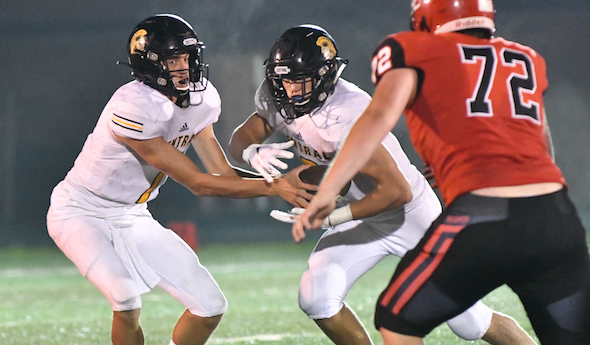
PHOTO: A Marquette defender closes in Friday as Traverse City Central quarterback Peyton Smith decides if he will hand off or keep the ball. (Photo by Cara Kamps.)