

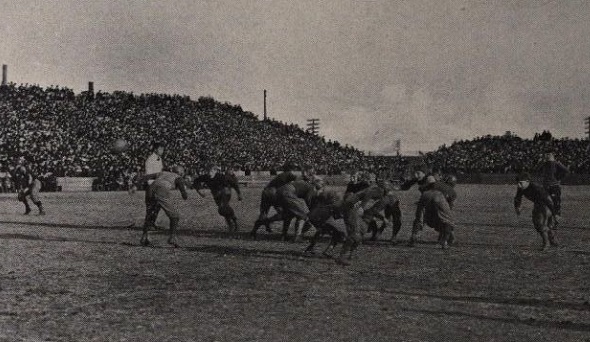
Thank Roosevelt for Football Weekends
December 20, 2013
By Rob Kaminski
MHSAA benchmarks editor
The next time you find yourself immersed in a tense crosstown football rivalry on a Friday night followed by a Saturday pilgrimage to the nearest college campus and a Sunday afternoon with a remote and your favorite snacks and beverages, take a moment to consider what the weekend would be like if it weren’t for Teddy Roosevelt.
The man who became our 26th President shortly after the turn of the 20th Century following the assassination of William McKinley in 1901 was a football fan like you. Maybe more so.
Today’s game of football has reached a critical crossroads. Player size and speed have increased across the board. Savage use of equipment as weapons rather than protective gear has been glorified on television networks and social media. Leaders of the game at all levels have recognized the need for change, employing new rules and widespread educational efforts to aid in preserving the sport.
History, as they say, is repeating itself.
In an ironic twist, it was Roosevelt who saved the then-brutally violent game of football from itself more than 100 years ago. Yes, the same “Rough and Ready Teddy” who led the charge up San Juan Hill during the Spanish-American War and often sparred in the boxing ring while in office from 1901-09 opined that football was becoming so gruesome that he delivered an ultimatum: clean up the game or it would be outlawed.
The Chicago Tribune reported that in 1904 alone, there were 18 football deaths and 159 serious injuries, mostly among prep school players. Football deaths suffered by younger players were reported on a nearly weekly basis, as outraged citizens called on colleges and high schools to banish football outright.
In stepped Roosevelt, who called head coaches and representatives from Harvard, Yale and Princeton – college powers at the time – to the White House in 1905 urging them to eliminate excessive violence and set an example of fair play for the rest of the country. When the casualties actually rose by one during the ensuing season, Roosevelt reacted with greater resolve and convened leading football authorities for the purpose of authoring drastic rules changes. What emerged was an intercollegiate conference which was the predecessor of the NCAA.
Among the most effective changes for the 1906 season were the legalization of the forward pass, the elimination of mass formations, and the creation of a neutral zone. Football fatalities fell to 11 in each of the next two seasons, and severe injuries fell drastically.
Thanks to the introduction of protective equipment and ever-evolving rules changes, football during the 100-plus years to follow has become an exponentially safer game. Yet, the game’s leaders always will need to adjust and react to scrutiny that comes with the territory.
So, as the game once again undergoes rules modifications in the name of safety, give a tip of the cap to President Roosevelt while you enjoy college bowl season and the NFL playoffs and begin to think ahead to the first high school practice of 2014.
1st & Goal: 2025 Week 6 Review
By
Geoff Kimmerly
MHSAA.com senior editor
October 6, 2025
The high school football season always seems to speed up when we reach October.
As forecast Friday, a handful of Week 6 matchups resulted in at least the start of league championships being decided for this fall. Other games fast-forwarded title races as we turned toward the final one-third of the 2025 regular season.
 Mix in rivalries, revenge tours, program wins or just the games to set up an even bigger one coming up. This weekend had them all, and we dive into the details below.
Bay & Thumb
HEADLINER Saginaw Valley Lutheran 23, Ithaca 22 To call this the best win in Valley Lutheran history likely isn’t an understatement. The Chargers (6-0) clinched a share of the Tri-Valley Conference Blue title, with only sixth-place Carrollton standing in the way of an outright title. They did so by defeating Ithaca (5-1) for the first time and breaking the Yellowjackets’ 23-game league winning streak going back to 2020 – and accomplished it with a game-winning field goal during the closing seconds, the only three points scored during the second half. Valley Lutheran’s six wins this season also equal their highest total in program history. Click for more from the Saginaw News.
Watch list Almont 35, Armada 14 The Raiders (6-0) took a solid step toward a potential third-straight Blue Water Area Conference title, defeating last season’s runner-up Armada (4-2) and setting up a possible eventual winner-take-call this week against also-undefeated Richmond.
On the move Goodrich 49, Owosso 13 The Flint Metro League Stars title – at least a share at this point – belongs to Goodrich again after the Martians (6-0) held Owosso (4-2) to a season low. Midland Dow 31, Traverse City West 13 The Chargers (5-1) kept pace with Saginaw Valley League North leader Mount Pleasant and no doubt will be rooting for the Titans (3-3) this week as they face the Oilers with a chance to open the title race back up. Millington 35, Buchanan 8 The Cardinals (5-1) can still earn a share of the Big Thumb Conference White title this week and now coming off a win over the Lakeland Conference-leading Bucks (4-2), who will play Friday to make their league championship outright.
Greater Detroit
HEADLINER Romeo 39, Macomb Dakota 20 The Bulldogs (4-2) own a share of the Macomb Area Conference Red championship for the first time since 2021, thanks to their first win over Dakota (5-1) since that same season. Romeo’s offense was especially impressive; Dakota had given up just 31 points total over its first five games and not more than 38 in one game since 2018. Click for more from the Macomb Daily.
TOUCHDOWN ROMEO!
Tayshawn Proctor walks in for his second TD of the night!
ROMEO: 39
DAKOTA: 20
Delivered by @hungryhowies
Catch the full broadcast on the State Champs YouTube page! pic.twitter.com/AxESv6Ezk5— STATE CHAMPS! Michigan (@statechampsmich) October 4, 2025
Watch list Madison Heights Madison 42, Hazel Park 14 Madison (5-1) won this matchup for first place in the MAC Bronze, clinching a share of the league title and continuing its best season since 2019. Hazel Park (4-2) was one of three co-champs last fall and can still earn another share if Clinton Township Clintondale can catch Madison this week.
On the move South Lyon 21, Waterford Mott 20 South Lyon (6-0) moved ahead of Mott (3-3) during the final minute to move one game away from claiming a share of the Lakes Valley Conference title. Oxford 34, West Bloomfield 33 The Wildcats (4-2) actually leant Clarkston a hand in clinching a share of the Oakland Activities Association Red championship, although West Bloomfield (5-1) can still earn a share by defeating the Wolves this week. Harper Woods 41, Rochester 7 The Pioneers (6-0) finished a perfect run through the OAA White to clinch their first title in four seasons playing in the league.
Mid-Michigan
HEADLINER Williamston 20, Haslett 14 Williamston’s turnaround season now includes a share of the Capital Area Activities Conference Red title, as Haslett (4-2) also entered the evening tied for first. The Hornets (6-0) went up 14-0 and then held off the Vikings’ comeback charge, scoring the go-ahead points during the fourth quarter. Click for more from the Lansing State Journal.
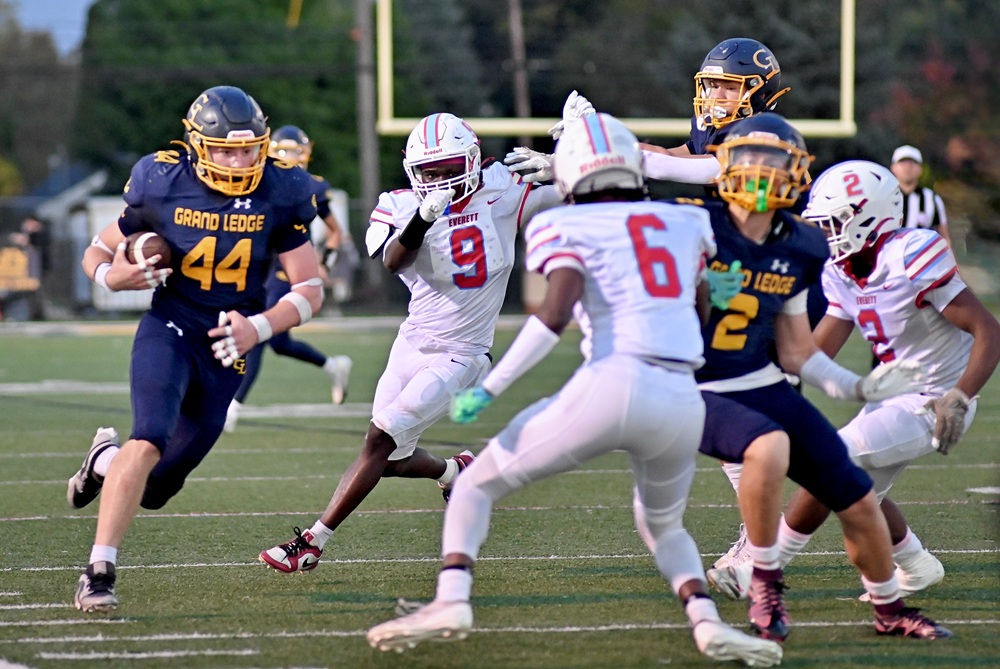
Watch list Grand Ledge 36, Lansing Everett 8 The Comets are 6-0 for the first time since 2015 and set up this week’s matchup with DeWitt for first place in the CAAC Blue by avenging last year’s 23-point loss to Everett (4-2).
On the move Mount Pleasant 28, Bay City Western 17 As noted above, Mount Pleasant (6-0) leads the SVL North and can clinch a share of the league title this week. Western (3-3) already has tied last year’s win total and is holding tight to a spot in the Division 3 playoff field. Howell 35, Hartland 7 The Highlanders (5-1) kept pace behind Brighton in the Kensington Lakes Activities Association West with their matchup against the Bulldogs coming up in Week 8. Mason 31, St. Johns 20 Mason (3-3) also is holding onto a spot in the Division 3 playoffs, and this win over the Redwings (4-2) may eventually decide if the Bulldogs make the field this season.
Northern Lower Peninsula
HEADLINER Traverse City St. Francis 20, Boyne City 13 With a pair of close games over the last two weeks, St. Francis (6-0) secured the Northern Michigan Football Conference Legends title, adding this victory over the Ramblers (4-2) to a one-pointer over Kingsley in Week 5. This is the last season for the league; the rest of the Legends division will play in the Northern Shores Conference in 2026. Click for more from the Traverse City Record-Eagle.
Watch list Maple City Glen Lake 16, Kalkaska 12 This nonleague matchup was significant nonetheless, as Kalkaska (5-1) was undefeated and Glen Lake (4-1) won by less than a score for the second straight game (after an open date last week). The Lakers are tied with Week 9 opponent Mancelona for first in the NMFC Legacy.
On the move Mancelona 36, East Jordan 16 The Ironmen held onto the share of first in the Legacy noted above by defeating East Jordan (3-3) for the first time since 2021. Traverse City Central 28, Midland 14 The Trojans (3-3) gave their Division 2 playoff hopes a serious boost as they moved up 10 spots back into the potential field at No. 26 and sent Midland (3-3) outside the top 32. Petoskey 20, Cadillac 13 Neither can make up enough ground to win the Big North Conference, but Petoskey (3-3) moved up five spots to get to No. 32 in the Division 3 playoff-point rankings.
Southeast & Border
HEADLINER Chelsea 35, Ypsilanti Community 6 The Bulldogs (5-1) ran their league winning streak to 15 and cleared one more obstacle as they attempt to close in on a third-straight Southeastern Conference White championship. The loss also dropped Ypsilanti (3-3) to No. 33 in the Division 3 playoff-point rankings, although the Grizzlies have some great opportunities to move back up as they seek their first postseason appearance (not counting COVID-shortened 2020) since 2014. Click for more from the Ann Arbor News.
Watch list Ida 40, Adrian Madison 19 The Bluestreaks (5-1) need help in the Lenawee County Athletic Association title race with Hudson and Clinton both still undefeated in league play. But they are continuing to climb the Division 6 playoff-points list and are up to No. 15 after downing Madison (3-3) – which is hanging onto the No. 30 spot.
On the move Saline 42, Ann Arbor Huron 14 The Hornets (6-0) clinched a share of the Southeastern Conference Red title with one league game to play in Week 8 and undefeated Harper Woods up next. Adrian 23, Tecumseh 7 The Maples (5-1) stayed a game back of Chelsea in the SEC White by avenging last year’s loss to Tecumseh (3-3), and surpassed last year’s win total as well. Manchester 30, Leslie 29 The Flying Dutchmen (3-3) needed this one in a big way, coming off two straight losses, and they jumped 11 spots to No. 26 on the Division 8 playoff-point list.
Southwest Corridor
HEADLINER Schoolcraft 18, Lawton 14 It looks as though the Southwestern Athletic Conference Valley title will go through Schoolcraft (5-1) again as the Eagles pulled within one more win of clinching a repeat championship. Schoolcraft led 6-0 at halftime, fell behind 14-6 into the final minutes of the third quarter but pulled ahead for good midway through the fourth. Lawton (4-2) fell into a second-place tie with Coloma. Click for more from the Kalamazoo Gazette.
Watch list Portage Northern 42, St. Joseph 36 The Southwestern Michigan Athletic Conference West shifted over the weekend with this win helping Northern (5-1) move into a first-place tie with Portage Central and those two set to face off this weekend with a share of the league title on the line. St. Joseph (3-3) still has a slight chance at a share if a few results fall into place.
On the move Berrien Springs 21, Dowagiac 0 While Buchanan has guaranteed itself a share of the Lakeland Conference title, there’s potentially still a lot to be decided as a Dowagiac win over Buchanan this week would give Dowagiac (4-2) and Berrien Springs (4-1) shares as well. Kalamazoo United 34, Constantine 7 The Titans (4-2) also can clinch this week in the SAC Lakeshore with Constantine (4-2) among three teams one game back. Niles 49, Three Rivers 0 Niles (6-0) has continued to impress; Three Rivers (4-2) entered the week in the Wolverine Conference title mix as well.
Upper Peninsula
HEADLINER Escanaba 38, Marquette 20 Not only did Escanaba (6-0) defeat rival Marquette for the first time since 2019, but by doing so it set up this week’s matchup with also-undefeated Gaylord for a share of the Big North Conference championship. Escanaba also moved up to No. 5 on the Division 4 playoff-points list as it seeks its first postseason appearance this decade. Click for more from the Escanaba Daily Press.
Watch list Bark River-Harris 44, L’Anse 16 The Broncos (4-1) bounced back from a Week 5 loss to set up their biggest game of the season, a rematch this week with Iron Mountain. L’Anse is 4-2.
On the move West Iron County 27, Manistique 22 The Wykons (2-3) are starting to climb as they broke a two-game losing streak against Manistique (1-4). Calumet 46, Houghton 0 The Copper Kings (4-2) got back on the right foot coming off back-to-back losses this fall to run their winning streak over the Gremlins (2-4) to 12. Menominee 61, Gladstone 6 The Maroons (6-0) remain atop the Western Peninsula Athletic Conference Copper with massive matchups against Negaunee and then Kingsford up next.
West Michigan
HEADLINER Hudsonville 35, Rockford 28 An awe-inspiring one-handed catch by Lawsyn Weber and an all-around stunning performance by quarterback Brady Van Laecke helped Hudsonville get past Rockford and left the Eagles (6-0) alone atop the Ottawa-Kent Conference Red. The Rams (4-2) are one of three teams tied for second place halfway through the league schedule. Click for more from the Grand Rapids Press.
HUDSONVILLE’S BRADY VAN LAECKE MAKING HIS CASE. The senior QB accounted for 4 total touchdowns — 2 on the ground and 2 through the air — as the Eagles took down Rockford. 👀 He’s building a strong résumé for the STATE CHAMPS! Mr. Football Award Top 10! Delivered by… pic.twitter.com/Z7f4n2w6eM
— STATE CHAMPS! Michigan (@statechampsmich) October 4, 2025
Watch list Hudsonville Unity Christian 14, Zeeland West 6 Unity (6-0) moved to the top of the O-K Gold with a second win in two years over reigning Division 3 champion Zeeland West and can clinch a share of a repeat league title this week.
On the move Grand Rapids West Catholic 51, Grand Rapids Christian 14 The Falcons (5-1) moved into first alone in the O-K White with a chance to clinch a share of the league title this week and only Christian (3-3) a game back with two to play. Muskegon 28, Muskegon Mona Shores 12 The Big Reds (4-2) ran their winning streak to four as they remained in the top spot in the O-K Green with this rivalry win over Mona Shores (3-3). Muskegon Oakridge 14, Whitehall 13 Both are still chasing Ludington in the West Michigan Conference Lakes, but Oakridge (5-1) definitely will be cheering for Whitehall (4-2) against the Orioles this week.
8-Player
HEADLINER Lake Linden-Hubbell 52, Powers North Central 34 Lake Linden-Hubbell (5-1) avenged a 60-8 loss to the Jets from a year ago to set up a potential championship decider against Gogebic this week in the Great Lakes Eight Conference West. The pair also entered last week at Nos. 15 and 16 on the Division 2 playoff-points list, but Lake Linden-Hubbell now is tied for No. 10 and North Central (4-2) is tied for 17th. Click for more from the Houghton Daily Mining Gazette.
Watch list Kinde North Huron 38, Peck 32 The Warriors (4-1) are tied for first in the Big Thumb Conference Red with Bay City All Saints and sent Peck (4-2) into third place. North Huron and All Saints meet in Week 8.
On the move Onekama 36, Central Lake 14 Onekama (6-0) sits in the top spot on the Division 2 playoff-points list, and Central Lake (3-3) is just one spot outside the field in Division 1. Pittsford 44, Concord 24 The Wildcats (5-1) ran their winning streak to five with a nonleague stop before jumping back into Southern Central Athletic Association Blue play. Indian River Inland Lakes 51, Rogers City 0 Inland Lakes (6-0) sits first on the Division 1 playoff-points list and Rogers City (4-2) is holding onto the No. 16 spot after the Bulldogs posted their fifth shutout of the season.
MHSAA.com's weekly “1st & Goal” previews and reviews are powered by MI Student Aid, a division within the Department of Lifelong Education, Advancement, and Potential (MiLEAP). MI Student Aid encourages students to pursue postsecondary education by providing access to student financial resources and information. MI Student Aid administers the state’s scholarship and grant programs that help make college Accessible, Affordable and Attainable for you. Click to connect with MI Student Aid and find more information on Facebook and Twitter @mistudentaid.
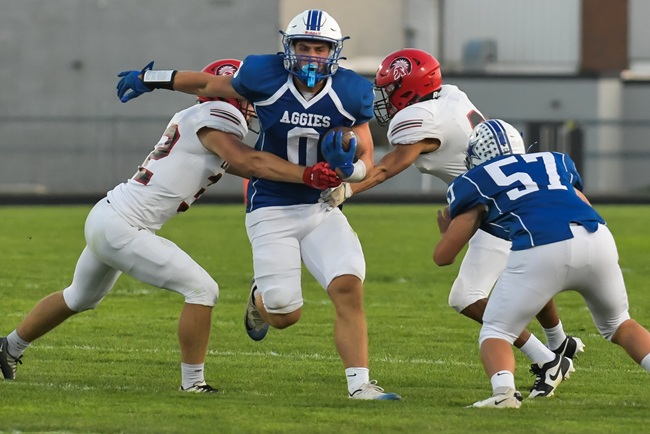
PHOTOS (Top) A Grand Ledge ball carrier charges up the sideline Friday during his team's 36-8 win over Lansing Everett. (Middle) A Beal City ball carrier attempts to break free during his team's 58-0 win over Lake City. (Top photo by Terry Lyons. Middle photo by High School Sports Scene.)