

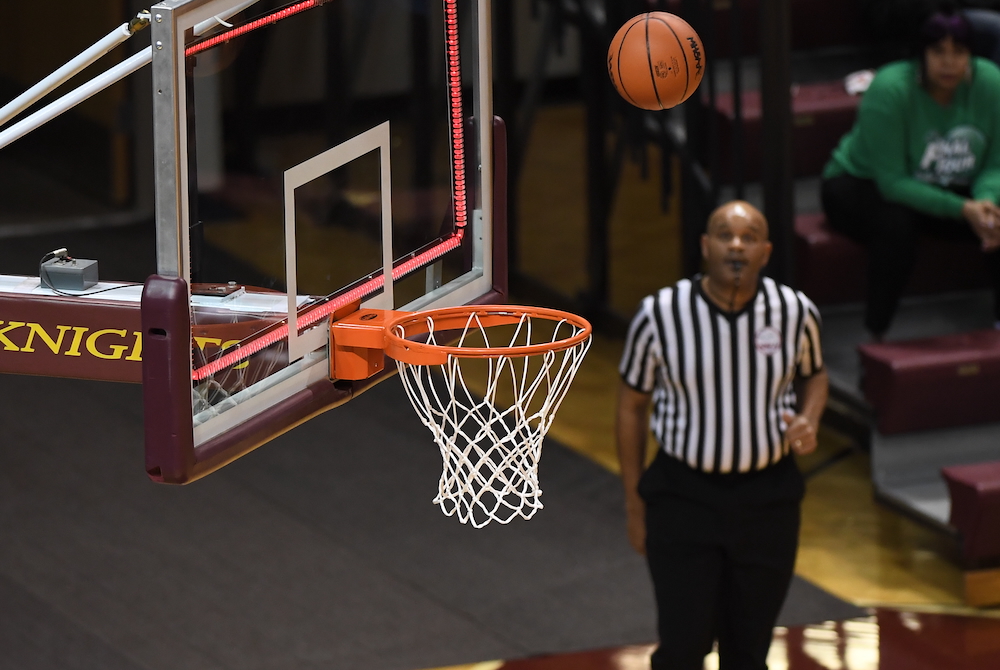
Be the Referee: Block or Charge?
By
Paige Winne
MHSAA Director of Brand Management
January 21, 2025
Be The Referee is a series of short messages designed to help educate people on the rules of different sports, to help them better understand the art of officiating, and to recruit officials.
Below is this week's segment – Block or Charge? - Listen
In basketball – if you are attempting to take a charge, do you have to be stationary? Can a defender draw a charge while sliding his or her feet?
A defensive player does not need to be stationary in order to draw a charge.
Once a defender has established legal guarding position – which is when the defensive player has both feet on the floor and is facing the opponent, the defender can move laterally or obliquely to maintain that position. Even if it means having one – or both – feet off the floor when contact occurs with the offensive player.
In a block or charge situation, many fans like to say it’s a block because the defender was moving, but that’s not always the case. A defender can draw a charge while in motion.
Previous 2024-25 Editions
Jan. 14: Out of Bounds, In Play - Listen
Jan. 7: Wrestling Scoring - Listen
Dec. 17: Bowling Ball Rules - Listen
Dec. 10: Neck Laceration Protector - Listen
Dec. 3: Basketball Goaltending - Listen
Nov. 26: 11-Player Finals Replay - Listen
Nov. 19: 8-Player vs. 11-Player Football - Listen
Nov. 12: Back Row Setter - Listen
Nov. 5: Football OT - Listen
Oct. 29: Officials Registration - Listen
Oct. 22: Volleyball Serve - Listen
Oct. 15: "You Make the Call" - Soccer Offside - Listen
Oct. 8: Roughing the Passer - Listen
Oct. 1: Abnormal Course Condition - Listen
Sept. 25: Tennis Nets - Listen
Sept. 18: Libero - Listen
Sept. 10: Cross Country Uniforms - Listen
Sept. 3: Soccer Handling - Listen
Aug. 24: Football Holding - Listen
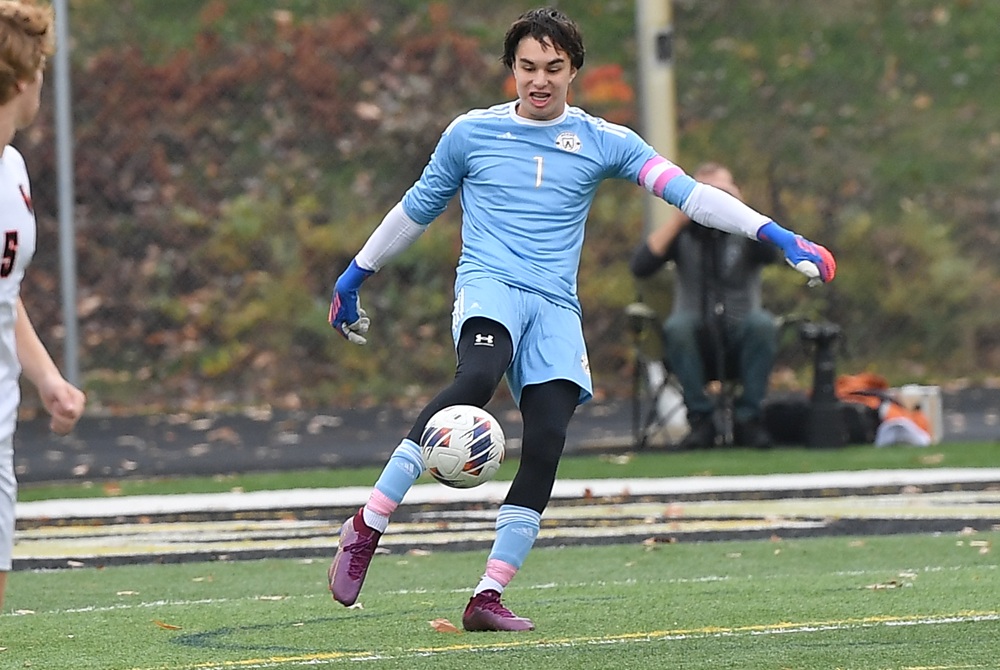
Be the Referee: Soccer Changes
By
Paige Winne
MHSAA Director of Brand Management
September 22, 2026
Be The Referee is a series of short messages designed to help educate people on the rules of different sports, to help them better understand the art of officiating, and to recruit officials.
Below is this week's segment – Soccer Changes - Listen
New this year in high school soccer, goalkeepers will have more time available to them before having to release the ball.
Now – once a keeper establishes possession of the ball – they will have eight seconds before having to play the ball. Previously, keepers had six seconds before having to release it.
The penalty for failing to release the ball in time is also changing.
A goalkeeper who is whistled for hanging on to the ball for longer than eight seconds will now see the opponent awarded a corner kick. The old rule awarded an indirect free kick.
So remember – starting this year – keepers get up to eight seconds before having to release the ball, and failure to do so will result in a corner kick for the opposing team.
Previous 2026-27 editions
Sept: 15: Dead Ball Penalty - Listen
Sept. 8: Libero Ejected - Listen
Sept. 1: Soccer Foul After Shot on Goal - Listen
Aug. 25: Fumble Out of Bounds - Listen