

Longtime Friends 'Living Dream' Leading Top-Notch Brandywine Hoops Teams
By
Scott Hassinger
Special for MHSAA.com
March 5, 2024
NILES – Niles Brandywine’s Josh Hood and Nathan Knapp spend countless hours in the gym shaping the lives of young people.
 And the two long-time Bobcats basketball head coaches, along with their respective family members, wouldn't have it any other way.
Not only have Hood and Knapp, both Brandywine alumni, built a winning culture within the program, but their passion and enthusiasm have sparked pride and support from the community as well.
Hood is 318-36 over 15 seasons at Brandywine as varsity girls coach following successful stints in the boys programs at Coloma and Cassopolis.
Brandywine, which hosts a Division 3 District this week, has won 10 titles between the Berrien-Cass-St. Joseph League and Lakeland Conference, 10 Districts, seven Regionals and advanced to the MHSAA Semifinals twice (2010, 2016) under Hood.
The Bobcats, 20-1, suffered its lone loss in early February to Vicksburg, a Division 2 school, 46-38. They were No. 1 in The Associated Press state rankings for a few weeks before finishing in the No. 2 spot behind Ypsilanti Arbor Prep.
Brandywine has played a difficult schedule and owns wins over 2023 Division 3 runners-up Blissfield (45-43) at the Michigan Hardwood Classic in Romulus over holiday break and last year quarterfinalist Hart (62-52) at Brandywine on Jan. 2. Brandywine’s regular-season schedule included five conference champions and 12 Division 1 or Division 2 opponents.
"We built our schedule this year to be the toughest in the state and get us well prepared for what could be a magical run," Hood said.
Just like any other coach, Hood says a successful program just doesn't happen overnight.
All 14 of Brandywine's varsity girls players began by participating in the Kiddie 'Cats Youth Basketball Program.
"This year we had 102 girls in K-6th grade in our youth program. Our current varsity girls are all primarily multi-sport athletes, and their success has been a body of work since they were in second grade. Our commitment in the summer and offseason since we lost to No. 1 Buchanan last year in Districts is unlike anything I've ever seen since I've been here," Hood said.
 This year before the girls basketball season began, each member of the team was required to put up 27,000 shots.
"This is a talented group, but make no mistake it's because these girls have put in the hard work to get themselves to this point. We've ran into a buzzsaw the last few years. Fortunately, we get to host Districts and this team wants to get their name on a banner. We know it's not going to be easy though," Hood said.
Brandywine is averaging 58.2 points per game while allowing just 29.6 at the defensive end.
"Our top 10 girls on this team have been on varsity since they were freshmen. Practices are a real brawl and very competitive,” Hood said. “We have former players who are successful women on our staff that our kids can look up to. Not many coaching staffs can say that.”
Mackenzie Cass, Hood's younger sister, coached the Brandywine junior varsity to a record of 18-0 this season. Hood's varsity staff also consists of former Brandywine playing standouts Tammy Lee, Kalie Wieger and Nicole Price, along with Frelen Gowen, Mike Troup and Dave Roeder.
Senior point guard Ellie Knapp, Nathan's daughter, leads the Bobcats at 14.2 points, 4.7 assists and 4.1 steals per game. She has verbally committed to play basketball at Holy Cross College, an NAIA school, in South Bend, Ind.
"Freshmen year was difficult because Brandywine had lost its entire starting lineup. Right away I had to be a leader and learn the offense and defense. That wasn't easy," Ellie Knapp said. "As a sophomore we were still young, but we matured a lot as juniors. Buchanan ended our season in Districts the last couple years. This year we're more experienced and everyone has bought in and worked hard for the success we've had. The last three years were tough, but I feel like you must lose first before you can learn how to win. It takes a lot of heart too."
Senior Kadence Brumitt, a Valparaiso University volleyball commit, averages 8.7 points and eight rebounds at the post position.
"I wasn't really a basketball player when I came in as a freshman. I stuck with it and I progressed,” said Brumitt, who plans to study nursing. “We struggled early on. This group of girls have played together for a real long time so there are no issues with chemistry."
While only two seniors in Ellie Knapp and Brummit, Hood says their contributions to the program the last four years have been immeasurable.
"Ellie and Kadence are both fierce competitors who come from great families and do things the right way. We've been very blessed to have such great role models in our program for future players," Hood said.
Another key player for Brandywine is junior Miley Young, who averages 8.8 points and 3.1 assists per game.
"It's great to have people like Miley who get even better going up against players like Ellie and Kadence every day in practice," Hood said.
 Hood, who is Brandywine's Middle/High School assistant principal, didn't work in the same building his first six years in the school district.
"It's nice to be able to be here in the building now everyday and building those relationships with the students. Now I can also read the pulses of my players better. If one of them is having a bad day, I can pull them in and find out what's going on," Hood said. "Just being here now and being able to build the community support, it's like no other place. We call our gym the 'Bobcat Den.' It's a special place and is packed every Tuesday and Friday night. That's a tribute to the community. There's no city of Brandywine; the epicenter is Brandywine High School. This community does a great job of supporting our kids, and we're very grateful for that. It's a family here, and we support all the sports and the kids see that."
Hood and his Bobcats make a point to give back to the community each season.
"One of the things we talk about in our program is the opportunity to give back. We talk to the girls about servant leadership. Our kids have embraced that and like to thank the community for supporting us. We ring a bell at Christmas time for the Salvation Army and held a food drive at a local church this year," Hood said.
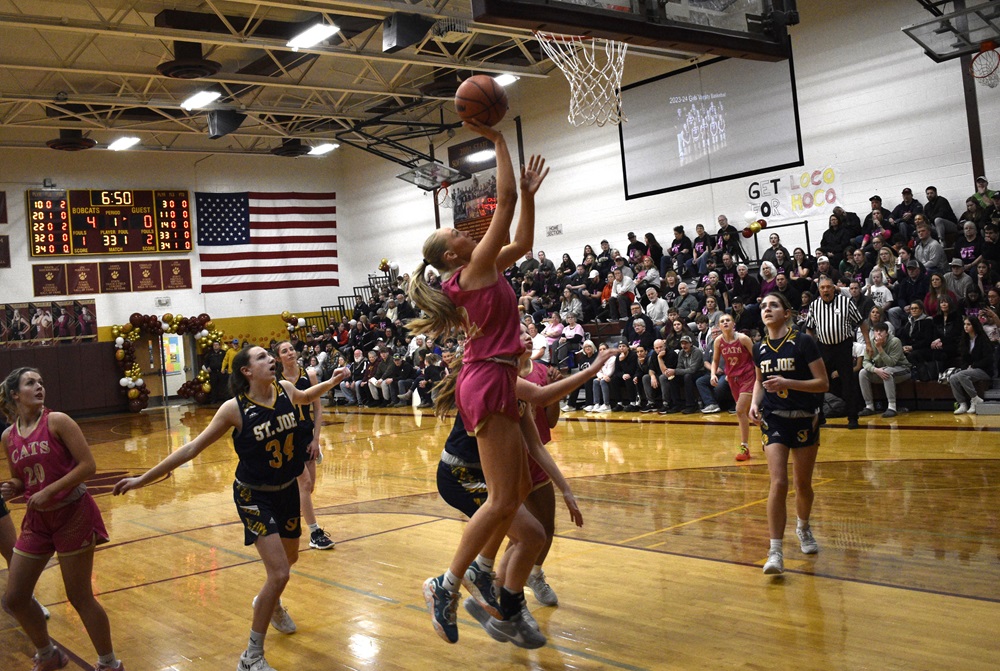
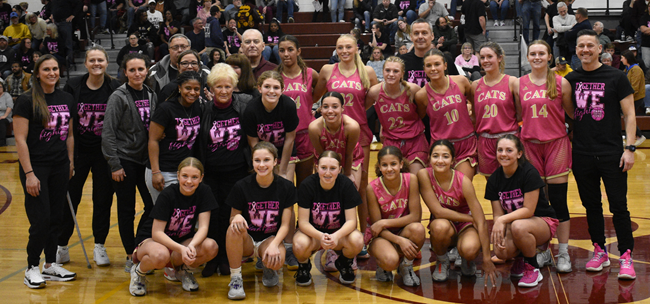
Brandywine held its annual Pink Game and Cancer Awareness Night at its final regular-season game against St. Joseph. The event raised money donated to the Brian Parker Cancer Foundation benefiting the local community.
Hood works well with his counterpart Knapp, Brandywine's boys' coach.
"How many coaches in the state can say that one of your peers was one of your best friends growing up and that you played high school basketball with them. There's nothing else, outside of our families, that we take more pride in than Brandywine," Hood said. "It's unbelievable. We can share the gym, build our schedules and between our two programs we have over 200 kids in our youth programs. I've learned so much from Nate. He's a phenomenal person. We're living out the dream."
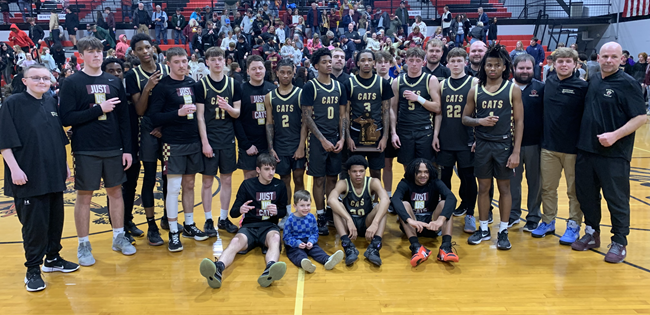
Brandywine's boys team (21-3) is looking to return to the Breslin Center later this month after winning Friday's District final against White Pigeon. The Bobcats harbor hopes of duplicating last year's historic run.
Brandywine faces Union City in a Regional opener tonight in Watervliet. The winner takes on either No. 8 Schoolcraft or Watervliet at 7 p.m. Thursday in the Regional Final.
Brandywine lost to Traverse City St. Francis 46-36 last year in its first Semifinal appearance.
Knapp, the Bobcats boys head mentor for 19 seasons, graduated four off a 25-2 team, but returned eight including seniors Byron Linley and Jaremiah Palmer, along with sophomore Nylen Goins.
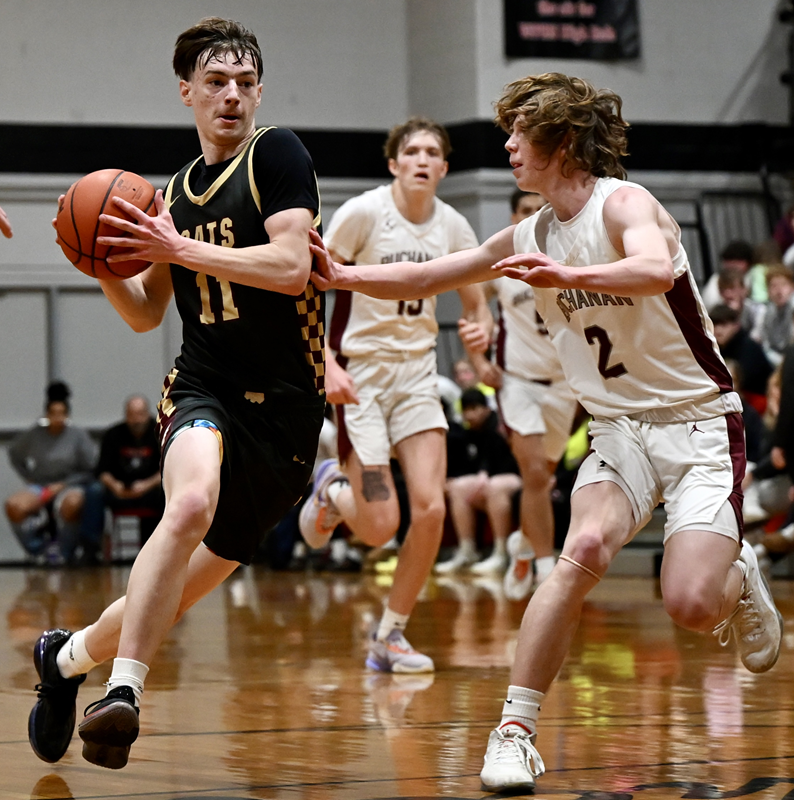
Linley leads the Bobcats in scoring at 13.7 points per game, followed by Palmer (13.1) and Goins (11.5).
"Byron is our shooter. He does a lot of the intangibles like scoring and plays great defense. He's always going 100 percent and is the last one to leave the gym," Knapp said. "Nylen is very athletic and brings great energy to the floor. He's quick and can get up and down the court. When he does, we're amazing. He's still raw defensively, but he's getting there and can really shoot."
Senior Jamier Palmer, Jaremiah's twin brother, along with classmates Robert Whiting and Ja'Torian Smith play key roles as well, along with senior Brock Dye.
 "Jaremiah and Jamier are our spark. They do anything we ask of them. They are two of the most unselfish and athletic players I've ever coached. They can score and are lock-down defenders," Knapp said.
Brandywine’s boys, co-champs in the Lakeland Conference with perennial state power Benton Harbor, beefed up their nonleague schedule as well.
The Bobcats' losses this season came to Riverview Gabriel Richard (57-55) in the Motor City Roundball Classic in Ferndale on Dec. 27, Benton Harbor (72-59) and Portage Central (71-67).
Brandywine avenged the earlier-season loss to Division 2 No. 3-ranked Benton Harbor with a 63-57 victory at the “Bobcat Den.” The Bobcats were ranked No. 3 in the final Division 3 AP poll, but were rated No. 1 at one point this season as well.
"Last year we won our first Regional. The glass slipper just really fit. This season we've had a target on our back from day one,” Knapp said. “We put a brutal schedule together for these guys. Our mindset was to play the better competition. We felt like St. Francis was a little long, and they kept getting a piece of the ball. This season we wanted to face teams like that before the tournament begins so we're ready for it. These kids have rose to the occasion every night and are warriors.”
Linley, a guard, feels the Semifinal loss to St. Francis served as big motivation this season.
"Since losing in last year's Semifinals I think that has just made us want to get back there (Breslin) even more. We just have to keep pushing one another in practice," Linley said. "Our coaches do a nice job daily of letting us know how good we can be and what we need to work on."
Jaremiah Palmer, a starting guard, feels his biggest assets on the court are his athleticism and quickness.
"I'm able to finish and get to my spots quick before opponents can stop me,” Jaremiah Palmer said. “Most of us have been playing together since middle school or longer. We have to translate what we learn in practice over to the game and play like it's our last one. Any team can beat you this time of year. No one on this team is selfish. We all work together."
Knapp (1991-1994) and Hood played their high school basketball at Brandywine for Al Westendorp.
"My senior year in high school we got upset in Districts by Marcellus. I tell our kids you have to be ready to play anyone every night," said Knapp, who runs Brandywine's CTE Program.
Knapp served as Hood's JV coach at Coloma before returning to Brandywine to become the varsity boys coach.
"We have great and amazing people around us here at Brandywine. It's a family atmosphere. My sons Austin and Carson are two of my assistant coaches, along with Brandon Glover, Casey Udell, Zach Livovich and Gabe Gouin. I'm older so when the kids don't get a point I'm trying to get across, the younger coaches help them understand what I'm trying to say," Nathan Knapp said.
The second game against Benton Harbor was a wake-up call and will serve as a big inspiration.
"We were down by 20 in the third quarter," Knapp said, "and the kids just stuck together, believed in themselves, played good defense and came back to win."
 Scott Hassinger is a contributing sportswriter for Leader Publications and previously served as the sports editor for the Three Rivers Commercial-News from 1994-2022. He can be reached at [email protected] with story ideas for Berrien, Cass, St. Joseph and Branch counties.
PHOTOS (Top) Kadence Brumitt (32) scores inside for Niles Brandywine against St. Joseph. (2) Niles Brandywine varsity girls' basketball team members and coaches pose for a photo during the Bobcats’ annual Pink Game on Cancer Awareness Night. (3) Niles Brandywine senior Byron Linley (11) drives between Buchanan defenders during last week's District game at White Pigeon. (4) The Brandywine boys basketball team poses with the trophy after defeating White Pigeon. (Linley photo by Kelly Sweeney/Leader Publications; all other photos by Scott Hassinger.)
All-Time Leading Scorer Allen Ready to Set Pace for Wayne Memorial's Title Pursuit
By
Keith Dunlap
Special for MHSAA.com
February 20, 2026
WAYNE — Jaylohn Allen insisted making such history wasn’t one of his goals when he started his varsity basketball career as a freshman.
 Given that, it made the moment all the more special last week.
During a game against Harvey Thornton (Ill.) on Valentine’s Day, Allen and the Wayne Memorial community loved seeing a 30-year-old record broken by Allen, who became the boys basketball program’s all-time leading scorer.
Allen surpassed the 1,748 career points scored by former Michigan State player Lorenzo Guess, who finished his career in 1996.
“To be the all-time leading scorer at Wayne Memorial High actually wasn’t one of my goals coming in as a freshman,” Allen said. “And honestly I didn’t really think I was going to pass it because 1,700 points is a lot of points, per se. To do that as a kid who grew up with many accomplishments and dreams I wanted to have was a joy. I thought 1,000 points was surreal, but the record meant so much more.”
Signed to play in college for Toledo, Allen certainly has meant a lot to Wayne Memorial over the past four years, and he hopes to make even more history for the Zebras over the next few weeks.
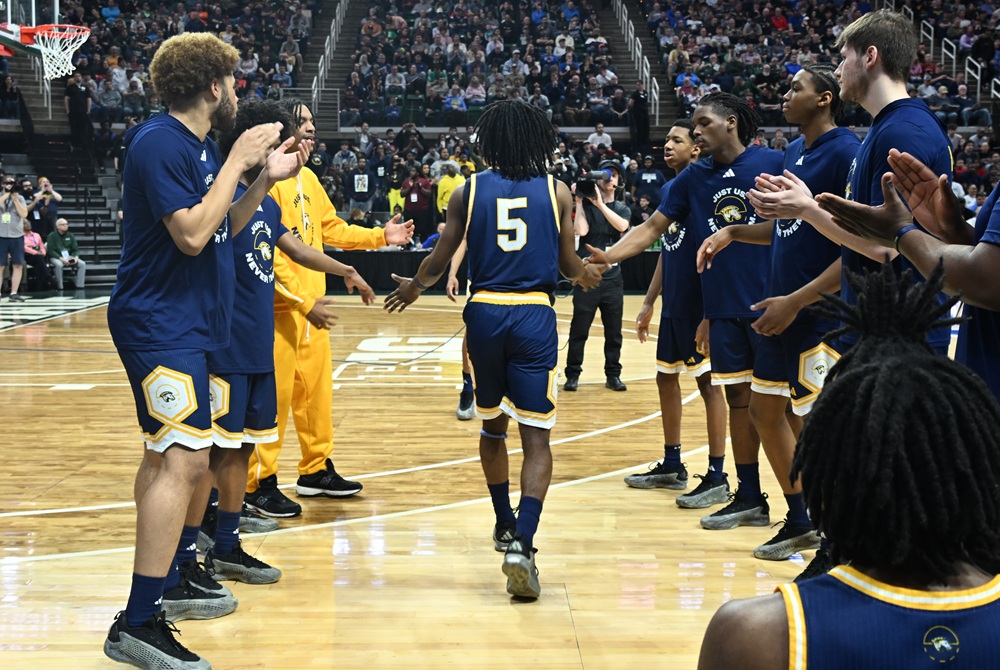
Allen is averaging nearly 23 points a game this season and is determined to try and get Wayne Memorial back to the Division 1 championship game, where it loss last year to East Lansing.
When the Zebras accepted the Finals runner-up trophy, they obviously had immediate reason for optimism given Allen and fellow backcourt mate Carlos Medlock – a Michigan State signee – were only juniors.
But Medlock threw a major wrinkle into Wayne Memorial’s title ambitions when he decided over the offseason to transfer to a prep school in Missouri.
“I found out maybe a week before he posted on social media,” Allen said of Medlock’s decision. “There were rumors about it, but I didn’t really think he was going to leave. It was a shock, but I was still ready to attack the senior season regardless of what happened and look forward to the senior season with or without him.”
Allen has certainly done that and more.
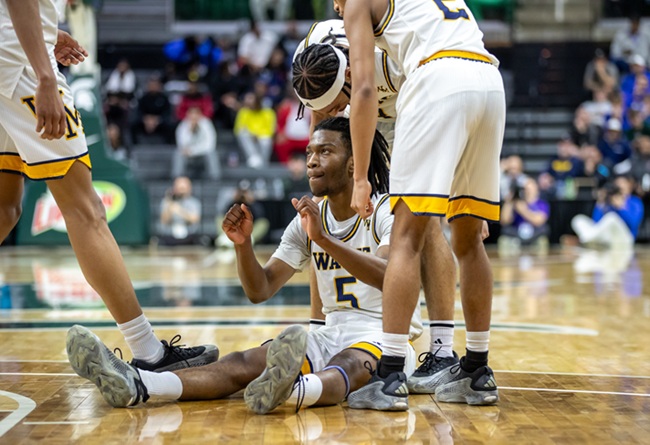 Instead of pouting or looking to leave himself, Allen treated Medlock’s departure as a chance to prove he was a worthy Mr. Basketball Award candidate this winter.
Over the summer, he worked to get in terrific shape and continued to not only hone his on-court talents, but became an even more vocal leader to younger players coming back.
“It put me into a bigger role and let people see I can score the ball even more than I’ve been doing the past three years,” Allen said. “It put a fire in me and some motivation that I could be more of the man with the ball.”
One person not surprised that Allen adapted so well without Medlock was Wayne Memorial head coach Steve Brooks.
“He’s pretty much always been the man; he just hadn’t been the leading scorer all the time,” Brooks said.
Allen said there were adjustments playing without his running mate of the last three years, especially when trying to get out in transition.
“Being on the floor and not seeing (Medlock) on the other side of the court and being able to swing it to him — it was just a connection in transition or any other core set that we had,” Allen said. “(The adjustments were) just realizing he’s not on the court and having to utilize my other teammates and making sure they are getting everything they need.”
There was a major scare in December, just before the holiday break, when Allen left a game with a knee injury after he took a charge.
“We thought he was lost for the year,” Brooks said.
But the injury was only a bone bruise, and Allen missed just 13 days and has been an unstoppable force since.
To Brooks, it’s obvious who should be Mr. Basketball.
“Mr. Basketball traditionally is for what you’ve done for your career and not just for a season,” Brooks said. “Over his career, he’s at 19 points a game. Him and Medlock both had 1,000 career points before Christmas of their junior year.”
While Mr. Basketball would be nice and the scoring record is an honor, there is one main purpose for Allen, and that is to get another shot at the Division 1 title that eluded Wayne Memorial last year.
The Zebras enter tonight’s Kensington Lakes Activities Association championship game 18-3 and carrying a 10-game winning streak.
“I want them to get there more than me,” Allen said of his teammates. “I want them to show me how much they want to be there so when it comes down to it, we’re ready for it.”
 Keith Dunlap has served in Detroit-area sports media for more than two decades, including as a sportswriter at the Oakland Press from 2001-16 primarily covering high school sports but also college and professional teams. His bylines also have appeared in USA Today, the Washington Post, the Detroit Free Press, the Houston Chronicle and the Boston Globe. He served as the administrator for the Oakland Activities Association’s website from 2017-2020. Contact him at [email protected] with story ideas for Oakland, Macomb and Wayne counties.
PHOTOS (Top) Wayne Memorial’s Jaylohn Allen (5) makes his way through his teammates during introductions before last season’s Division 1 Final at Breslin Center. (Middle) Teammates help Allen up from the floor during the Zebras’ Semifinal win.