

Be the Referee: Back Row Setter
By
Paige Winne
MHSAA Director of Brand Management
November 12, 2024
Be The Referee is a series of short messages designed to help educate people on the rules of different sports, to help them better understand the art of officiating, and to recruit officials.
Below is this week's segment – Back Row Setter - Listen
We’re on the volleyball court for today’s “You Make the Call.”
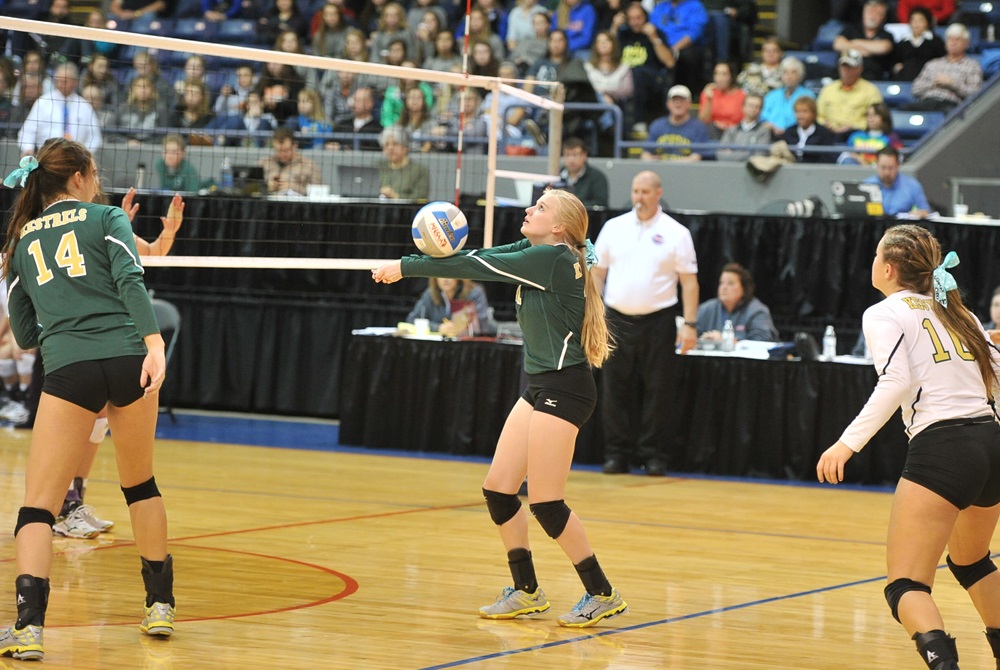
Team A serves the ball over net. Team B’s number 9 passes, or bumps the ball up toward the net, where number 2 tips it over for a point.
But number 2 is a back row setter and moved to the front row on the serve.
Is this a legal play?
If you said it depends … you are correct.
A back row setter can move to the front row and play the ball over the net as long as the entire ball is NOT above the net.
If the ball is completely above the net, then the back row setter is not allowed to play it over the net from the front row.
Previous 2024-25 Editions
Nov. 5: Football OT - Listen
Oct. 29: Officials Registration - Listen
Oct. 22: Volleyball Serve - Listen
Oct. 15: "You Make the Call" - Soccer Offside - Listen
Oct. 8: Roughing the Passer - Listen
Oct. 1: Abnormal Course Condition - Listen
Sept. 25: Tennis Nets - Listen
Sept. 18: Libero - Listen
Sept. 10: Cross Country Uniforms - Listen
Sept. 3: Soccer Handling - Listen
Aug. 24: Football Holding - Listen
Preview: Major Matchups, Multiple 1st-Time Champs Guaranteed
By
Geoff Kimmerly
MHSAA.com senior editor
November 16, 2022
We can make one promise heading into this weekend’s MHSAA Volleyball Semifinals and Finals at Battle Creek’s Kellogg Arena, and it’s a two-parter.
There will be first-time champions in Divisions 3 and 4, as all eight finalists making the trip this weekend are seeking their first title – and five of those eight will be working as well to reach the last day of the season for the first time.
We also can guarantee a first-time finalist in Division 2, as Cadillac and Dearborn Divine Child face off on one side of the bracket. And in Division 1, for the second-straight year, the top three-ranked teams from the final regular-season coaches poll have advanced – and two-time reigning champion Bloomfield Hills Marian may get the chance to face the only team to defeat the Mustangs this fall.
Action begins Thursday with Division 1 and 4 Semifinals, with Divisions 2 and 3 on Friday and all four title matches Saturday.
All 12 matches will be broadcast on MHSAA.tv and (audio) MHSAANetwork.com. Click for more information, including how to purchase tickets, from the Volleyball page of the MHSAA Website.
This weekend’s schedule:
Division 1 - Thursday
Bloomfield Hills Marian vs. Grand Rapids Forest Hills Northern, 4:30 p.m.
Saline vs. Northville, 6:30 p.m.
Division 2 - Friday
Grand Rapids South Christian vs. North Branch, 4:30 p.m.
Dearborn Divine Child vs. Cadillac, 6:30 p.m.
Division 3 – Friday
Pewamo-Westphalia vs. Cass City, Noon
Kalamazoo Christian vs. Calumet, 2 p.m.
Division 4 – Thursday
Athens vs. Lansing Christian, Noon
Mount Pleasant Sacred Heart vs. Crystal Falls Forest Park, 2 p.m.
Finals – Saturday
Division 1, Noon
Division 2, 4:30 p.m.
Division 3, 2:30 p.m.
Division 4, 10 a.m.
Below is a glance at contenders in each division. (Statistics are through Regional Finals for most teams.)
Division 1
BLOOMFIELD HILLS MARIAN
Record/rank: 47-1, No. 1
Coach: Mayssa Cook, fifth season (221-26-3)
League finish: First in Detroit Catholic League Central
Championship history: Four MHSAA titles (most recent 2021), six runner-up finishes.
Best wins: 3-2 (Quarterfinal), 2-0 and 2-0 over No. 4 Clarkston, 3-0 (Regional Final), 2-0 and 2-0 over No. 10 Macomb Dakota, 2-0 over No. 9 Rockford, 2-0, 2-0, 3-0 and 3-0 over No. 8 Farmington Hills Mercy; 3-1 over honorable mention Lake Orion, 2-0 over honorable mention Temperance Bedford, 2-1 over Division 2 No. 2 North Branch, 2-0 and 2-0 over Division 2 No. 3 Pontiac Notre Dame Prep.
Players to watch: Ava Sarafa, 6-0 sr. S (1,226 assists, 257 digs); Ella Schomer, 6-0 sr. OPP (288 kills, .317 hitting %); Izzy Busignani, 6-1 soph. OH (457 kills, .304 hitting %, 299 digs)
Finals forecast: Improving on the 2021 championship season would have been difficult, but Marian may be in the process as it seeks its third-straight Division 1 title – the Mustangs’ lone loss was to Northville, and they’ve given up nine sets total. Sarafa and Schomer were Miss Volleyball finalists this year, with Sarafa having made the all-state first team and Schomer the second last season. Senior outside hitter Reagan Sass (.317 hitting %) and 6-3 junior middle Mckenzie Swanson (.390) are two more hitting options, while senior Molly Banta is another off the bench (313 kills). Sarafa has signed to continue at Kentucky, Schomer signed with Wofford (S.C.), Sass will continue at Denison (Ohio) and senior defensive specialist Evey Oegema will play at Calvin College.
GRAND RAPIDS FOREST HILLS NORTHERN
Record/rank: 44-4-1, No. 3
Coach: Dale Wilhelm, fifth season (138-62-8)
League finish: First in Ottawa-Kent Conference White
Championship history: Two MHSAA championships (most recent 2002), three runner-up finishes.
Best wins: 3-0 (Quarterfinal), 2-0 and 2-0 over No. 9 Rockford; 2-1, 2-1, 2-0, 3-0 over No. 6 Grand Rapids Forest Hills Central; 3-1 (Regional Final) and 2-0 over No. 7 Hudsonville, 2-0 over honorable mention Saline, 2-0 over No. 8 Farmington Hills Mercy, 3-0 (District Final) and 2-0 over honorable mention Coopersville, 2-0 over honorable mention Temperance Bedford.
Players to watch: Elana Erickson, 5-10 jr. OH (418 kills, .316 hitting %, 310 digs); Kennedy Louisell, 5-11 sr. OH (565 kills, .346 hitting %, 274 digs); Lauren Hallas, 5-8 sr. S (738 assists, 52 aces).
Finals forecast: Forest Hills Northern is headed back to the Semifinals for the first time since 2004-05, when it finished Class A runner-up. Wilhelm, who formerly coached Reed City and Remus Chippewa Hills and as an assistant at Ferris State, has a career record of 698-377-74 and brought FHN back from a 13-19 finish only two seasons ago. The Huskies’ only losses this season were to Northville twice, Forest Hills Central (against four wins) and Division 3 semifinalist Kalamazoo Christian. Louisell was a Miss Volleyball finalist this fall and has signed with North Carolina-Greensboro. She made the all-state second team last season, and Erickson earned an honorable mention.
NORTHVILLE
Record/rank: 46-3, No. 2
Coach: Sarah Lindstrom, second season (94-8)
League finish: First in Kensington Lakes Activities Association West and overall
Championship history: Has never played in an MHSAA Final.
Best wins: 2-0 over No. 1 Bloomfield Hills Marian, 2-0 and 2-1 over No. 3 Grand Rapids Forest Hills Northern, 3-1 (Regional Semifinal) and 2-0 over No. 8 Farmington Hills Mercy, 2-1 over No. 5 Ann Arbor Skyline, 2-0 over honorable mention Jenison, 3-0 (District Final), 2-0, 2-0 and 3-1 over honorable mention Novi; 3-0 over Division 2 No. 1 Detroit Country Day, 2-0 over Division 2 No. 2 North Branch, 2-0 over Division 2 No. 3 Pontiac Notre Dame Prep, 2-0 over Division 3 No. 1 Monroe St. Mary Catholic Central.
Players to watch: Abby Reck, 6-2 sr. OH (529 kills, .300 hitting %, 57 aces, 308 digs); Avry Nelson, 6-3 jr. MB (226 kills, .321 hitting %, 90 blocks); Ella Craggs, 5-9 soph. S/RS (1,070 assists, 276 digs).
Finals forecast: Northville is the only team to defeat Marian and also has two wins over Forest Hills Northern as it returns to the Semifinals for the first time since 2018. Stewart was a Finals champion playing soccer for Novi in 2005 and brought Divine Child to Kellogg Arena for the 2012 Class B Volleyball Semifinals. Her team this fall has lost only to Mercy (against two later wins), Division 1 semifinalist Saline and Division 2 semifinalist North Branch (which Northville also defeated). Reck made the all-state second team last season and was a Miss Volleyball finalist this fall, and has signed with Northeastern (Mass.). Senior libero Taryn Rice (454 digs) and juniors Greta Mckee (216) and Ashlee Gnau (300) form a strong defensive group.
SALINE
Record/rank: 38-8-1, honorable mention
Coach: Darien Bandel, first season (38-8-1)
League finish: First in Southeastern Conference Red
Championship history: Class B champion 1984.
Best wins: 2-1 over No. 2 Northville, 2-0 and 3-1 over honorable mention Temperance Bedford, 3-0 over No. 5 Ann Arbor Skyline, 2-0 over honorable mention Lake Orion, 2-0 over Division 2 No. 1 Detroit Country Day, 2-1 over Division 2 No. 2 North Branch.
Players to watch: Marie Laurio, 5-10 soph. OH (435 kills, 337 digs), Anna Hesse, 5-11 sr. OH (394 kills), Laney Burns 5-7 sr. S (1,257 assists, 61 aces, 342 digs).
Finals forecast: Saline is headed back to the Semifinals for the first time since the championship season of 1984, with Bandel leading the way after starring at Oxford and Oakland University and serving as an assistant coach for Birmingham Groves, Notre Dame Prep and Northville all over the last decade. She inherited a strong senior setter in Burns, who earned all-state honorable mention last season. Saline has given up only two sets over five postseason matches and won 10 of its last 11 matches overall. Junior defensive specialist Olivia Behen (506 digs) is another key contributor.
Division 2
CADILLAC
Record/rank: 33-10-4, honorable mention
Coach: Michelle Brines, 23rd season (930-286-49)
League finish: Tied for first in Big North Conference
Championship history: Has never played in an MHSAA Final.
Best wins: 3-1 over honorable mention Grand Rapids West Catholic in Quarterfinal, 2-1 over No. 8 Holland Christian, 2-0 over Division 4 No. 2 Leland, 3-0 over Traverse City Central, 2-0 and 2-0 over Division 3 honorable mention Morley Stanwood.
Players to watch: Cassie Jenema, 5-9 soph. S (1,133 digs, 284 digs); Carissa Musta, 6-4 jr. MH (457 kills, .350 hitting %, 165 blocks); Joslyn Seeley, 5-9 sr. OH (373 kills, 338 digs).
Finals forecast: Cadillac is back at the Semifinals for the third time in six seasons after most recently making the trip in 2020. The Vikings also have won 10 of their last 11 matches and played opponents from all over the Lower Peninsula during the regular season in preparation for another tournament run. Musta earned all-state honorable mention last season and Jenema has stepped in well after Cadillac graduated all-state setter Renee Brines in the spring. Junior 6-1 outside hitter Makenzie Johns added 197 kills entering the week, and the future is bright as four of this season’s starters should anchor the lineup in 2023 as well.
DEARBORN DIVINE CHILD
Record/rank: 16-18-1, unranked
Coach: Elizabeth Gazley, second season (47-25-1)
League finish: Fourth in Detroit Catholic League Central
Championship history: Has never played in an MHSAA Final.
Best wins: 3-0 over Livonia Clarenceville in Quarterfinal, 3-0 over Milan in Regional Final, 3-2 (District Final) and 3-0 over Ann Arbor Gabriel Richard.
Players to watch: Reese Ringwelski, 5-11 sr. OH/MB (188 kills); Chio Ibegbu, 5-10 jr. MB (134 kills); Jillian Palmer, 5-6 sr. S (400 assists, 117 digs).
Finals forecast: Emerging from one of the strongest leagues in the state, Divine Child found its stride at the best time this season and has won eight of its last nine matches in returning to the Semifinals for the first time since 2014. Gazley led the team to a 31-7 record and Regional title last season as well, but despite the slower start this fall these Falcons have surged to make it a step farther. They’ve lost only two sets over five postseason matches. Libero Paige Ebben is another of six seniors and leads defensively with 261 digs through the District Final.
GRAND RAPIDS SOUTH CHRISTIAN
Record/rank: 36-6-3, No. 5
Coach: Ashley Jackson, fourth season (record N/A)
League finish: First in O-K Gold
Championship history: Class B champion 2007 (winter), two runner-up finishes.
Best wins: 3-2 over No. 4 Lake Odessa Lakewood in Quarterfinal, 3-0 (Regional Semifinal), 2-0, 2-0 and 2-1 over No. 8 Holland Christian, 3-1 over No. 7 Grand Rapids Christian in District Final, 2-0 over Division 1 honorable mention Jenison.
Players to watch: Ellie Fles, 6-0 jr. OH (318 kills, 78 aces, 301 digs); Kennedy Arp, 6-0 sr. MH (324 kills, .397 hitting %, 85 blocks); Gina Boomsma, 5-7 sr. S (484 assists, 67 aces, 189 digs).
Finals forecast: South Christian will play in its first Semifinal since 2013, when it finished Class B runner-up. The Sailors have won 13 of their last 14 matches, giving up just six sets over that run – especially impressive since it included wins over three top-10 teams during the MHSAA Tournament, plus Holland Christian a second time during the regular season. Arp made the all-state second team last season and has signed with Valparaiso. Senior middle Skylar Raak (178 ills, .305 hitting %) is another effective offensive option, and sophomore libero Olivia In’t Hout (354 digs) anchors the defense.
NORTH BRANCH
Record/rank: 51-7, No. 2
Coach: Jim Fish, 23rd season (1,267-218-51)
League finish: First in Blue Water Area Conference
Championship history: Three MHSAA titles (most recent 2016), five runner-up finishes.
Best wins: 3-1 (Regional Final) and 2-0 over No. 3 Pontiac Notre Dame Prep, 3-2 (District Semifinal), 3-1 and 2-0 over No. 10 Imlay City, 2-0 and 2-0 over honorable mention Essexville Garber, 2-0 over No. 5 Grand Rapids South Christian, 2-0 over Division 1 No. 6 Grand Rapids Forest Hills Central, 2-0 over Division 1 No. 2 Northville, 2-0 over Division 1 No. 5 Ann Arbor Skyline, 2-0 over Division 1 honorable mention Coopersville, 2-0 over Division 1 honorable mention Jenison, 2-0 over Division 1 honorable mention Lake Orion, 2-1 over Division 3 No. 1 Monroe St. Mary Catholic Central.
Players to watch: Alana Deshetsky, 5-8 jr. OH (287 kills, 95 aces, 332 digs); Adrienne Greschaw, 5-8 jr. S (1,125 assists, 65 aces, 204 digs); Clara Gyomory, 5-9 jr. RS (314 kills, .324 hitting %).
Finals forecast: Last season’s Division 2 runner-up is back thanks in part to a Regional Final win over Notre Dame Prep, which had ended the Broncos’ last five seasons with losses including in last year’s championship match. North Branch returns its entire lineup from last season’s run plus has added freshman outside hitter Aubree Deshetsky (240 kills, 296 digs). Junior libero Hailey Green (582 digs) made the all-state first team last season, while Alana Deshetsky made the second team and Greschaw made the third team. Junior 6-2 middle Kaela Chingwa had added 107 blocks, plus 229 kills, entering the week.
Division 3
CALUMET
Record/rank: 30-6, honorable mention
Coach: Kate Bonacorsi, third season (81-12-1)
League finish: First in Western Peninsula Athletic Conference
Championship history: Class C runner-up 2008.
Best wins: 3-0 over No. 3 McBain in Quarterfinal, 2-0 over No. 7 Plymouth Christian Academy, 2-0 and 3-0 over Houghton, 2-1 over Mt. Morris.
Players to watch: Helen Beiring, 6-0 sr. OH (436 kills, .365 hitting %, 312 digs); Allison Bjorn, 6-0 soph. MH (213 kills, .347 hitting %); Laina Kariniemi, 5-4 jr. S (884 assists, 64 aces).
Finals forecast: Calumet is returning to the Semifinals for the first time since back-to-back trips in 2016 and 2017, and has reached the Quarterfinals all three seasons under Bonacorsi. The win over No. 3 McBain on Tuesday avenged an early-season defeat and extended the Copper Kings’ winning streak to 13, and they’ve given up only two sets during that run – to Elk Rapids in the Regional Final win. Beiring made the all-state first team last season and is one of only three seniors; defensive standouts Carley Loukus (259 digs) and Kaylie Halonen (398) are the others.
CASS CITY
Record/rank: 34-8-3, No. 8
Coach: Amy Cuthrell, seventh season (132-40-7)
League finish: First in Greater Thumb Conference West
Championship history: Has never played in an MHSAA Final.
Best wins: 3-0 over New Lothrop in Regional Final, 3-0 over Royal Oak Shrine Catholic in Quarterfinal, 2-0 over Division 2 No. 10 Imlay City.
Players to watch: Saylar Cuthrell, 5-4 sr. S (1,031 assists, 293 digs); Shelby Ignash, 6-0 soph. MH (504 kills, 95 blocks, 319 digs); Kacee Gray, 5-7 soph. OH (382 kills, 295 digs).
Finals forecast: Cass City is making its first trip to the Semifinals since earning its only other Regional titles in 1976 and 1977. The Red Hawks have shut out all five of their postseason opponents and 12 of their last 13, and in addition to the wins above also had a notable tie with Division 2 No. 3 Pontiac Notre Dame Prep. Ignash earned all-state honorable mention as a freshman. Sophomore outside hitter Alexis Champagne had added 158 kills entering the week and 191 digs, with five more teammates having posted at least 200 digs this season.
KALAMAZOO CHRISTIAN
Record/rank: 38-5-3, No. 4
Coach: Carlie Southland, first season (38-5-3)
League finish: First in Southwestern Athletic Conference Valley
Championship history: Class C-D runner-up 1976.
Best wins: 3-2 (Quarterfinal) and 2-0 over No. 9 Shelby, 2-1 and 2-0 over No. 8 Cass City, 3-1 (Regional Final) and 2-0 over No. 5 Watervliet, 3-0 over honorable mention Bronson in Regional Semifinal, 2-0 over Division 1 No. 3 Grand Rapids Forest Hills Northern, 2-1 over Buchanan, 2-1 over Division 4 No. 3 Athens.
Players to watch: Holland DeVries, 5-9 jr. OH (310 kills, 102 aces, 372 digs); Marisa Fetterley, 6-3 sr. MH (346 kills, 74 aces, 90 blocks); Lola Stecker, 5-6 jr. S (1,056 assists).
Finals forecast: Kalamazoo Christian has navigated one of the toughest two weeks in any division to reach the Semifinals for the first time since that runner-up season in 1976. Last week’s Regional title was the first since the Fall 2007 season, and the Comets are bringing a 14-match winning streak into Kellogg – and have won 27 of their last 28. The Watervliet wins avenged an early loss, and the other four defeats and all three ties came to teams from Divisions 1 and 2. DeVries earned all-state honorable mention last season, and this could be just the start under 2016 grad Southland; Fetterley is the only senior starter.
PEWAMO-WESTPHALIA
Record/rank: 44-2-2, No. 2
Coach: Jon Thelen, eighth season (220-80-25)
League finish: First in Central Michigan Athletic Conference
Championship history: Class C runner-up 1994.
Best wins: 3-1 over No. 1 Monroe St. Mary Catholic Central in Quarterfinal, 2-0 over No. 7 Plymouth Christian Academy, 2-0 over Division 2 No. 9 Lansing Catholic, 2-0 over Division 2 honorable mention Allendale, 3-0 over Division 4 No. 8 Lansing Christian, 2-1 over Division 4 No. 1 Adrian Lenawee Christian.
Players to watch: Taylor Smith, 6-1 jr. S; Dani Pohl, 5-11 sr. OH; Sierra Schneider, 6-1 sr. MB. (Statistics not submitted.)
Finals forecast: P-W is making its first trip to the Semifinals since that Class C runner-up season of 1994, and booked it by defeating a Monroe St. Mary team that was Division 3 runner-up last season and champion in 2019 and 2020. Four seniors anchor a starting lineup set by Smith, who made the all-state second team last season while Pohl made the third team. Both of the Pirates’ losses came to bigger schools – Holland West Ottawa and Lansing Catholic – and they avenged the latter at the end of the regular season.
Division 4
ATHENS
Record/rank: 33-12-2, No. 3
Coach: Jacy Cole, 14th season (370-231-36)
League finish: First in Southern Central Athletic Association West
Championship history: Has never played in an MHSAA Final.
Best wins: 3-0 over No. 1 Adrian Lenawee Christian in Quarterfinal, 3-0 over honorable mention St. Joseph Our Lady of the Lakes in Regional Final, 3-0 over No. 5 Mendon in District Quarterfinal, 3-2 over No. 6 Battle Creek St. Philip, 3-0 and 2-0 over Camden-Frontier, 2-1 over Division 3 No. 7 Plymouth Christian Academy.
Players to watch: Kylie Quist, 5-6 sr. OH (285 kills, 320 digs); Kamryn Parlin, 5-7 jr. MH (288 kills, 326 digs); Alaina Brubaker, sr. S (1,056 assists, 95 aces, 325 digs).
Finals forecast: Athens has followed up on its first Regional title with its first trip to the Semifinals, anchored by three players who earned all-state honors in 2021 – Parlin made the second team, Brubaker made the third and Quist earned an honorable mention. The attack is impressively balanced; the top four hitters all had between 280-290 kills entering the week, with senior Jocelyn Hall and junior Piper Porter joining Parlin and Quist in that group. Athens hasn’t given up a set during the postseason, and the Lenawee Christian win avenged a previous loss, while the other 11 defeats and both ties came to teams from Divisions 1, 2 and 3.
CRYSTAL FALLS FOREST PARK
Record/rank: 16-4, unranked
Coach: Bobbie Jo Anderson, third season (record N/A)
League finish: Tied for first in Skyline Central Conference
Championship history: Has never played in an MHSAA Final.
Best wins: 3-1 over No. 9 Indian River Inland Lakes in Quarterfinal, 3-1 over Painesdale Jeffers in Regional Final, 3-1 over Stephenson in Regional Semifinal.
Players to watch: Charlie Larson, jr. S; Leah Feldhausen, jr. MH; Ashlynn Kannich, sr. DS. (Statistics not submitted.)
Finals forecast: The Trojans are headed back to the Semifinals for the first time since 2015, seeking their first championship match berth after reaching this point in the tournament five other times over the last two decades. The Stephenson win avenged a regular-season loss, and the Trojans won that match after losing the first set and did the same in the Quarterfinal victory over Inland Lakes – last season’s Division 4 runner-up. Kannich is one of only three seniors – all defensive specialists – on a team also bringing three freshmen and five sophomores to Kellogg with a bright future ahead.
LANSING CHRISTIAN
Record/rank: 30-11-1, No. 8
Coach: Sarah Rottman, first season (30-11-1)
League finish: Second in Greater Lansing Activities Conference
Championship history: Has never appeared in an MHSAA Final.
Best wins: 3-0 over Portland St. Patrick in Quarterfinal, 3-0 over Marine City Cardinal Mooney in Regional Final, 3-1 over Clarkston Everest Collegiate in Regional Semifinal.
Players to watch: Katelynn Rottman, 5-11 jr. OH/DS (377 kills, 336 digs); Madelynn Rottman, 5-11 sr. S (454 assists, 115 digs); Ava Waldron, jr. DS (286 digs, 64 aces).
Finals forecast: Lansing Christian will be playing in its first Semifinal after winning its third Regional title, and the Pilgrims should be prepared for anything they see after navigating a regular-season schedule filled nearly entirely with bigger schools including Division 2 power Lakewood and Division 3 semifinalist Pewamo-Westphalia, plus Division 4 top-ranked Adrian Lenawee Christian. Lansing Christian has given up only two sets over six postseason matches. Madelynn Rottman earned an all-state honorable mention last season and is one of four senior starters. Another, Eliza Wortz, was second on the team in kills entering the week with 187.
MOUNT PLEASANT SACRED HEART
Record/rank: 42-7-6, No. 4
Coach: Krista Davis, ninth season (287-117-38)
League finish: First in Mid-State Activities Conference
Championship history: Has never played in an MHSAA Final.
Best wins: 3-1 over No. 2 Leland in Quarterfinal, 3-0 over Onekama in Regional Final, 2-1 over Clare, 2-1 over Alma.
Players to watch: Lillie Laney, 5-10 sr. MH (339 kills, .354 hitting %, 60 aces, 83 blocks); Eliza Pieratt, 5-1 sr. S (518 assists, 98 aces); Angel Brown, 5-9 sr. OH (384 kills, 70 aces, 314 digs).
Finals forecast: After reaching the Semifinals for the first time last season – and just missing the championship match with a five-set defeat – Sacred Heart is back with Laney and Brown among those who saw the most game action during last year’s trip. Brown made the all-state second team last season, and Laney earned an honorable mention. Pieratt is joined by sophomore Sophie Hauck (482 assists) in a two-setter lineup. Junior libero Bridget Ruiz leads the defensive effort with 403 digs, and sophomore outside hitter Chelsea Lynch had 285 entering the week to go with 187 kills.
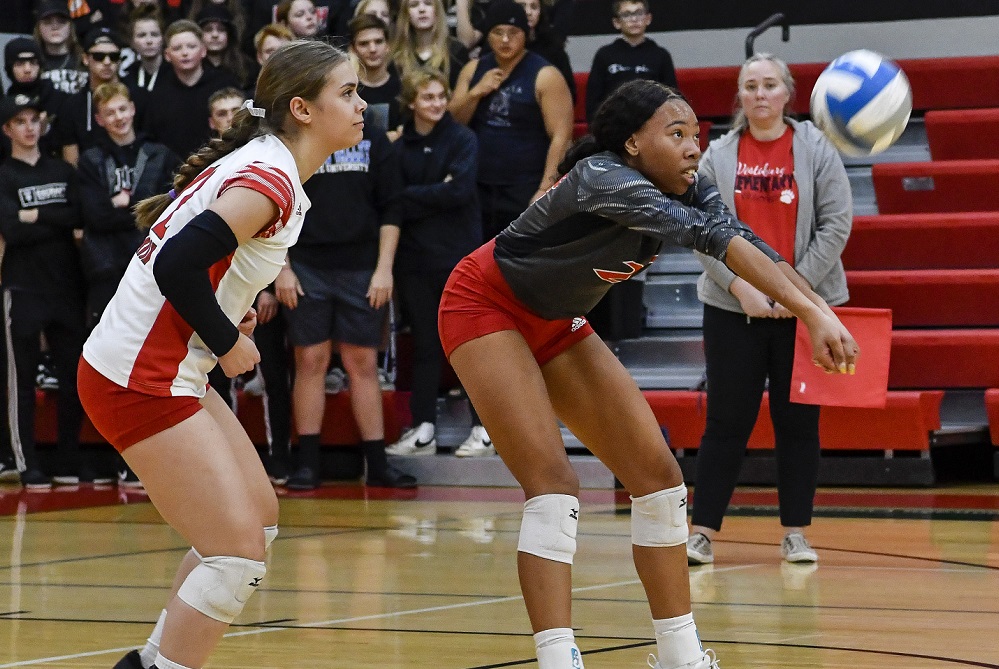
PHOTO Mount Pleasant Sacred Heart’s Angel Brown (23) hits from the back row with teammate Bridget Ruiz (12) beside her during a match against Coleman. (Click for more from High School Sports Scene.)