

Be the Referee: Illegal Attack
By
Paige Winne
MHSAA Director of Brand Management
November 11, 2026
Be The Referee is a series of short messages designed to help educate people on the rules of different sports, to help them better understand the art of officiating, and to recruit officials.
Below is this week's segment – Illegal Attack - Listen
A volleyball scenario for you today:
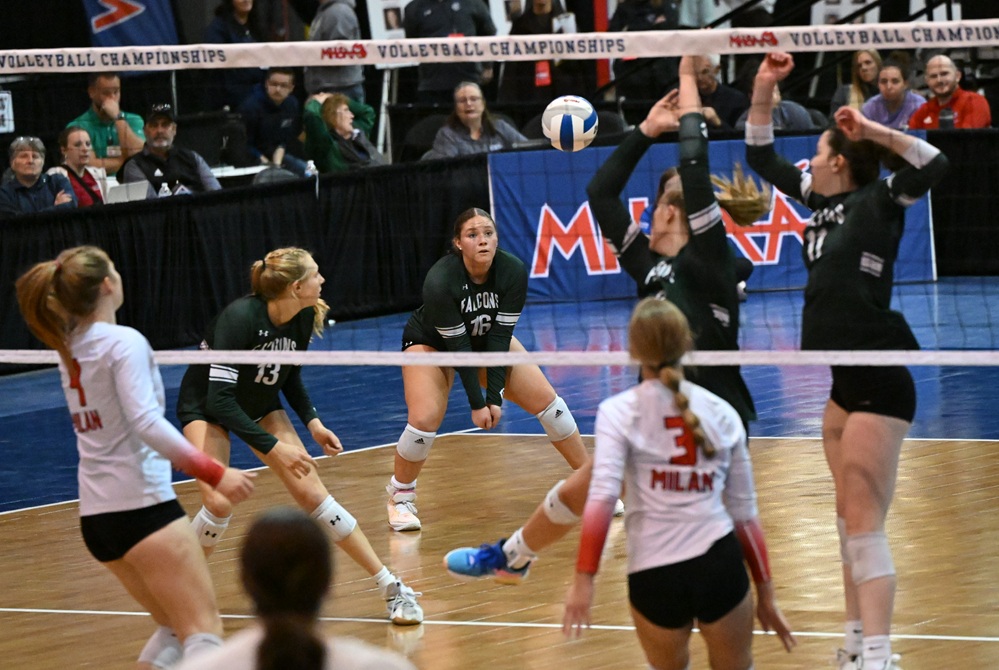
A back-row player attacks the ball from in front of the attack line and the ball is higher than the net. Is this allowed?
Sort of.
Simply being a back-row player and contacting the ball higher than the net in front of the attack line is not illegal.
Completing the attack makes it illegal.
An attack is considered complete when the ball either crosses the net completely or is legally contacted by the opponent.
The referee should wait until the attack is completed before making the call.
If this happens, the play is whistled dead for an illegal attack.
Previous 2026-27 editions
Nov. 3: Pass Interference - Listen
Oct. 27: Field Hockey Substitutions - Listen
Oct. 20: Foot Save in Volleyball - Listen
Oct. 13: Soccer Advantage - Listen
Oct. 6: Defensive Holding - Listen
Sept. 29: Minimum Number of Volleyball Players - Listen
Sept 22: Soccer Changes - Listen
Sept: 15: Dead Ball Penalty - Listen
Sept. 8: Libero Ejected - Listen
Sept. 1: Soccer Foul After Shot on Goal - Listen
Aug. 25: Fumble Out of Bounds - Listen
Be the Referee: Soccer Timing
By
Sam Davis
MHSAA Director of Officials
September 20, 2022
Be The Referee is a series of short messages designed to help educate people on the rules of different sports, to help them better understand the art of officiating, and to recruit officials.
Below is this week's segment – Soccer Timing - Listen
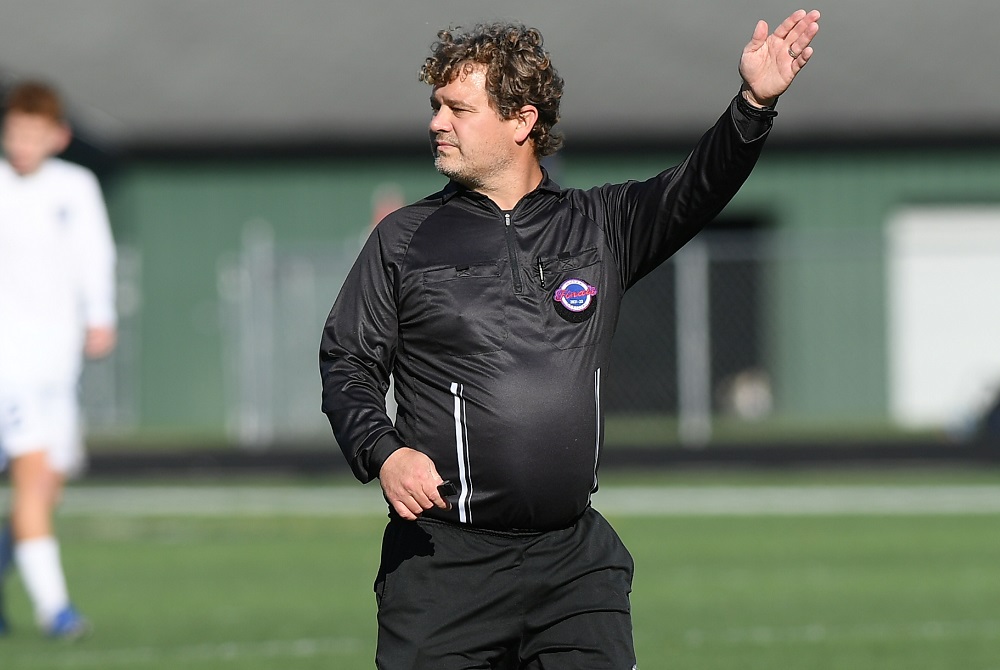
One of the biggest complaints people make about professional soccer is never knowing how much time is really left in the game. The clock counts up from zero, and the referee can add time at their discretion.
But that’s not the case in high school soccer.
To start with, halves are 40 minutes, not 45. The clock starts at 40 and counts down. And when players are injured and the ball is not in play, the clock will stop and then restart when action is ready to continue.
In the last five minutes of the game, the clock stops for substitutions by the leading team, so a coach can’t stall by sending in a new player. When the clock hits zero and the buzzer sounds … the game is over. There’s no guessing how much added time there is – the end of the game is the end of the game.
Previous Editions:
Sept. 13: Volleyball Replays - Listen
Sept. 6: Switching Sides - Listen
Aug. 30: Play Clock - Listen
Aug. 23: Intentional Grounding Change - Listen