

Be the Referee: Libero
By
Paige Winne
MHSAA Director of Brand Management
September 17, 2024
Be The Referee is a series of short messages designed to help educate people on the rules of different sports, to help them better understand the art of officiating, and to recruit officials.
Below is this week's segment – Libero - Listen
In volleyball, a libero is a defensive player who plays in the back row. It’s a fairly new position, as it was introduced in 1998 – and the libero plays by some unique rules:
► The libero wears a different color jersey from the rest of the team – so they are easily identifiable. Only one libero can be designated for each set of a match.
► The libero can serve, but can't perform an overhead set in front of the attack line, or complete an attack if the ball is above the net.
► The libero is never allowed to rotate to the front line.
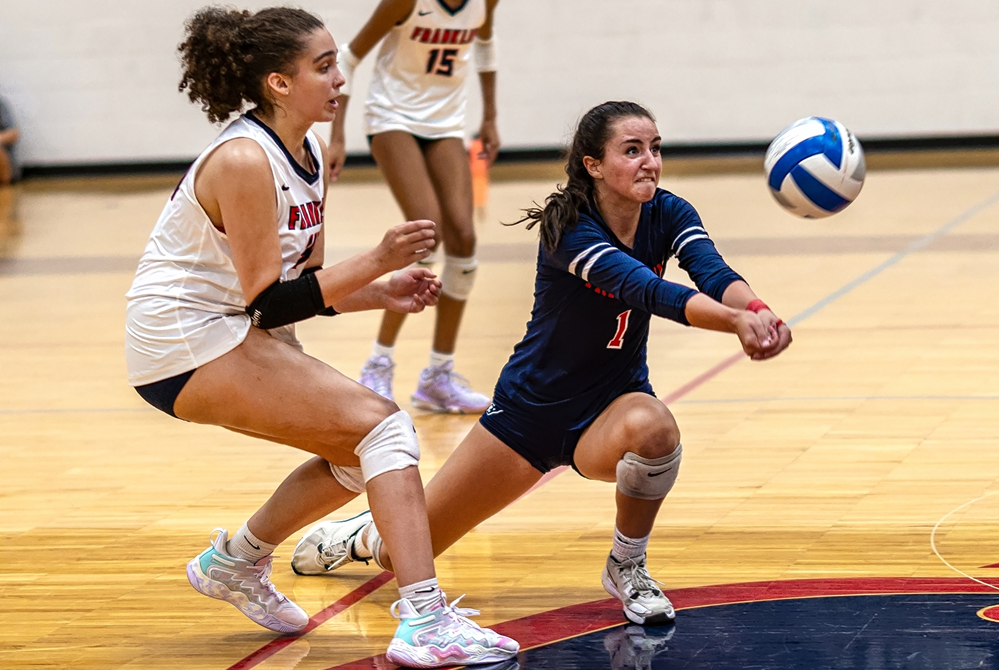
► The libero is the first line of defense, often passing to the setter and covering open spaces.
► The libero can be replaced without restriction – but in the event of an injury, can only be replaced by the player the libero originally replaced.
Previous 2024-25 Editions
Sept. 10: Cross Country Uniforms - Listen
Sept. 3: Soccer Handling - Listen
Aug. 24: Football Holding - Listen
PHOTO Livonia Franklin libero Mckenna Moore (1) defends during her team's match against Livonia Churchill this season. (Photo by Douglas Bargerstock.)
Be the Referee: Volleyball Replays
By
Sam Davis
MHSAA Director of Officials
September 13, 2022
Be The Referee is a series of short messages designed to help educate people on the rules of different sports, to help them better understand the art of officiating, and to recruit officials.
Below is this week's segment – Volleyball Replays - Listen
In volleyball, you’ll sometimes see the first referee gives a double thumbs-up signal. That’s not because the referee was impressed with a huge spike. So what does it mean?
A double thumbs-up signal indicates there will be a replay of the rally or point. What causes a do-over for a rally or point?
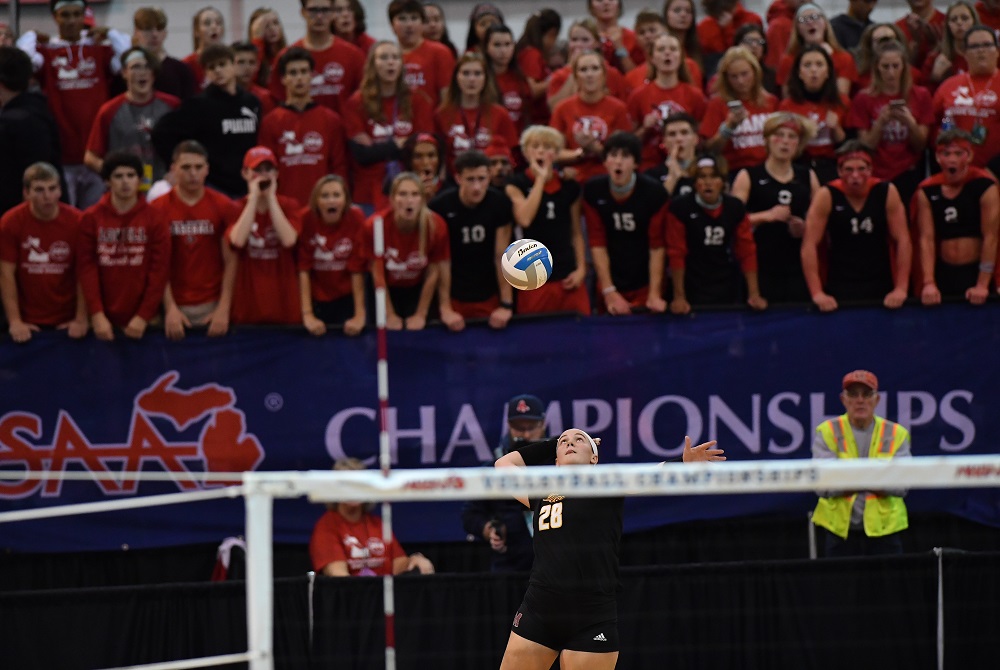
This most often occurs when something or someone enters the proximity of the playing area, but can also happen when the ball gets lodged in the net or overhead obstruction. When it hits certain objects on the wall short distances from the court, and when a player gets a little anxious and serves before the first ref’s whistle.
And, unlike any other sport, the point will be replayed if the officials just can’t come to an agreement on the call. The point gets wiped off the board, and the whole rally starts anew, like it never happened.
Previous Editions:
Sept. 6: Switching Sides - Listen
Aug. 30: Play Clock - Listen
Aug. 23: Intentional Grounding Change - Listen