

Be the Referee: Volleyball Double & Lift
By
Paige Winne
MHSAA Marketing & Social Media Coordinator
October 3, 2023
Be The Referee is a series of short messages designed to help educate people on the rules of different sports, to help them better understand the art of officiating, and to recruit officials.
Below is this week's segment – Volleyball Double & Lift - Listen
You’re sitting at a volleyball match and hear parents in the stands yell “Double!” or “Lift!”
What do those terms mean, and why are they yelling them?
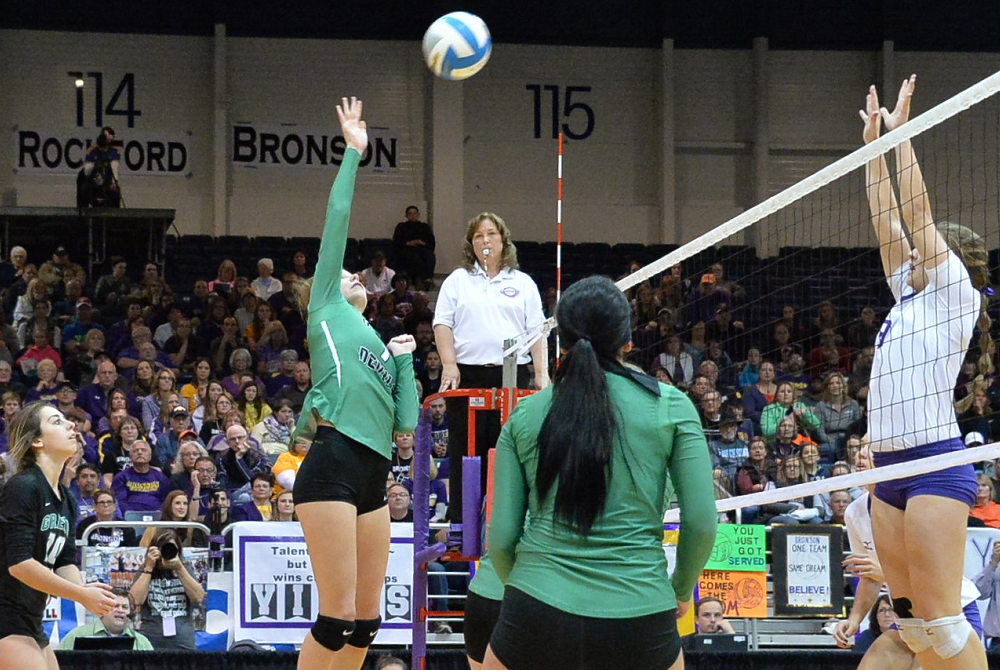
Double refers to double contact. That’s when a player hits the ball twice in a row or if the ball touches two parts of the player’s body in succession. If a setter hits the ball with one hand then the other – even if immediate, it’s a double. She needs to set with both hands at the same time.
A lift is when the player, typically a setter, has prolonged contact with the ball that results in throwing or re-directing the ball back into play. The ball doesn’t rebound off the player's fingers or hands, but is directed by the player.
The official on the stand at the net is in the best position to notice these fouls.
Previous Editions
Sept. 26: Registration Process - Listen
Sept. 20: Animal Interference - Listen
Sept. 13: Feet Rule on Soccer Throw-In - Listen
Sept. 6: Volleyball Jewelry - Listen
Aug. 30: Football Rules Similarities - Listen
Aug. 23: Football Rules Differences - Listen
(PHOTO by Gary Shook.)
Performance of the Week: Lake Orion's Nina Horning
September 15, 2022
 Nina Horning ♦ Lake Orion
Volleyball ♦ Senior
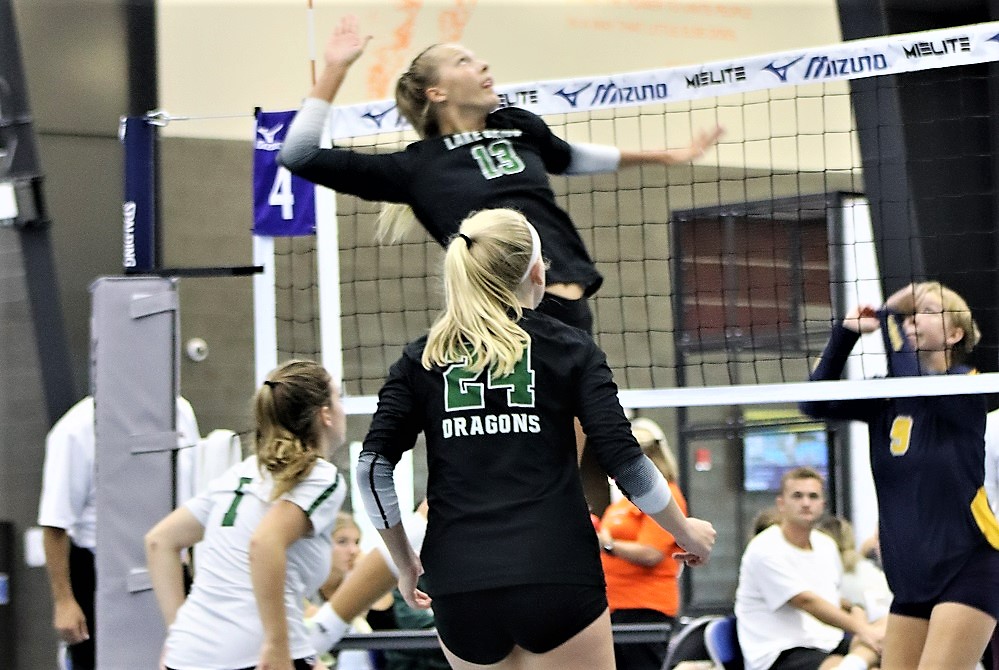
Horning put another exclamation point on the recent announcement that she’s one of 10 finalists for this year’s Miss Volleyball Award by leading Lake Orion past Division 2 then-No. 3 Detroit Country Day 25-11, 25-17, 25-19 on Sept. 8. Horning had 10 kills during the third set alone and is approaching 1,400 kills for her career.
The 6-foot-5 outside hitter is a four-year varsity player for the Dragons, as she joined the program the season after Lake Orion won the Division 1 title led by another standout hitter, then-senior Paige Briggs. Horning made the Division 1 all-state second team as a sophomore and first team as a junior after leading her team to Oakland Activities Association Red and District titles. She has committed to continue her academic and volleyball careers at University of Cincinnati; she's interested in studying physical therapy.
Follow the MHSAA on TikTok.

Second Half’s "Performance of the Week" features are powered by MI Student Aid, a part of the Office of Postsecondary Financial Planning located within the Michigan Department of Treasury. MI Student Aid encourages students to pursue postsecondary education by providing access to student financial resources and information. MI Student Aid administers the state’s 529 college savings programs (MET/MESP), as well as scholarship and grant programs that help make college Accessible, Affordable and Attainable for you. Connect with MI Student Aid at www.michigan.gov/mistudentaid and find more information on Facebook and Twitter @mistudentaid.
2022-23 Honorees
Sept 8: Arturo Romero, Muskegon Oakridge soccer - Report
Sept. 1: Austin King, Midland Dow tennis - Report
Aug. 25: Olivia Hemmila, Troy Athens golf - Report
(Photos courtesy of Nina Horning.)