

Be the Referee: Volleyball Replays
By
Sam Davis
MHSAA Director of Officials
September 13, 2022
Be The Referee is a series of short messages designed to help educate people on the rules of different sports, to help them better understand the art of officiating, and to recruit officials.
Below is this week's segment – Volleyball Replays - Listen
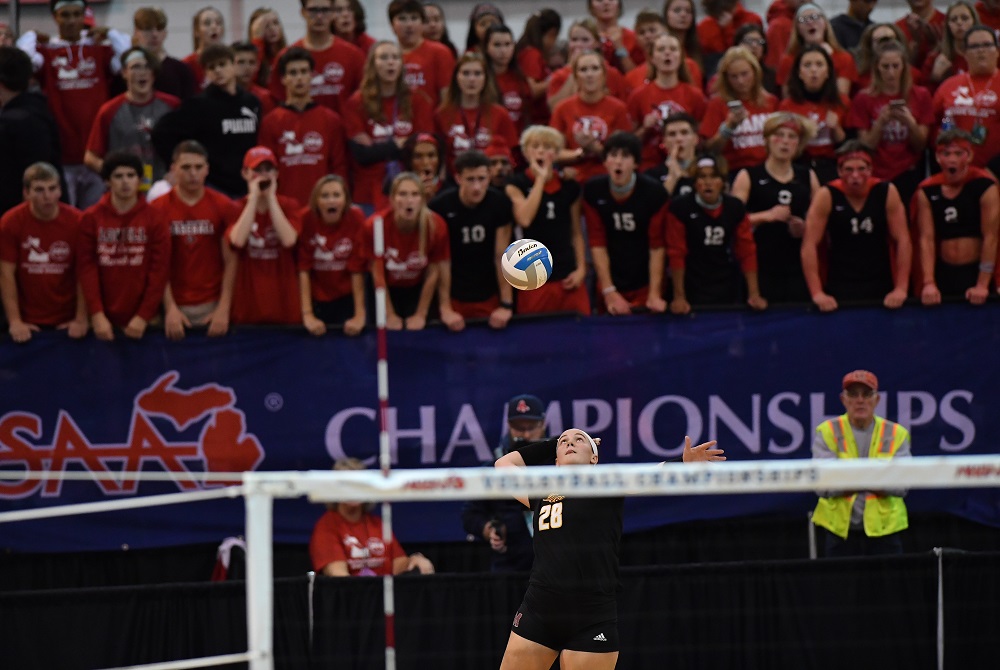
In volleyball, you’ll sometimes see the first referee gives a double thumbs-up signal. That’s not because the referee was impressed with a huge spike. So what does it mean?
A double thumbs-up signal indicates there will be a replay of the rally or point. What causes a do-over for a rally or point?
This most often occurs when something or someone enters the proximity of the playing area, but can also happen when the ball gets lodged in the net or overhead obstruction. When it hits certain objects on the wall short distances from the court, and when a player gets a little anxious and serves before the first ref’s whistle.
And, unlike any other sport, the point will be replayed if the officials just can’t come to an agreement on the call. The point gets wiped off the board, and the whole rally starts anew, like it never happened.
Previous Editions:
Sept. 6: Switching Sides - Listen
Aug. 30: Play Clock - Listen
Aug. 23: Intentional Grounding Change - Listen
Be the Referee: Primary Areas
February 11, 2016
This week, MHSAA assistant director Mark Uyl explains how angle is the most important factor when determining which basketball official should make a call.
Be The Referee is a series of short messages designed to help educate people on the rules of different sports, to help them better understand the art of officiating, and to recruit officials.
Below is this week's segment - Primary Areas - Listen
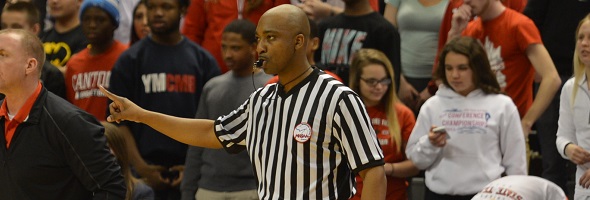
In just about every single basketball game ever played, there are times where fans will turn to each other and wonder, “Why did that official make the call when there was another member of the crew that was a whole lot closer to the play?”
The most important thing in all of officiating and especially basketball officiating is angle is the most important element for an official.
There will be many times during the game that the official that is closest to the play actually has the worst look or the worst angle. Many times the player is going up in the lane for that shot, and the whistle will come from one of the two outside officials because they had the perfect angle to see all the elements of the play and can rule correctly.
Past editions:
Feb. 4: Block/Charge Calls - Listen
Jan. 28: Dive on the Floor - Listen
Jan. 21: Hockey Officials' Options - Listen
Jan. 14: Recruiting Officials - Listen
Jan. 7: Wrestling Weight Monitoring - Listen
Dec. 31: Respect for Referees - Listen
Dec. 24: Basketball Instant Replay - Listen
Dec. 17: Basketball Communication - Listen
Dec. 10: Basketball Excessive Contact - Listen
Nov. 26: Pregame Communication - Listen
Nov. 19: Trick Plays - Listen
Nov. 12: 7-Person Football Mechanics - Listen
Nov. 5: Make the Call: Personal Fouls - Listen
Oct. 29: Officials Demographics - Listen
Oct. 15: Make the Call: Intentional Grounding - Listen
Oct. 8: Playoff Selection - Listen
Oct. 1: Kick Returns - Listen
Sept. 24: Concussions - Listen
Sept. 17: Automatic First Downs - Listen
Sept. 10: Correcting a Down - Listen
Sept 3: Spearing - Listen
Aug. 27: Missed Field Goal - Listen