


High 5s: 11/28/12
November 28, 2012
The final MHSAA championships of the Fall 2012 season give us our final High 5s before heading into winter. This week, we recognize both an individual and a team that achieved new heights.
 Drake Harris
Grand Rapids Christian junior
Football
A 6-foot-4, 180-pound receiver who has committed to play both football and basketball at Michigan State beginning in 2014, Harris posted one of the finest receiving season in MHSAA history capped by playing a huge role in his team's first MHSAA championship. The Eagles beat Orchard Lake St. Mary's 40-37 in overtime Saturday for the Division 3 title. His eight catches for a Finals-record 243 yards and a touchdown put his unofficial season totals at 91 catches for 2,015 yards and 25 scores. Once confirmed, the season yardage will rank as the most in MHSAA history and 12th nationally for one season (his yards per game rank fourth and yards per catch sixth on the NFHS lists). Harris also ranked fourth for catches and second for touchdown catches on the MHSAA single-season lists.
Just ducky: "I'm probably more energized now after he hit that kick," Harris said after teammate Joel Schipper's winning field goal Saturday. "I was probably more tired a little bit during the game. But we condition all practice. We play fast. We play like Oregon, move the ball, (at) a high tempo. We're all in condition, so we really weren't that tired."
Bring on the new guy: Harris has caught more than 3,000 yards worth of passes from senior Alex VanDeVusse over the last two seasons, but will play with a new quarterback in 2013. "I've been with Alex since sophomore year. I guess I have to start over and work hard all next season and hope to get back here."
Be like Calvin: "Calvin Johnson, I want to be just like him when I get older. I know I'm a little skinny right now, but when I get to college, I know they'll put weight on me. I watch film on him all the time, watch him running routes. So I take my game after him. He's the best wide receiver in the NFL right now, probably one of the best wide receivers to play the game, in my opinion."
 Portland football
The Raiders, unranked despite entering the postseason 8-1, finished with their first MHSAA title won in their first trip to the Finals. Portland defeated Grand Rapids West Catholic 12-9 in the Division 5 championship game after knocking out 2011 champion Flint Powers Catholic in the Regional Final. For the playoffs, Portland outscored its five opponents 169-66 while holding three to nine or fewer points. In finishing 13-1 and setting a school record for wins, the Raiders beat nine playoff teams total including eventual Division 3 Semifinalist DeWitt.
Previous 2012-13 honorees:
- Julia Bos, Grand Rapids Christian cross country - Click for more
- Morgan Bullock, Zeeland swimming - Click for more
- Nathan Burnand, Waterford Mott cross country - Click for more
- Aaron Chatfield, Burt Lake Northern Michigan Christian soccer - Click for more
- Erin Finn, West Bloomfield cross country - Click for more
- Alex Grace, Saginaw Swan Valley football - Click for more
- Billy Heckman, Portage Central tennis - Click for more
- Codi Jenshak, Escanaba tennis - Click for more
- Amanda McKinzie, Battle Creek St. Philip cross country - Click for more
- Connor Mora, Cedar Springs cross country - Click for more
- Kelsey Murphy, Plymouth golf - Click for more
- Dewey Lewis, Rockford soccer - Click for more
- Nick Raymond, Erie Mason cross country - Click for more
- Jacqueline Setas, Lansing Catholic golf - Click for more
- Michael Sienko, Williamston tennis - Click for more
- Carli Snyder, Macomb Dakota volleyball - Click for more
- Beal City volleyball - Click for more
- East Kentwood soccer - Click for more
- Flint Beecher football - Click for more
- Grand Blanc boys soccer - Click for more
- Holland girls swimming and diving - Click for more
- Ithaca football - Click for more
- Lansing Everett football - Click for more
- Ludington boys tennis - Click for more
- Muskegon Mona Shores girls golf - Click for more
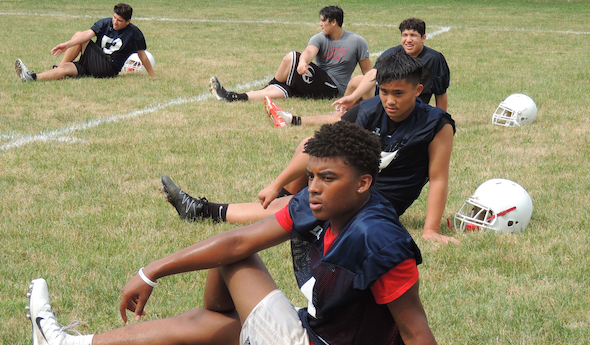
Add Rest Days to Your Workout Routine
June 2, 2020

Henry Ford Health System
Whether you're new to exercise or a seasoned enthusiast, it's tempting to adopt an all-go, no-quit attitude. This is especially common when you're are trying to achieve a fitness goal. Maybe you want to run a 5K, or maybe you have 10 pounds you want to shed before going on vacation.
"Whatever the driver, it's important to remember that scheduling time for rest and rejuvenation is a critical component of any workout regimen," says James Moeller, M.D., a sports medicine specialist at Henry Ford Health System.
Building in Rest Days
From high-intensity interval training (HIIT) and spin to barre and Zumba, popular workouts increasingly push exercisers to go faster, longer, stronger. This prolonged physical stress can lead to overuse injuries, such as stress fractures, muscle strains and joint pain. Excessive exercise can also lead to hormonal changes, disrupted sleep patterns, decreased immunity and mood swings.
“Working out, especially resistance training, breaks tissues down, causing microscopic damage,” Dr. Moeller says. "Rest days allow your muscles time to rebuild."
So how much rest do you really need? There isn't a one-size-fits-all prescription. Factors like your age, fitness level, the intensity of your workout and the amount of training you do weekly will impact the amount of recovery time you need. But there are some basic guidelines for rest days:
1. Go easy: Rest is a relative term. "It's not just sitting on the couch with an iced tea," says Dr. Moeller. "You may still be exercising on 'rest' days, but at a lower intensity." Maybe you go for a brisk walk or ride your bike to work. Take a yoga class or do some dynamic stretching. The key is to make sure you're not overworking the same body parts.
2. Get sufficient sleep: Sleep is a key component of muscle repair and rebuilding. During sleep, your body’s production of growth hormone increases. Not getting quality shuteye thwarts your body's production of growth hormone and can impact your performance.
3. Give overtaxed muscles a break: You don't need to skip the gym on specific days each week, but you do need to rotate which body parts you're working. The general rule is to give muscles 48 hours to recover after a workout. So it's a good idea to take two to three days off before working the same muscle groups again.
4. Stay hydrated: Make sure to restore lost fluids before, during and after a workout. Dehydration can lead to overheating, headaches and muscle fatigue, among other ailments. You don’t need a sports drink; water is best. "Sports drinks aren't required unless you're getting into very high intensity activity, or exercising for more than one hour at a time," Dr. Moeller says.
5. Pay attention to your body: A lot of people try to work out through pain and fatigue. If there's a heaviness to your movements, or if you feel like your muscles are not responding appropriately to the stress you're providing, take a time out. "It's really about learning to read your body's signals," says Dr. Moeller.
Health authorities and news headlines widely publicize the health benefits of exercise — and the consequences of inactivity. The American Heart Association recommends that adults get at least 150 minutes of moderate-intensity exercise per week, plus strength training two or three days per week. Less discussed are the negative effects of not allowing your body sufficient time to rest.
Getting sufficient rest between workouts is just as important as participating in regular exercise. "Both are part of the total process required to build strength, endurance and muscle mass," Dr. Moeller says.
Want to learn more? Henry Ford Health System sports medicine experts are treating the whole athlete, in a whole new way. From nutrition to neurology, and from injury prevention to treatment of sports-related conditions, they can give your athlete a unique game plan.
Visit henryford.com/sports or call (313) 972-4216 for an appointment within 24 business hours.