


Official Treatment
March 7, 2014
A book I quoted in this space three times last November – How: Why HOW We Do Anything Means Everything by Dov Seidman – has me thinking about sports officiating.
One premise of the book is that the Internet era has made the world so transparent and connected that there is no such thing anymore as “private” behavior or a “minor” mistake. Everything can become a public matter – instantly. Anything can become a major problem – overnight. Worldwide.
So, when our local real estate agent, who officiates junior varsity basketball, misses a call that an invested spectator captures with his or her smart phone camera, and sends to his or her relatives and a local media outlet that night, there is no limit to where that video could appear by the next morning.
And while major college and professional officials may now receive four-figure fees to work under those conditions, officials at the junior high/middle school and high school levels – sometimes working for little more than gas money - wonder if it’s worth the hassle.
There are many obstacles to recruiting and retaining officials for school sports, including poor business practices by assigners and bad sportsmanship by coaches and spectators; but a significant factor not to be overlooked is the adverse potential of immediate worldwide criticism for a call that had to be made in the blink of an eye.
The human factor of sports is now subject to inhuman expectations. In an enterprise that strives for fairness, it appears that it’s the official who is being treated least fairly.
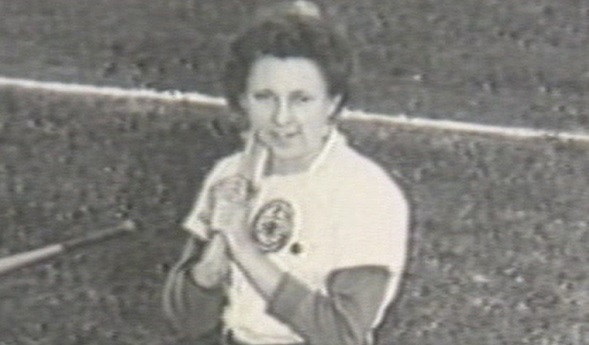
Former Official in League of Her Own
September 26, 2018
By Geoff Kimmerly
Second Half editor
Retired MHSAA official Dolly Konwinski – previously a player in the All-American Girls Professional Baseball League who consulted on the 1992 film “A League of Their Own” – died Saturday at the age of 87.
Konwinski umpired both baseball and softball as an MHSAA registered official for more than a dozen years into the 1990s. She brought to the diamond playing experience from the AAGPBL; she played for four teams between 1948-52, including most of three seasons with the Grand Rapids Chicks.
The AAGPBL has been honored by the National Baseball Hall of Fame in Cooperstown, N.Y., and Konwinski consulted on and made a brief appearance in “A League of Their Own,” which was nominated for Grammy and Golden Globe awards.
She most recently lived in Caledonia and is survived by her husband of 63 years Robert and four children, plus many grandchildren and extended family.
Click for recent Grand Rapids Press coverage of her death. A Mass of Christian Burial will be held at 11 a.m. Thursday at St. Mary Magdalen Catholic Church in Kentwood. Click for her obituary.
The feature below, reported by Rick Berkey, aired as part of the coverage of the 1990 MHSAA Girls Basketball Finals on PASS Sports.