


Official Treatment
March 7, 2014
A book I quoted in this space three times last November – How: Why HOW We Do Anything Means Everything by Dov Seidman – has me thinking about sports officiating.
One premise of the book is that the Internet era has made the world so transparent and connected that there is no such thing anymore as “private” behavior or a “minor” mistake. Everything can become a public matter – instantly. Anything can become a major problem – overnight. Worldwide.
So, when our local real estate agent, who officiates junior varsity basketball, misses a call that an invested spectator captures with his or her smart phone camera, and sends to his or her relatives and a local media outlet that night, there is no limit to where that video could appear by the next morning.
And while major college and professional officials may now receive four-figure fees to work under those conditions, officials at the junior high/middle school and high school levels – sometimes working for little more than gas money - wonder if it’s worth the hassle.
There are many obstacles to recruiting and retaining officials for school sports, including poor business practices by assigners and bad sportsmanship by coaches and spectators; but a significant factor not to be overlooked is the adverse potential of immediate worldwide criticism for a call that had to be made in the blink of an eye.
The human factor of sports is now subject to inhuman expectations. In an enterprise that strives for fairness, it appears that it’s the official who is being treated least fairly.
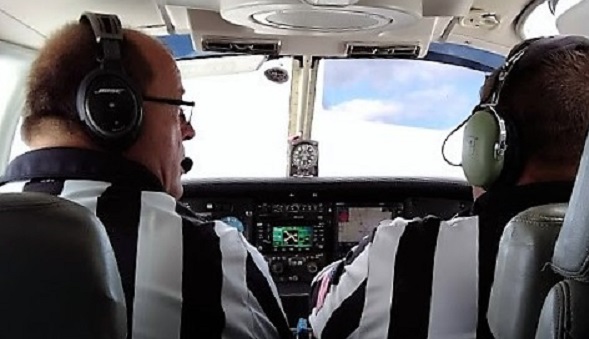
The Official View: Eyes in the Sky
By
Brent Rice
MHSAA Assistant Director
September 10, 2018
By Brent Rice
MHSAA Assistant Director
Welcome to “Official View,” a weekly feature on the MHSAA’s Second Half website designed to deliver must-know information to Michigan’s 10,000 high school officials – while also showing administrators, athletes and fans a slice of the officiating life from those in the avocation.
Each edition will include a rule of the week, present an “It’s Your Call” segment, keep our officials up to date on important news and notices and provide a behind-the-scenes glance at officials making our games possible.
It’s Your Call
SOCCER In the video clip below, a player takes control of the ball in the area at the top of the goal box and behind two defending players and fires a shot toward the net. Is this player offside?
(Click the video play button below; you'll then need to click again to view on YouTube, starting at 2:20 and ending at 2:39.)
You make the call: No, the player is not offside. The ball was last played by an opponent – in this case through the air on a header – and the player receiving the ball only would’ve been off-side if receiving the ball from a teammate. Rule 11-4-1b (included paragraph).
Rule of the Week
VOLLEYBALL The right-side hitter on Team S spikes the ball to the opposing side floor for a point. As she comes back to the ground following her leap, she both strikes the net and steps completely across the center line. The ball touches the floor before the hitter lands.
Ruling: This is a legal point. In order for either violation to be called, the ball must still be in play.

It’s Official!
Deadline for Tournament Consideration Requirements: Both the 2018-19 Rules Meeting and the Sport Rules Exams must be completed by Sept. 13. Check your Rules Meeting and Rules Exam status on MHSAA.com by logging in, clicking “Official Services” and then selecting the links for Exams and Rules Meetings.
If you haven’t already, get your current season schedules into the MHSAA and confirm your MIGS (Member in Good Standing) status on the MHSAA website to make certain you are eligible for postseason consideration. You must complete all of the above requirements to ensure your eligibility.
Official View
In the photo at the top of this edition, pilot Dean Lefebrve flies his football crew to its Week 2 varsity game, Negaunee at Calumet. The crew also included, just above, Dean Nelson, Rich Lundholm, Paul Angeli and Andrew Lewis.