

Casting Lines for Future Tournaments
August 12, 2016
By Jack Roberts
MHSAA Executive Director
The MHSAA is best known to the public for the tournaments it conducts to conclude the fall, winter and spring seasons each school year.
These tournaments, the first and largest program of the MHSAA, have survived the Vietnam War, the Korean conflict and two World Wars. They have survived the technology bubble, the housing collapse, the energy crisis and the Great Depression.
MHSAA tournaments existed at the dawn of aviation and at the time of our nation’s lunar landing. Popes, presidents and governors have changed and changed again and again, and MHSAA tournaments roll on year after year.
But the sense of tradition and permanence and inevitability of MHSAA tournaments doesn’t dissuade us from asking questions about our tournaments, even some of the most basic questions. Here are two.
Question #1
I have long been and will always be an advocate for a Ryder Cup format for the MHSAA Golf Finals, and a team tennis approach to the MHSAA Tennis Finals; but 90 years of tradition is hard to overcome. Might this be a more exciting format? Could it be co-ed? Could it reverse the decline in boys tennis participation, and increase girls golf participation? Wouldn’t it be fun to try?
Periodically, the International Olympic Committee requires each of the designated Olympic sports to defend its status, to state its case why the sport should remain a part of the Olympic program. Then, after a series or votes that retain one sport at a time, the IOC drops the sport that makes the weakest case. It does so to make room for one of the previously unlisted sports that makes the best case for inclusion.
This would appear to keep the existing Olympic sports on their toes, and to keep the Olympic movement fresh and reflective of modern trends in sports.
While I would not enjoy the controversy, I can see the potential for some positive results if the MHSAA were to invoke the same policy for determining the 14 tournaments it will provide for girls and the 14 for boys.
This might cause us to consider more deeply what a high school sport should look like, or at least what an MHSAA tournament sport should stand for.
On the one hand, we might be inclined to drop tournaments for those sports that involve mostly non-faculty coaches and non-school venues, or require cooperative programs to generate enough participants to support a team, or resort almost entirely to non-school funding, or cater to individuals more than teams.
Or perhaps this process would cause policymakers to forget traditional thinking and ask: “In this day and age, should we shake off traditional notions of sport and consider more where modern kids are coming from?” That might mean fewer team sports and more individual sports, more “extreme” sports like snowboarding and skateboarding, and more lifetime sports, meaning not just golf and tennis and running sports, but also fishing and even shooting sports.
Currently, MHSAA policy states that the MHSAA will consider sponsorship of a tournament series for any sport which 64 member schools conduct on an interscholastic basis as a result of action by the governing boards of those schools.
Should the only question be how many schools sponsor a sport, or must an activity also have certain qualities and/or avoid certain “defects?” What should an MHSAA tournament sport look like and stand for?
Question #2
Bristling from criticism that his association is a money-grabbing exploiter of children, my counterpart in another state said, “If we were running our programs just to make money, we would do very many things very differently.” I knew exactly what he meant.
Because we care about the health and welfare of students, because we mean what we say that the athletic program needs to maximize the ways it enhances the school experience while minimizing academic conflicts, and because we try to model our claim that no sport is a minor sport when it comes to its potential to teach young people life lessons, we operate our programs in ways that make promoters, marketers and business entrepreneurs laugh, cry or cringe.
If money were the only object, we would seed and select sites to assure the teams that attracted the most spectators had the best chance to advance in our tournaments, regardless of the travel for any team or its fan base. If money were the only object, we would never schedule two tournaments to overlap and compete for public attention, much less tolerate three or four overlapping events. If money were the only object, we would allow signage like NASCAR events and promotions like minor league baseball games.
Those approaches to event sponsorship may not be all wrong; they’re just not all right for us. And we will live with the consequences of our belief system.
During a typical school year, more than 20 percent of the MHSAA’s 2,097 District, Regional and Final tournaments lose money. Not a single site in golf, skiing or tennis makes a single penny. In no sport did every District, Regional and Final site have revenue in excess of direct expenses.
In fact, in only three sports – boys and girls basketball and football – is revenue so much greater than direct expenses overall that it helps to pay for all the other tournaments in which the MHSAA invests.
That’s right: invests. When we present our budget to our board, we talk about the MHSAA’s investment in providing tournament opportunities in all those sports and all those places that cannot sustain the cost of those events on their own. How much is this investment worth to students, schools and society?
These two are core questions that require our focus far in advance of talk about scheduling, site selection, seeding and the myriad matters that too often hijack our time and attention.
Jackson Northwest's Kloack 'Doubles' Up Record Book Achievements
By
Geoff Kimmerly
MHSAA.com senior editor
October 13, 2023
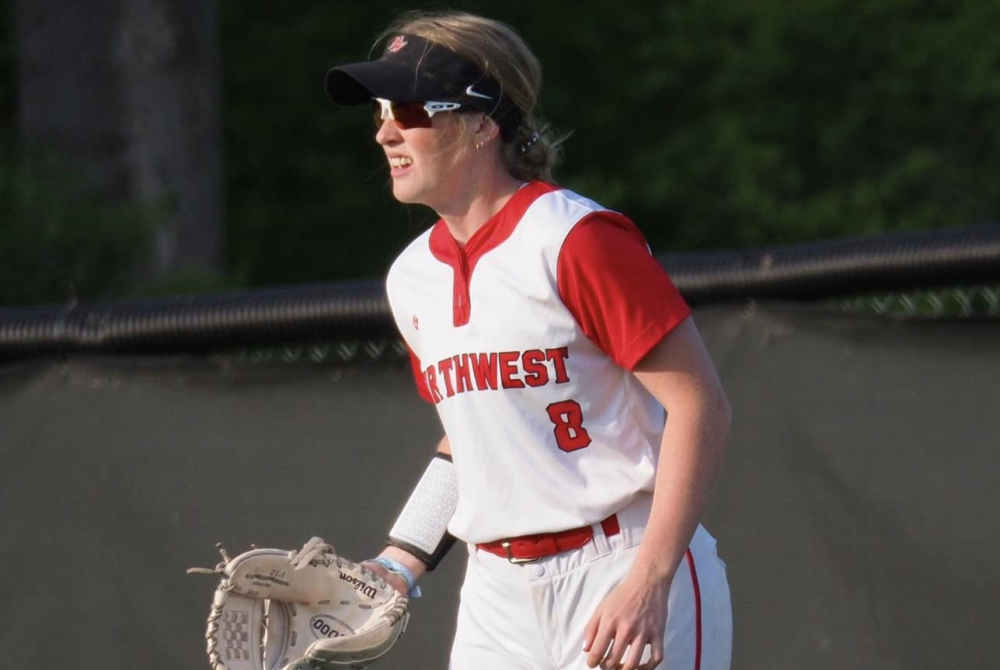
Jackson Northwest standout Campbell Kloack reached the MHSAA record book for single-season doubles for the second time this spring, hitting 18 for the second season in a row. But she’s also now on the career list with one more season to play.
The now-senior has 51 doubles over her first three seasons. She’s committed to sign with Saginaw Valley State to continue her softball career after she’s done at Northwest.
See below for more recent additions to the MHSAA softball record book.
Softball
Rylee Scheurer made a significant impact on Portland St. Patrick as a sophomore in 2022, making record book lists with 70 runs and 70 hits both over 36 games as the Shamrocks as a team made the records with 399 hits, 88 doubles, 308 RBI and a .407 team batting average. Senior teammate Lydia Meredith also was added after being hit by three pitches in one game that May 31, 2022, against Ionia. Scheurer then earned another entry this spring, for RBI in one game, while eighth-grade teammate Graceyn Rockey earned listings for home runs in her first two varsity at bats and 11 home runs for the season. St. Patrick as a team again was added as well, this time for 278 RBI and a .446 team average over 28 games – the team average ranking fifth all-time.
Olivia Turner’s big numbers as a Grass Lake sophomore in 2022 earned her three more individual record book entries and put her on three career lists as well. Turner’s 27 doubles over 42 games tied for fifth-most in one season, and she also hit 12 home runs and totaled 84 RBI – the latter ranking 11th for one spring. She’s on those career lists as well with 50 doubles, 28 homers and 176 RBI over 78 games before this past season.
Edwardsburg’s Caitlin Tighe will be playing her senior year of softball next spring, but has been added for several achievements from her freshman season. On April 22, 2021, she had three home runs, in consecutive at bats, and eight RBI in her team’s win over Niles, and she also was added for 17 doubles and 10 homers total that season. Teammate Abby Bossler was added for back-to-back homers in the same inning during the second game that day against Niles – as the Eddies made the team record book with five homers total that contest – and then 16 doubles the following spring in 2022. As a team, Edwardsburg also was added for 394 hits, 81 doubles and 293 RBI over 37 games in 2021 and 418 hits, 83 doubles, 34 home runs and 276 RBI over 37 games in 2022. Bossler graduated this spring and is continuing at Radford University in Virginia, and Tighe is committed to Western Michigan.
Hillman senior Nicole Barbeau earned her school’s first softball record book individual entry as a sophomore in 2022. She hit 12 home runs over 35 games to make the single-season list in that category.
Parchment’s Kassidy Butler put together one of the most impressive careers over the last quarter century of MHSAA softball, and it’s reflected with 13 record book entries. Among the most notable, Butler tied for 10th on the single-season doubles list with 25 as a freshman in 2012 and is tied for seventh with 69 for her four-season career; her 20 home runs as a senior in 2015 are tied for 12th on that list, while her 243 RBI are third-most for a career and her .581 batting average ranks 13th. She went on to play at Kellogg Community College.
Kinde North Huron enjoyed a power-packed 2022 season, making the team record list with 34 home runs over 28 games and with Brooke Gordon and Maggie Koroleski both making the individual homers list with 12. Gordon was a senior and signed with Northwood, and Koroleski was a senior this spring and signed with Cleary.
Algonac’s Kenna Bommarito became the fifth pitcher to record all 18 outs of a six-inning game by strikeout, doing so during a no-hitter April 11 against Algonac. She also just missed the single-game RBI list with five. She’s a senior this school year.
Abby Fowler was a catalyst for Holton’s lineup during its 22-3 win over Grand Rapids Covenant Christian on April 26. The senior drove in 10 runs, tying for third on the single-game RBI list.
Niles Brandywine’s Chloe Parker added four more record book entries this spring as a junior to her sophomore listing for doubles. She bested that 2022 total by one with 21 doubles and now has 54 for her career with a season to play. She also made lists for back-to-back home runs and seven RBI in a game. Teammate Adelyn Drotoz also was added for a seven-RBI game this spring as a sophomore.
Petoskey’s Andi Gasco tied the single-game extra-innings strikeout record on June 1, 2009, when she struck out 32 batters during a 21-inning Quarterfinal loss to Clio. She also has been added to the record book for 409 strikeouts that season and 1,364 for her career – which ranks 11th on that list. She went on to star at Trine. More recently, Kenzie Bromley turned a powerful senior season into a pair of record book entries in the spring. The Petoskey senior hit 18 home runs over 33 games to make the single-season list in that category, and also made the career list with 34 over three seasons. She’s continuing at Kent State.
A pair of Holt standouts were added for offensive contributions over the last two seasons. Jadyn Joseph, a 2022 graduate, was added for scoring 73 runs over 39 games as a senior. Marlie Rehm, now a sophomore, was added for 16 doubles over 36 games in the spring as a freshman. Joseph plays at Ferris State.
Three decades later, Susie Ritums has been added for her back-to-back no-hitters as a Comstock senior on May 5 and May 7, 1993. Ritums struck out 22 hitters over the 11 innings needed to earn that pair of victories.
PHOTO Jackson Northwest’s Campbell Kloack owns three record book listings for doubles as she prepares for her senior season next spring. (Photo courtesy of the Jackson Northwest softball program.)